Whatever plan I had for posting something today changed when I saw the Google doodle celebrating the 30th birthday of the World Wide Web when computer scientist Sir Tim Berners-Lee submitted a paper titled “Information Management: A Proposal” to his supervisor at CERN. The idea, linking information systems with hypertext, was brilliant, and CERN rightfully celebrated its role in the creation of the WWW.
The problem is the people... while it's good that people have access to information, the problem is that people tend to want garbage. The World Wide Web was created by scientists, people with lofty goals of seeking out the building blocks of the universe and democratizing their findings. They wanted to release their findings to a grateful world... the world wanted porn, cat pictures, and the ability to anonymously harass others.
Instead of the Promethean dream of common people discussing particle physics, the Web gave us (DON'T GOOGLE THESE) Goatse, and Two Girls One Cup, Lemon Party, and ten hour Nyan Cat videos. It gave us shitposting, and dank memes, and a quicker way to distribute 'The Protocols of the Elders of Zion'. It gave us Russian troll farms and crazy conspiracy theories and anti-vaccine hysteria on a grand scale. The Web, brilliant in concept and execution, fell victim to Sturgeon's Law. The flow of information, much of it garbage, can confuse people who don't have the time and training to sift through the dross to find the real facts (hey, I sorta got burned by this yesterday). That Stang fella and his buddies warned us about this:
Of course, I'm half joking about this... while there's a lot of crap out there, the worthwhile information makes the whole endeavor a, pardon the expression, net positive. I'd like to think that my particular corner of this crazy virtual space is one of the worthwhile stops on this information superhighway. Hey, I've even posted about CERN.
Showing posts sorted by relevance for query cern. Sort by date Show all posts
Showing posts sorted by relevance for query cern. Sort by date Show all posts
Tuesday, March 12, 2019


Wednesday, November 25, 2015
Secret Science Club Post Lecture Recap: Smashing!
On Monday night, I headed down to the beautiful Bell House, in the Gowanus section of Brooklyn, for this month's Secret Science Club lecture, featuring physicist Dr Kyle Cranmer of NYU's Center for Cosmology and Particle Physics and NYU's Center for Data Science. Dr Cranmer was a member of the Large Hadron Collider team which discovered the Higgs boson.
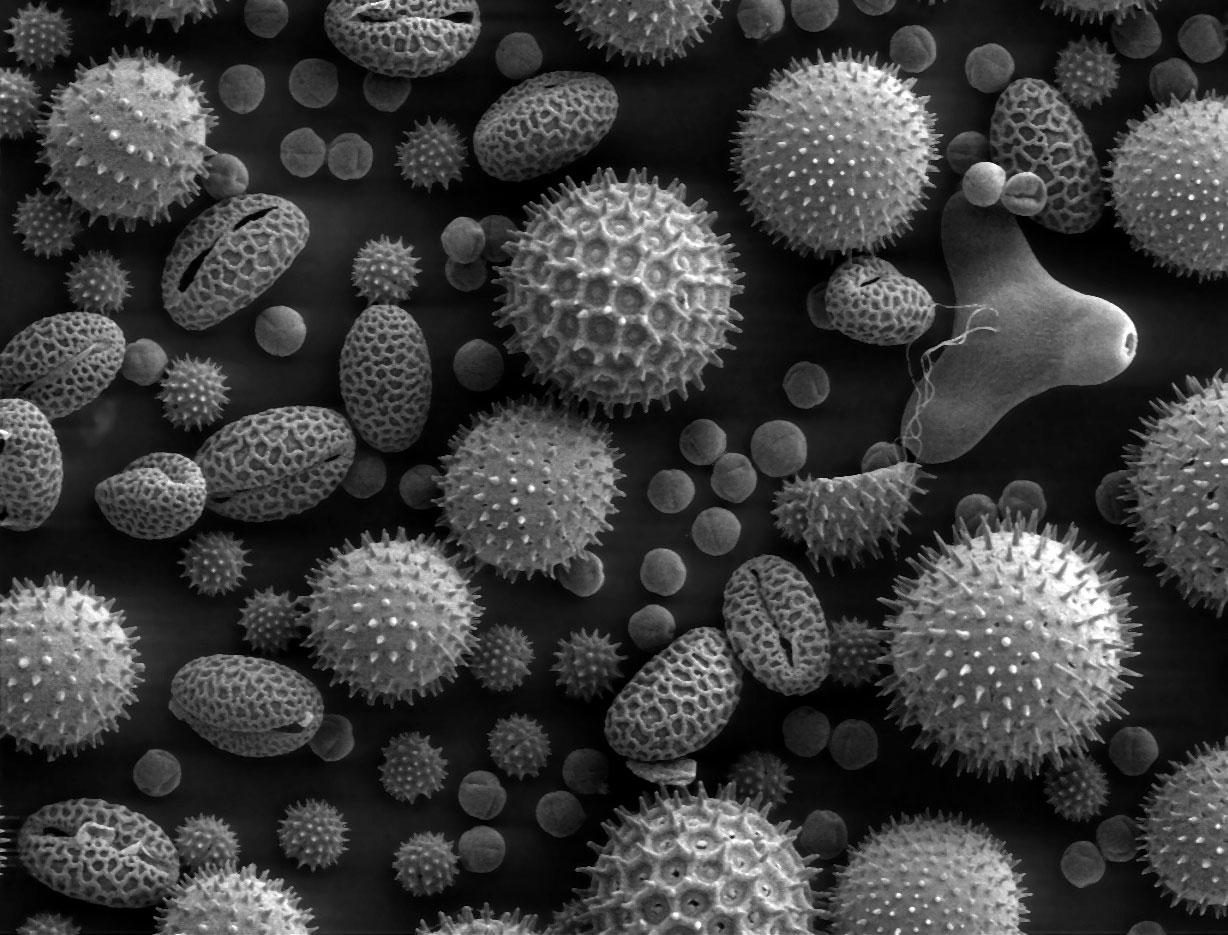
Dr Cranmer began his lecture by displaying an image of a snowflake, which he prized for its beauty and symmetry. While noting that symmetry is not often observed in 'normal' life, as things get smaller, symmetry becomes more common- objects (at this stage, he displayed a scanning electron microscope image of pollen) become more austere, cleaner, more symmetrical. The fundamental particle that makes up 'normal' matter is the atom- each atom is composed of electrons and a nucleus that is made of protons and neutrons, which are made out of quarks, both up quarks and down quarks. Electrons belong to a class of particles known as leptons. Dr Cranmer drolly noted, "Everything you touch is made out of down quarks, up quarks, and electrons.
He then displayed the 'classic' image of an atom, and noted that electrons don't orbit the nucleus of an atom like planets orbit around their sun- a better model for their movement is a cloud probability model. He then displayed a gorgeous image of the hydrogen wave function:

The talk then shifted to the subject of the four fundamental forces of nature... Electromagnetic force, the interaction between magnetism and positive and negative charges- opposite charges attract and same charges repel. The strong force, which holds identically charged protons together in the nucleus of the atom, is stronger than electromagnetic force. The weak force is involved in the interaction between quarks and leptons. Gravity is an attraction between and among masses. Dr Cranmer also delved briefly into Einstein's Theory of General Relativity, mentioning the central importance of an equation:

The universe can be broken down into four forces, one equation, and twelve particles:

One problem that was encountered early on in particle physics is that the equations only worked if the fundamental particles were massless, though it was known that the particles had mass. Physicist Peter Higgs theorized that there was an energy field that permeates the universe (the Higgs field) which every particle 'feels'- different particles are effected in different ways, particles which interact strongly have a lot of mass while particles which are hardly effect have little mass. Dr Cranmer illustrated this principle with a cartoon. The interaction of the particles with the Higgs field gain inertial mass.
Why do particles interact differently with the Higgs field? Fundamental particles can act as waves, the most commonly known example of this being light waves, which are composed of photons. Peter Higgs proposed that there was a particle manifestation of the field, which was dubbed the Higgs boson. In order to test this theory, and to discover whether or not there was a Higgs boson, the biggest particle accelerator in the world was needed. CERN, the European Organization for Nuclear Research, has as its centerpiece a 17 mile long particle accelerator three-hundred feet below ground spanning the Swiss-French border. The ATLAS detectors measure the paths, momentum, and energy of particles, allowing identification to be made. The CMS detector uses a solenoid magnet to bend the paths of particles. Among the gorgeous visuals Dr Cranmer presented was a picture of beautiful transparent lead tungstate.
In the particle accelerator, particles collide and 'lots of stuff' flies off and interacts with the various sensors. Interesting particles show up at the point of collision and decay immediately. The energy of the particle beam, which is steered by electromagnets, rivals that produced by a jumbo jet- it's sufficient to melt copper. Dr Cranmer dryly noted, "You don't want to put your hand in there." Mass and energy being equivalent, new particles are created in collisions. While this occurs rarely, there are forty-million collisions per second. In the quadrillions of collisions which have occurred in the LHC, a few Higgs bosons have been detected. Dr Cranmer compared the search to painting one thousand grains of sand red and then putting them in an Olympic-sized swimming pull filled with sand and then trying to find the red ones. The Higgs boson quickly decays, often into two Z bosons which decay into four leptons. After a statistical 'spike' in the CMS data suggested the existence of the Higgs boson, the discovery of the Higgs was announced on 7/4/2012. In 2013, Peter Higgs and Belgian physicist François Englert won the Nobel Prize in Physics. Dr Cranmer quipped that it's hard to overstate the importance of the discovery of the Higgs boson, but it is possible. He then presented us with a diagram of the standard model of particle physics originally done by David Kaplan- from Dr Cranmer's blog:

The model is self-consistent, but Dr Cranmer noted that there is a problem with the "complete theory of everything", namely it looks like we're done. He then posed the question, "Where do we go now?" His answer, we go from small to large, from the subatomic level to the macro level. He then showed a familiar picture, an image of a galaxy cluster characterized by distorted images caused by light being bent by mass... gravitational lensing. The amount of bending allows us to measure the mass which is causing the bending, and there is a lot more mass than is present in the stars alone. The existence of dark matter can be inferred by its gravitational effects. There is evidence that dark matter forms a 'cosmic web', a scaffolding for the universe in which galaxies and clusters are seeded. Dark matter is not part of the standard model of particle physics.
After the Big Bang, there was a period of inflation, in which the young universe was a hot 'soup' of quarks and gluons. This young, hot, soupy universe was opaque- when it cooled down, atoms began to form and the universe became transparent- this occurred at approximately 13.7 billion years ago as evidenced by cosmic microwave background radiation. Currently, the universe is composed of about 26.8% dark matter, 4.9% 'mundane' matter, and 68.3% dark energy. While telescopes like the Hubble can look farther out and farther back in time, the Primordial Era of the hot, dense, opaque early universe cannot be observed. The LHC probes what the universe was like under those conditions, and the search is on for dark matter, supersymmetry, and extra dimensions.
Dr Cranmer then asked, can we trust extrapolations from the earthly observations to the universe at large? Out conceptual framework is derived from the Theory of General Relativity, Quantum Mechanics, and Field Theory... a combination that can be called 'Relativistic Quantum Field Theory'. Relativity describes the symmetry of space and time. Field theory describes how fields interact with matter. Quantum mechanics describe the wave/particle duality- particles can act as waves, light waves are composed of photons, the Higgs boson is a particle which acts as a wave field.
Dr Cranmer then went on a digression about antimatter- if there are particles, there should be antiparticles. Similarly, if the supersymmetry theory of space and time is correct, there should be superparticles- in theory, one of these 'sparticles' has the properties of dark matter.
The success of the Relativistic Quantum Field Theory is related to spin- particles have spin, which receives a quantum correction- the quantum corrections are expressed in Feynman diagrams. Dr Cranmer described the success of experiments in quantum corrections as 'hitting a hole in one from New York to China. The Higgs boson also receives quantum corrections- corrections which are a quadrillion times the mass of the boson- this is known as the naturalness problem. Questions remain: Why is the Higgs boson so small? Are we missing something? What is the energy scale at which the problem occurs? This renormalization process is akin to adjusting for inflation? The underlying principle to balance the "budget" is supersymmetry- for every boson there's a fermion.
The next question Dr Cranmer posed was, "Does the Higgs boson spell the death of the universe?" The stability of the universe correlates to the ratio of the top mass of the universe and the mass of the Higgs:

As the mass of the universe and the mass of the Higgs increase, the universe could enter a different state, perhaps a state in which atoms cannot exist. The timeframe of this is probably 'kajillions' of years, but it could happen tomorrow. It's possible that this change could result in a 'bubble' universe branching off. It's possible that there is a series of nested universes popping off, a multiverse in which different pockets are connected, but conditions could be radically different. The naturalness problem could be explained by different conditions in different 'pockets'- we can only observe universes which can support life, the anthropic principle. While a lot of physicists are displeased with this model, it's not necessarily wrong. Dr Cranmer likened this to Kepler's nested platonic solids model of the solar system, while it wasn't correct, it wasn't necessarily dumb according to the standards of Kepler's time.
Dr Cranmer ended the LHC portion of the talk by likening CERN's experiments to a menu, with the Higgs boson being an appetizer and Supersymmetry with Dark Matter or Extra Dimensions with Black Holes being the main course. He then briefly touched on extremely energetic particles from space (jokingly referred to as the "Oh My God!" particle) detected by the Fly's Eye Detector. The source of these superenergetic particles can't be too far away, but it is a mystery. In the fluxes of cosmic rays, one of these particles, which typically have the energy of a fastball, per billion square kilometers may hit the earth's surface in a year. The Pierre Auger detector is designed to detect these ultrahigh energy particles. Dr Cranmer then noted that apps could be developed so that every cell phone could be a particle detector, one such app is CRAYFIS.
In the Q&A, the topic of the different interactions with the Higgs field came up- the reason for this is unknown, but there are lots of theories. Some bastard in the audience asked about the implications of the LHC experimental results for quantum entanglement, the so-called 'spooky action at a distance'. When a particle decays, two particles 'fly off', but the angular momentum is conserved. Measuring one of the particles, one can know the state of the other. This doesn't impact the results in the LHC- it's a subtle effect, but it's real. It doesn't drastically change what the particles do, though. Dr Cranmer then riffed on this by mentioning the Black Hole Information Paradox- if something falls into a black hole, what happens to the 'information' that results from its entanglement with another particle? Also in the Q&A, Dr Cranmer talked about the role of dark energy in the expansion of the universe- dark energy 'makes matter allergic to itself'.
Once again, the Secret Science Club dished out another fantastic lecture- kudos to Dr Cranmer, Dorian and Margaret, and the staff of the beautiful Bell House. Here's a special pre-Thanksgiving thanks to everyone.
Sunday, February 23, 2020
Meanwhile, Real Science Proceeds Apace
Yesterday's post was about a self-taught 'engineer' conducting an experiment in an attempt to prove a pseudoscientific thesis... it was nice to see him using empiricism in his quest for knowledge, though his efforts... uhhhh... fell flat. Today, I am more interested in real science- the CERN crew has been able to create and maintain antimatter for up to twenty-four hours.
One of the mysteries of the universe is the prevalence of matter- if the Big Bang had produced equal amounts of matter and antimatter, the opposite-charged particles would have annihilated each other, resulting in No Universe At All. A small asymmetry at the beginning would have resulted in the current mass (heh heh) asymmetry. It's all very heady stuff, but suffice it to say that real discoveries are being made, and nobody has to plaster themselves onto the desert floor to make them.
Antimatter has come up in a few of the Secret Science Club lectures I have recapped. I imagine it will become a more common subject as physicists better learn how to create and maintain the stuff, even if it really wouldn't be so good for power generation.
Wednesday, September 18, 2013
Secret Science Club Post Lecture Recap: Of Two Minds
Last night, I headed down to the beautiful Bell House in the Gowanus section of Brooklyn for the latest Secret Science Club lecture, featuring Dr Moran Cerf, who is one of those scientist/rockstar figures, a former hacker/security expert and Moth "Grand Slam" story winner.
Dr Cerf's lecture dealt with decision making and the brain/body interface. Why do individuals want one thing, but do the opposite thing? At times, it seems that an individual is two people fighting for dominance in one body. How does the brain interact with the body in everyday life?
Dr Cerf illustrated this conundrum by relating the tragic tale of Charles Whitman, the infamous University of Texas "tower sniper". After the mass shooting, the police tried to determine a cause for the shooting spree. Whitman was generally seen as a quiet, law abiding man, but his diary told an alarming tale. Whitman wrote that he "feels like he's not the same guy" and described having violent urges. Before he embarked on his murderous foray, he indicated that he wanted an autopsy performed on him and left a check to pay for it. When an autopsy was performed, a tumor the size of a walnut was found in his brain which impinged on his amygdala.
I another instance, a patient with a frontal lobe tumor began to exhibit signs of sexual deviancy, including pedophila. The removal of the tumor caused him to revert back to his previous sexual mores, but a partial recurrence of the tumor caused a return of the symptoms until it too was removed.
To illustrate the ability of individuals to "color" their perceptions of events, Dr Cerf cited a study (PDF) in which which a group of colonoscopy patients were told to rate the pain they experienced on a ten-point pain scale. Half of the patients experienced an interval at the end of the procedure in which the tip of the scope remained in their rectums. Oddly enough, the patients with the extended colonoscopy rated their experience as less painful than the patients whose colonoscopies were shorter in duration. It is probable that they experienced fewer "highs and lows" during the procedure than those with a quicker colonoscopy, and that the patients with the quicker procedure assessed it from moment to moment, rather than assessing it as one single event.
Studying the "competing influences" in the brain poses some ethical dilemmas- while studies using rats and monkeys can be conducted using electrodes implanted in the brain, human subjects typically refuse to have their brain tissue exposed and to have wires implanted in their brains. The ideal human subjects for such studies are patients who have brain injuries or illnesses. In extreme cases of epilepsy which cannot be treated medicinally (about 4% of cases), the corpus callosum, which connects the hemispheres of the brain is "cut". In these patients, the brain is typically open for two weeks, and electrodes are implanted in the brain to monitor it. The patients are asked for permission to be studied during this period of time.
The two hemispheres of the brain control "handedness" in the body, with a hemisphere controlling the motor functions of the opposite side of the body. The brain is not completely symmetrical, though, for instance, the language center of the brain is typically in the left hemisphere. Dr Cerf showed a couple of videos in which a subject with a "split brain" had to sort tiles or cards with various symbols on them, with one hand at times "correcting" the sorting performed by the other hand.
Electrodes in the brain can detect the stimulation of a single neuron (Dr Cern cited the "Simpsons" neuron also mentioned by Dr
André Fenton in his SSC lecture). Here's a video of the "Simpsons neuron" in action:
A neuron that fires for a concept came to be known as a "Jennifer Aniston Cell"- one patient's neuron fired not only when an image of Jennifer Aniston was displayed, but also when the patient heard her name or saw it in written form. In another patient a similar cell fired when images, text, and spoken words represented the Sydney Opera House. This neuron was "fooled" when a display of the Baha'ai Lotus Temple was shown, but it stopped doing so when the discrepancies between images of the two buildings was pointed out to the subject.
In another experiment, a subject was asked to manipulate images on a monitor. The images chosen were of icon Marilyn Monroe and actor Josh Brolin- the subject was asked to concentrate on image, then the other, and the image on the monitor would shift accordingly. In essence, two neurons would vie for dominance. Wired has a great summary of the experiment with an accompanying video.
Dr Cerf then moved on to the role that neurons play in movement- in quadriplegics, the brain cells responsible for movement work properly, but patient is immobile. Is it possible to manipulate objects with the brain? Dr Cerf showed a very poignant video of a paralyzed woman who has been able to manipulate a robot arm with an electrode implanted in her motor cortex in order to drink her coffee- I challenge you to try to watch it without tearing up:
Currently, there are flaws in the work. Dr Cerf discussed, as Dr Anne Churchland did in her lecture, the fact that, although computers can "master" the game of chess, they have not been able to direct the physical act of moving the pieces on the board. The mechanics are being improved- in one particular experiment a monkey was able to manipulate a prosthetic arm via an electrode implanted in its brain in order to grab marshmallows:
During the trials, the monkey's arm was immobilized, necessitating the use of the prosthetic arm. Once able to manipulate the arm properly, the monkey continued to use the prosthetic even when both of its arms were free, effectively giving it a "third arm". Imagine the possibilities, an individual could use the TV remote, drink a beer, and scratch oneself all at once. Now THAT's what I call multitasking!
Of course, there are ethical problems as well as technical ones- one cannot simply implant electrodes into people without an underlying therapeutic need. The human subjects described by Dr Cerf were individuals who needed drastic medical interventions. That being said, it may be possible that the limitations of the human body may be overcome through the use of machines. He cited the transition of the typewriter, from Pellegrino Turri's machine to allow his blind lover to write letters to a ubiquitous office staple.
Dr Cerf then described an experiment in which individuals were presented with a "clock face" graphic, and were instructed to use a button to stop the clock "hand" whenever they chose, and were then asked to indicate when they felt the "urge" to stop the "clock". Using an EEG to measure brain activity, the test administrators determined that brain activity increased three seconds before the button was pressed, and 1.5 seconds before the subject indicated an "urge" to stop the clock. In subsequent iterations of the experiment, the subject was manipulated in different ways- they were told that they couldn't stop the "clock" under certain circumstances and were given conflicting stimuli. In some cases, the subjects tried to "fool" the administrators, but the EEG always gave the subject away.
Dr Cerf wrapped up by reiterating the whole topic of contradictory desires and behaviors. He cited the "snooze alarm" conundrum, in which one's desire to wake, characterized by the setting of the alarm, is "at war" with one's decision to sleep more. He showed various novelty alarm clocks which "escape" the snooze-prone. He wrapped up with a hilarious photo of fitness club patrons taking an escalator one flight to the gym. In the Q&A some bastard asked the good doctor if he'd seen any evidence that the increasing use of electronic gadgets was making subjects more comfortable with electrode implants. Dr Cerf indicated that, to the contrary, the trend is for more conservative therapeutic measures, with the use of electrode implants and radical brain surgery becoming less common as less drastic measures are put into place.
In the middle of the lecture, an individual at the other end of the room from myself fell ill, and there was a brief interruption of the talk, but Dr Cerf recovered quickly without losing his stride. Kudos to Dr Cerf for not missing a beat and delivering a superb lecture. It was another feather in the cap of the Secret Science Club. Here's a brief animated feature covering some of the topics of Dr Cerf's talk:
In other news, I had a conversation with the brilliant and awesome **FUTURE BLOG POST**, a previous Secret Science Club lecturer, about some assistance in an upcoming project. I am looking forward to this project, so watch this space. Additionally, Secret Science Goddess (one of a pantheon of two!) and chanteuse Dorian Devins will be conducting a dialog with Richard Dawkins on Wednesday, 9/25 at NYU's Skirball Center for the Performing Arts. A friend of mine who has just recently gotten into science via Dawkins' writings picked up tickets for a bunch of us to go, as soon as I texted him about the event. I feel bad about having told him about Dawkins' dickishness, but I feel that one needs to know about any warts that one's "heroes" may have. Me? I can see the beneficial accomplishments of Dr Dawkins as well as his dickery, and will be keenly interested in the possible controversies that will be brought to the fore in this forum. Of course, my primary reason for attending the event is my unwavering support for Dorian Devins, whose feminist credentials are as strong as her science-supporting community credentials. Put succinctly, I dig Devins more than Dawkins... nobody's ever had to make excuses for her behavior.
Thursday, July 5, 2012
Massively Cool
The most exciting news of the week has got to be the discovery of a particle which may be the Higgs boson. Of course, the scientists at CERN's Large Hadron Collider have couched this discovery in a characteristically cautious manner (while boobs speak with certainty, the wise speak soberly). Here's a good overview of what the Higgs boson is thought to be. The best thing about this discovery is that it marks the beginning of an entire field of scientific endeavor, rather than a culmination.
I wrote a Secret Science Club post-lecture recap about the search for the Higgs boson last year, with a couple of embedded videos. Of course, whenever I hear "Higgs boson", I can't help but think of The Higsons, which reminds me of Uncle Robyn's goofy song. Of course, the Higgs boson, and the Higgs field, is thought to be responsible for the existence of mass, which is not to be confused with weight, but I figure this song would not be inappropriate to post:
Anyway, that's the coolest news of the week, and I am one happy, happy bastard.
Thursday, June 19, 2014
Wave as They Go By
Tonight, there was a special treat in the skies- a flyover by the International Space Station. I took an opportunity to watch it hurtle overhead- it appeared as a bright white dot moving at a decent clip from the northwest to the southeast, where, unlike an airplane, it gradually faded from view rather than disappearing over the horizon.
At least, I think I saw the ISS, though it could have been swamp gas. On a serious note, besides a beautiful sight in the night sky, visible even in the suburbs of the earth-bound constellation that is New York City, the ISS is a symbol of the heights humanity can attain at its best- one of the pinnacles of human ingenuity and international cooperation (CERN being another). There is a lot of horrible stuff happening on the surface of the planet, but a simple glance upwards can be sufficient to rekindle hope in our species.
The DJ on the local radio station played David Bowie's Space Oddity at 9:36, the song ending shortly before the station popped into view. Well played, Mr Arrow, well played. I think I'll embed the video for Astronaut Chris Hadfield's version, with its beautiful views of and from the station:
Friday, April 5, 2013
A Glimmer of Light Shed on Dark Matter?
Perhaps the most exciting news this week was the detection of a plethora of positrons in the cosmic ray flux that may be due to the annihilation of dark matter. The positrons (the antimatter equivalent of the humble electron) were detected in the particle streams of the cosmic rays by the international Alpha Magnetic Spectrometer installed on the International Space Station.
In January, I attended a lecture on dark matter, which I posted a recap of. Dark matter is "adjacent" to regular matter, but only interacts with it gravitationally- it is not detectable on the electromagnetic spectrum. There are some theoretical models for dark matter, using such whimsical terms as WIMPs and MACHOs and axions, but nothing substantial is known about the nature of dark matter. Hopefully, the discovery of a stream of positrons amid the general particle flow of the universe represents a glimmer of light shed on dark matter. If this heralds a New Dark Age (hat tip to Smut Clyde, it will be a glorious one.
Postscript: While these results from the International Space Station and CERN represent the best of humanity, international cooperation in the name of scientific inquiry and the furtherance of human knowledge, I have a sinking feeling that more money will be spent dealing with the bellicose posturing of a schlubby schmuck with a bad haircut than was spent on this project.
Tuesday, January 30, 2018
Secret Science Club North Post Lecture Recap: A Glorious Ignorance
Last night, I headed down to the scintillating Symphony Space on Manhattan's Upper West Side, for the latest Secret Science Club North presentation, featuring particle physicist Dr Daniel Whiteson of the University of California at Irvine and CERN, teaming up with Dr Jorge Cham, recovering robotics researcher and the genius behind the Piled Higher and Deeper comic. Drs Cham and Whiteson have a new book, We Have No Idea: A Guide to the Unknown Universe. Their presentation concerned the topic of the book and was a celebration of a certain type of ignorance- that ignorance which inspires inquiry, that ignorance which seeks to remedy itself with discovery.
The good doctors first decided to combine their talents a few years back when Dr Whiteson approached Dr Cham to ask if he did commissioned work. They combined forces and produced a video which has been described as the best explanation of the search for the Higgs boson for the layperson:
The video was a distillation of eight hours of conversation between Dr Cham and Dr Whiteson, a brilliant 'editing' job on the part of Dr Cham combined with his charming cartoon art.
The presentation was lovely, a casual tour through millennia of inquiry with a recap of the current state of particle physics. I pretty much just sat back and enjoyed the lecture, which had Dr Whiteson lecturing in front of a screen displaying Dr Cham's art, with Dr Cham improvising comical additions to the background. As such, I figure that the best way to recap the lecture is to present a video of it (seeing as Dr Cham's drawings are an integral part of the program):
I had a lot of fun- the interplay of Drs Whiteson and Cham was funny, and they quickly imparted a fantastic overview of the state of physics to an audience ranging in age from grammar school children to senior citizens, from second graders to PhDs. The talk covered such topics as dark matter and dark energy and particle physics. There were some hilarious moments, such as Dr Whiteson's observation that, even as a kid, he was one to smash rocks together to see what they were made of, and Dr Cham's characterization of his life as a grad student as reminiscent of a video he made of a cockroach-modelling robot on a treadmill occasionally getting smacked by an offscreen aggressor. There was a brief Q&A session afterwards, during which the bastard asked about antimatter, and possible reasons why it is in such short supply compared to regular matter- Dr Whiteson indicated that it is unknown whether there was a higher proportion of matter from the beginning of the universe, and that there might actually be entire sectors of the universe that are composed of antimatter, joking that the residents of such an area would call it matter. There were a lot of questions about dark matter- could it even be considered made of 'particles', is there a fifth force which determines how it interacts with the universe?
The night was a love-fest, I have to note that, in particular, Dr Cham is held in esteem and affection by the world's grad students... my friend Dr Garnier noted that Dr Cham's cartoons are ubiquitous in university offices worldwide. At any rate, the presentation was fun and informative, and I do not hesitate in plugging Dr Cham's and Dr Whiteson's book.
Thursday, December 22, 2016
Secret Science Club Lecture Recap: Astrophysics Endterm Exam
Last night, I headed down to the beautiful Bell House, in the Gowanus section of Brooklyn, for this month's Secret Science Club lecture, which featured the triumphant return (I have to confess that my lecture recaps became much more serious when I started taking notes- the SSC really forced me to become a better, more responsible writer) of astrophysicist Dr Charles Liu of The City University of New York College of Staten Island and the Hayden Planetarium and Department of Astrophysics of the American Museum of Natural History.
Dr Liu began his lecture by joking about whether he describes himself as an astronomer or an astrophysicist- if he's sitting on a plane next to someone he wants to talk to, he describes himself as an astronomer... if he doesn't want to talk to them, he describes himself as an astrophysicist. He noted that yesterday was the last day of finals at school, so he wanted to give us a 'holiday sampler', starting with the astrophysical significance of the Winter Solstice- simply the day on which Earth's northern hemisphere receives the least amount of sunlight, but not necessarily the day on which the sunrise was latest or the sunset the earliest. He noted that the increasing darkness before the solstice tended to worry many ancient peoples, so they created special commemorations of the day, such as Saturnalia, which involved societal role reversals, gambling, and merrymaking (Dr Liu likened it to Mardi Gras). Most of the winter solstice holidays in the northern hemisphere involve the use of artificial lights amid the darkness of the solstice. Dr Liu quipped that these holidays are all due to astronomy.
Dr Liu then showed one of those gorgeous photos of Pluto and noted that he did not vote for the demotion of the dwarf planet. He noted that the New Horizon probe's closest flyby of Pluto occurred in 2015, but that the data from the probe has still been coming in throughout 2016, and the final data dump will soon occur. Pluto has a highly elliptical orbit and is currently moving farther away from the sun. Pluto is getting colder, and its atmosphere is precipitating to the surface. Pluto has a varied geology. Earth's geology is largely driven by the heat from the planet's interior, while Pluto's may be largely driven by the cold- Pluto's atmosphere has distinct layers of haze which form as atmospheric gases freeze into ice crystals. Dr Liu joked that Pluto is cool in the hot sense as well as in the cold sense, and noted that Pluto is cool no matter what its designation is, and he exhorted us to enjoy the beautiful new discoveries.
Dr Liu then gave us an overview of LIGO, the Laser Interferometer Gravitational-Wave Observatory. Spacetime 'ripples' much like the surface of a pond- the fluctuations in spacetime were predicted by Einstein when he formulated his theory of general relativity. LIGO uses two antennae arrays, one in Washington state and one is Louisiana, to detect fluctuations. LIGO operated for ten years without any 'action', at the cost of hundreds of millions of dollars. After ten years, additional funding was approved, and the antenna arrays were improved and gravitational waves were detected in 2015. The two detectors received the results about 1/1000th of a second apart, a ripple of spacetime with the dimension of an entire planet created a distortion the width of an atomic nucleus. The LIGO team is favored to win the Nobel Prize in Physics- a whole area of physics, gravitational waves, has now been solved. The source of the gravitational waves detected by LIGO was a set of two colliding black holes which are circling each other wan will collapse/combine into one black hole. Dr Liu tasked us with imagining the immense amount of power which will be released in this collapse as mass is converted into energy- a mass one three-thousandth of Earth would produce more energy than that our sun would produce in a billion years. Dr Liu joked that astronomers are cool, because they get to hang out, contemplating explosions powerful enough to destroy entire solar systems.
Dr Liu then mentioned the upcoming James Webb Space Telescope project. He noted that the Hubble Space Telescope is twenty-seven years old, and that it was recently saved due to public outcry- with the telescope's gyroscopes being serviced weeks before they would have failed, providing seven more years of perfect performance, though Dr Liu warned us that the Hubble could go at any time. The James Webb Space Telescope is designed to have different capabilities than the Hubble- it will be situated in a solar orbit at the L2 Lagrange Point. The James Webb Space Telescope will be able to operate twenty-four hours a day, seven days a week, and will have an umbrella-like sunshield. The JWST will be able to observe light in the infrared, visible, and ultraviolet wavelengths. Dr Liu gave the audience some career advice- the Panoply of Space Telescope Awesomeness will require staffing, so brush up on your resumes.
Dr Liu went on to discuss the upcoming Daniel K. Inouye Solar Telescope project, named in honor of the late senator from Hawaii. The DKIST, located on Maui, is scheduled to begin operations in 2019 and is designed to observe the sun in the ultraviolet and infrared spectra, using solar-adaptive optics. It is designed to observe solar spicules. Dr Liu joked that the DKIST project is also hiring, and gleefully noted that the is a really exciting time in the field of astronomy.
Dr Liu then opened up a question and answer period, which he jokingly referred to as his own 'final exam' for the semester. He had audience members write questions on pieces of paper which were then passed up to him. Some bastard in the audience asked him to sing his black hole song from his previous lecture. The first question concerned the number of black holes in the universe, which Dr Liu said was increasing. Someone else asked if we could be wrong about gravity- Dr Liu said maybe, but gravity is a fundamental force of the universe, so no matter whether one adheres to string theory or a holographic model of the universe, our understanding of gravity is not disproven. In order to change the fundamentals of science, one has to show that everything is wrong, as Einstein showed that Newton was wrong because he didn't see enough of the universe. Dr Liu told us not to worry about these sort of things.
The next question dealt with climate change- Dr Liu indicated that climate always changes, but that natural changes occur over thousands of years. Humans have been altering the climate at an accelerated pace. Dr Liu noted that we had to worry about the short-term problems caused by climate change, but warned against grandiose geoengineering projects which could have long-ranging consequences. He noted that our main focus should be on carbon sequestration and helping poor people to survive natural disasters due to climate change. He said that we should solve the problem using the things we know rather than going off into unknown territory with geoengineering.
Dr Liu also noted that all science is important- using the example of climate science, he reminded the audience that oceanic science, earth science, and space science all contributed important knowledge to our understanding of global warming. Our understanding of the greenhouse effect was derived from studying Venus and Mars. All fields of study are parts of one whole- science is not a zero sum game and all scientists should work together. He also noted that scientists needed to be lobbyists in order to secure funding for research.
The next question regarded terraforming Mars- Dr Liu was of the opinion that it would take at least one thousand years to make Mars as liveable as Earth. Regarding his favorite molecule, Dr Liu joked that it was the beer molecule.
Another question regarded black holes- is there something on the other side of a black hole, such as a white geyser or a budding new universe? Dr Liu noted that there is no evidence for this sort of thing, and told us to think of a black hole as a sort of cosmic 'hernia'- the matter absorbed by a black hole kinda just 'hangs off of' the universe. While Stephen Hawking predicted that Hawking radiation would be released from black holes, there is no evidence of any white geysers, and there is no evidence for any other 'big bangs' than the original one.
When asked about SpaceX and the dream of colonizing Mars, Dr Liu noted that Elon Musk is a great salesman, then he exhorted us, 'Think big, and don't bet against humanity.'
Asked about how space junk is cleaned up, Dr Liu joked that there are no garbagemen in space, but noted that orbits decay, debris re-enters the atmosphere, and burns up. Asked about navigating through an asteroid field, Dr Liu noted that the average distance between asteroids is one million miles- sorry, Han Solo, no hotshot piloting is needed. Another questioner asked how the James Webb Space Telescope would be maintained, and Dr Liu noted that it wouldn't be- it works or it doesn't. He then went into a tangent about the Large Synoptic Survey Telescope under construction in Chile... it will have an array of 320 megapixel cameras to photograph the entire sky every night for ten years in order to build up a database of celestial objects- he noted that LSST will operate from 2023 to 2033 and asked if any of us were considering a career change.
Asked about the coolest thing about astronomy, Dr Liu joked, it puts a roof over my head and feeds my family. He then told us that, no matter how bad a day he's had, he's certain that the Earth won't be destroyed in the next five billion years. He said that what matters is today, and that although he's seen bad things, to think about the good things. He gave a passionate soliloquy- we live in a place, not just Brooklyn, where we can disagree without killing each other, without hating each other, we can even love each other. Be vigilant, be careful, speak up, but we will be fine in the end. Today will change the course of the future, but look to the stars... when things are crazy down here, look up. He then quoted from Robert Frost's poem Choose Something Like a Star:
O Star (the fairest one in sight),
We grant your loftiness the right
To some obscurity of cloud—
It will not do to say of night,
Since dark is what brings out your light.
Some mystery becomes the proud.
But to be wholly taciturn
In your reserve is not allowed.
Say something to us we can learn
By heart and when alone repeat.
Say something! And it says, 'I burn.'
But say with what degree of heat.
Talk Fahrenheit, talk Centigrade.
Use language we can comprehend.
Tell us what elements you blend.
It gives us strangely little aid,
But does tell something in the end.
And steadfast as Keats' Eremite,
Not even stooping from its sphere,
It asks a little of us here.
It asks of us a certain height,
So when at times the mob is swayed
To carry praise or blame too far,
We may choose something like a star
To stay our minds on and be staid.
After the written Q&A session, Dr Liu continued with an oral Q&A. Some bastard in the audience asked him to consider CERN with an astronomer's eye- what would be his dream discovery from Switzerland? Dr Liu stated that it would be the discovery of a graviton. While one can infer the existence of a graviton, such a particle would be one-billionth the mass of the lightest particle known. In order to discover one, a particle accelerator would have to increase in size and power, and the odds of a particle accelerator the size of Europe being built are slim.
Asked about dark matter, Dr Liu noted that it is observed through its gravitational effects, and that for every pound of baryonic matter in the universe, there are four or five pounds of dark matter. Dr Liu compared dark matter to the headlights of a vehicle- we can see the headlights and infer the mass of a car behind them.
Asked about the multiverse, Dr Liu noted that it could exist, but there would be a zero-percent chance that we could visit it using any current knowledge. He then quipped, 'Our universe is plenty big.' When asked how far back in time we can look, he noted that the cosmic horizon equals the age of the universe (13.8 billion years) times the speed of light. Looking out is looking back in time- it takes eight minutes for the light of the sun to reach the Earth, so we see the sun as it was eight minutes ago.
Asked about the possibility of faster-than-light travel, Dr Liu said that we would have to think beyond the four-dimensional universe and noted that Mexican physicist Miguel Alcubierre speculated the use of a bubble outside of spacetime which would allow apparent FTL travel.
Asked about the role of the public in funding science, Dr Liu characterized scientific societies as 'the tail that wags the dog' and joked that people loved the Hubble Space Telescope because the beautiful images it produced ended up as their screen savers. When asked about which Star Trek series he loved best, Dr Liu cried, it's like choosing between his children, then noted that, while TNG had the best episodes, it wasn't the best series, and that Voyager had its charms.
The last question concerned energy in the expanding universe- as the universe expands, the energy goes up. There is an inherent amount of energy in each cubic inch of space, and there is something counteracting gravity- the universe is accelerating in its expansion. As the energy increases, the amount of matter stays the same- we don't know where this energy comes from. As cosmologically abhorrent as the cosmological constant appears to be, it's what the universe tells us must be. Dr Liu then noted that a Dark Energy Survey is underway... I think I'm going to update my resume.
Once again, the Secret Science Club dished out a fantastic lecture, a sort of 'Astrophysics Greatest Hits of 2016' survey, or a 'State of Space Science Survey'. Dr Liu is a passionate, humorous advocate for astrophysics and, yes, he did sing the black hole song to the tune of Day-O, with audience participation, of course. Kudos to Dr Liu, Margaret and Dorian, and the staff of the beautiful Bell House.
Here's a great video of Dr Liu doing what he does best- advocating for science with passion, wit, and charm:
I'd say that the good doctor passed his end-of-semester final exam with flying colors... in a range from the infrared to the ultraviolet.
Subscribe to:
Posts (Atom)