I live about four blocks north of the Bronx, so I am not eligible to vote in the upcoming NYC mayoral elections, but I do follow NYC politics, as the fate of the City of Y______ is inextricably intertwined with that of NYC. Personally, I prefer John Liu, the city's current comptroller, but this post is about Anthony Weiner. Yeah, Weiner... he was recently forced to admit that, even after the fallout from the Snapadickpic scandal abated, he was engaged in "sexting" with a young lady. Cazzo di merda, Weiner, these aren't even real sex scandals, they're just juvenile stunts... I mean, he blew his Congressional gig and his mayoral election, and he didn't even get off? Bill Clinton would've made sure he got his casbah rocked, but Weiner's just a wannabe.
The whole sordid Weiner tale just reeks of a weird combination of hubris and numbnuttery. Weiner has an attractive and accomplished wife, but he spends his free time sending sexually charged missives to young women that he meets online? Sheesh, I think he likes the power trip that he feels from stringing along women barely old enough to vote for him, but his self-preservation skills are a little underdeveloped. Seriously, the guy has impulse control issues, and his lack of judgment should render him unfit to be the mayor of Palookaville, much less the Big Apple. And really, "Carlos Danger" was his pseudonym? It sounds like a character from a rejected "Austin Powers" sequel. Couldn't he have used a more clever nickname, like Miles O'Toole, or Anthony Weiner?
I think that, after this grilling, Weiner is done. He really needs to seek help with his sexting problem. The New York City public certainly doesn't need this weiner running the show. Frankly, Weiner's wife should consider tossing him out on his buns.
Wednesday, July 24, 2013


Tuesday, July 23, 2013
Moshing at the Met?
Today was my day off, so I decided to head to the Metropolitan Museum of Art to see the exhibit Punk: Chaos to Couture. While I enjoyed the exhibit, I have to say that it was a lot more "couture" than "chaos". Here's the press release for the exhibit.
The exhibit, situated on the second floor of the 'Met, started with a brief overview of punk's "Do It Yourself" aesthetic- an aesthetic born largely out of poverty, as slumming Lower East Siders in New York and working-class kids in England cobbled together distinctive looks out of worn clothing and found objects, forming a look which was calculated to shock middle-class sensibilities. One of the first displays featured a Vivienne Westwood designed red "parachute" tunic, paired with red bondage pants with a terrycloth drop seat. Ms Westwood, it must be noted, was one of the designers who shaped the English punk aesthetic in the 1970s, while running the boutique "SEX" with Malcolm McLaren, who went on to become the "Svengali" behind the Sex Pistols.
The next gallery focused more on the New York punk scene, including (hilariously) a mock-up of the men's bathroom of C.B.G.B.- thankfully, the exhibit did not replicate the hideous miasma which accompanied the original (let's face it, the club was a fetid hellhole, storied as it was). As there wasn't a single "fount" of fashion for the 1970's Lower East Side scenesters, this wasn't the most compelling portion of the show. The soundtrack of this part of the exhibit included snippets of such NYC classics as I Don't Wanna Go Down to the Basement.
Following on this was an exhibit of clothes sold at the various McLaren and Westwood run shops at 430 Kings Road, London. Among the infamous designs on display were the "Two Cowboys" shirt (modeled by Sid Vicious here), which was inspired by the gay fetish art of Tom of Finland, the "God Save the Queen" T-Shirt, and the "Tits" T-shirt (modeled by Steve Jones here). Additionally, there was a video filmed at the 430 King's Road shop featuring an individual completely encased in a latex bondage suit, complete with "gimp" mask. As an aside, Malcolm McLaren was fascinated by the topic of submission, and he asked the Sex Pistols to write a song about it, with hilarious results. The centerpiece of this area of the exhibit was a "compare and contrast" of the classic Westwood designs and contemporary designs inspired by the originals.
The next galleries explored four different aspects of the punk aesthetic, starting with "Hardware". This section started off with the safety pins, chains, and studs that adorned punk clothes. Johnny Rotten, in his typical blunt fashion, explained the provenance of the safety pin in punk fashion: “The arse of your pants falls out, you just use safety pins.” The exhibit featured designer clothes with gold faux safety pins, padlocks(Sid famously wore a padlock necklace), and studs.
The second aspect of the aesthetic that was explored was bricolage. This gallery featured plastic garbage- and shopping-bag dresses, and dresses made up to look like they were made out of newsprint. In this gallery, the sountrack featured snippets of Boredom by the Buzzcocks, New Rose by The Damned, and Identity by the X-Ray Spex.
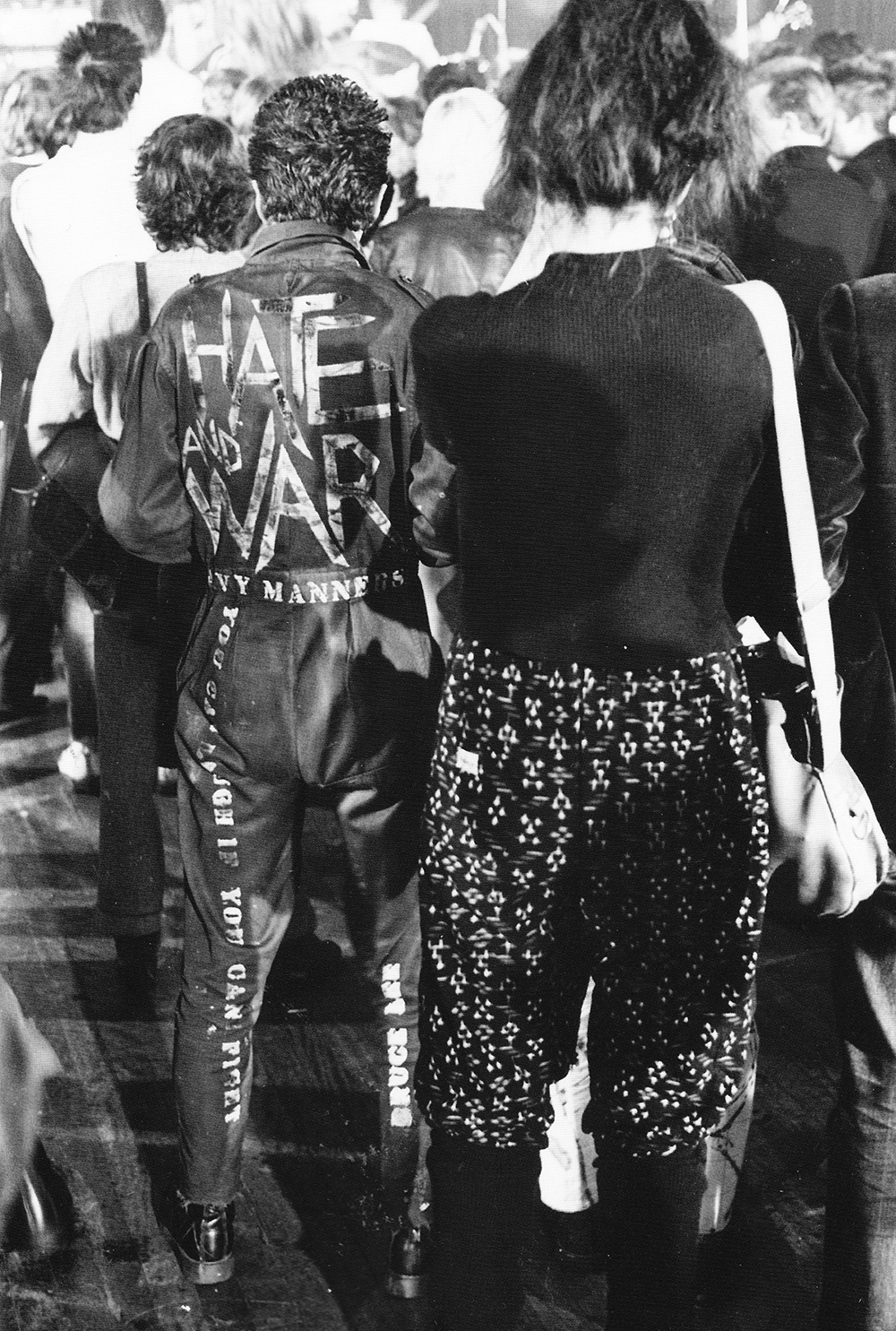
The third aspect dwelt on was Graffiti and Agitprop, typified by the spray painted and stenciled jumpsuits worn by The Clash. Tragically, the soundtrack in this section of the exhibit was ambient music, no Mick, Joe, Paul, and Tory-or-Topper to be heard. Among the current examples in this section was Vivienne Westwood's "Climate Revolution" design.
The last facet of the punk aesthetic touched upon in this exhibit was titled "Destroy", and hinged on the ripped-and-reconstituted look necessitated by poverty (refer to Monsieur Rotten's quote about safety pins and the arse of his pants).
All told, I wanted to see more chaos and less couture, to hear more of the raucous music I love so well. The exhibit was good, but I probably wasn't the target audience. Anyway, here's a video featuring Vivienne Westwood in her salad days on the King's Cross Road:
It was nice to see the Met playing homage to punk, they have a heavy metal exhibit every day.
The exhibit, situated on the second floor of the 'Met, started with a brief overview of punk's "Do It Yourself" aesthetic- an aesthetic born largely out of poverty, as slumming Lower East Siders in New York and working-class kids in England cobbled together distinctive looks out of worn clothing and found objects, forming a look which was calculated to shock middle-class sensibilities. One of the first displays featured a Vivienne Westwood designed red "parachute" tunic, paired with red bondage pants with a terrycloth drop seat. Ms Westwood, it must be noted, was one of the designers who shaped the English punk aesthetic in the 1970s, while running the boutique "SEX" with Malcolm McLaren, who went on to become the "Svengali" behind the Sex Pistols.
The next gallery focused more on the New York punk scene, including (hilariously) a mock-up of the men's bathroom of C.B.G.B.- thankfully, the exhibit did not replicate the hideous miasma which accompanied the original (let's face it, the club was a fetid hellhole, storied as it was). As there wasn't a single "fount" of fashion for the 1970's Lower East Side scenesters, this wasn't the most compelling portion of the show. The soundtrack of this part of the exhibit included snippets of such NYC classics as I Don't Wanna Go Down to the Basement.
Following on this was an exhibit of clothes sold at the various McLaren and Westwood run shops at 430 Kings Road, London. Among the infamous designs on display were the "Two Cowboys" shirt (modeled by Sid Vicious here), which was inspired by the gay fetish art of Tom of Finland, the "God Save the Queen" T-Shirt, and the "Tits" T-shirt (modeled by Steve Jones here). Additionally, there was a video filmed at the 430 King's Road shop featuring an individual completely encased in a latex bondage suit, complete with "gimp" mask. As an aside, Malcolm McLaren was fascinated by the topic of submission, and he asked the Sex Pistols to write a song about it, with hilarious results. The centerpiece of this area of the exhibit was a "compare and contrast" of the classic Westwood designs and contemporary designs inspired by the originals.
The next galleries explored four different aspects of the punk aesthetic, starting with "Hardware". This section started off with the safety pins, chains, and studs that adorned punk clothes. Johnny Rotten, in his typical blunt fashion, explained the provenance of the safety pin in punk fashion: “The arse of your pants falls out, you just use safety pins.” The exhibit featured designer clothes with gold faux safety pins, padlocks(Sid famously wore a padlock necklace), and studs.
The second aspect of the aesthetic that was explored was bricolage. This gallery featured plastic garbage- and shopping-bag dresses, and dresses made up to look like they were made out of newsprint. In this gallery, the sountrack featured snippets of Boredom by the Buzzcocks, New Rose by The Damned, and Identity by the X-Ray Spex.
The third aspect dwelt on was Graffiti and Agitprop, typified by the spray painted and stenciled jumpsuits worn by The Clash. Tragically, the soundtrack in this section of the exhibit was ambient music, no Mick, Joe, Paul, and Tory-or-Topper to be heard. Among the current examples in this section was Vivienne Westwood's "Climate Revolution" design.
The last facet of the punk aesthetic touched upon in this exhibit was titled "Destroy", and hinged on the ripped-and-reconstituted look necessitated by poverty (refer to Monsieur Rotten's quote about safety pins and the arse of his pants).
All told, I wanted to see more chaos and less couture, to hear more of the raucous music I love so well. The exhibit was good, but I probably wasn't the target audience. Anyway, here's a video featuring Vivienne Westwood in her salad days on the King's Cross Road:
It was nice to see the Met playing homage to punk, they have a heavy metal exhibit every day.
Sunday, July 21, 2013
De-Extinction, on the Radio and in the Blogosphere
Today, NPR's Studio 360 featured a story on de-extinction, the "resurrection" of extinct animals using cloning or, in attempts to "revive" the recently extinct wild forebears of domesticated animals, back breeding.
Last month, "Just Alison" wrote an excellent article about the ethics of de-extinction on her indispensible Biodiversity Revolution blog. She concentrates on the "de-extinction" of the wooly mammoth, which has been proposed (mammoth DNA would be implanted in the ova of extant elephants). In their wonderful book Carnivorous Nights: On the Trail of the Tasmanian Tiger my friends Margaret and Michael (I swear, I'm not being biased, the book is great) touched on efforts to revive the thylacine by implanting DNA into the ova of Tasmanian devils.
I am somewhat torn on the issue of de-extinction. While it would be cool to have passenger pigeons or Carolina parakeets back, any "resurrected" species would be mere simulacra of the extinct species whose DNA (probably "repaired" in the lab due to degradation of the DNA in preserved specimens) their somatic cells bear (never mind the fact that they would have mitochondrial DNA from the ova of another species. More importantly, the factors that led to the extinction of these species (loss of habitat, competition from invasive species, harmful human activity) have not been rectified. Any "resurrected" species would probably be limited to a few "hothouse flowers" (and not the good kind) languishing in zoos or the private reserves of the wealthy (I could well imagine Dick Cheney paying some serious cash just so he could shoot a wooly mammoth). As Alison, and many others, have noted, efforts at de-extinction would consume resources better spent on conservation, on preventing the extinction of species that we are in danger of losing.
As nice as it would be to have some of the "charismatic fauna", mega or otherwise, be brought back from oblivion, you don't just get to call a mulligan on extinction. Atrocities and screw-ups happened, we have to own up to that fact and decide to become better stewards of the planet. Our own survival may very well hinge on it.
Last month, "Just Alison" wrote an excellent article about the ethics of de-extinction on her indispensible Biodiversity Revolution blog. She concentrates on the "de-extinction" of the wooly mammoth, which has been proposed (mammoth DNA would be implanted in the ova of extant elephants). In their wonderful book Carnivorous Nights: On the Trail of the Tasmanian Tiger my friends Margaret and Michael (I swear, I'm not being biased, the book is great) touched on efforts to revive the thylacine by implanting DNA into the ova of Tasmanian devils.
I am somewhat torn on the issue of de-extinction. While it would be cool to have passenger pigeons or Carolina parakeets back, any "resurrected" species would be mere simulacra of the extinct species whose DNA (probably "repaired" in the lab due to degradation of the DNA in preserved specimens) their somatic cells bear (never mind the fact that they would have mitochondrial DNA from the ova of another species. More importantly, the factors that led to the extinction of these species (loss of habitat, competition from invasive species, harmful human activity) have not been rectified. Any "resurrected" species would probably be limited to a few "hothouse flowers" (and not the good kind) languishing in zoos or the private reserves of the wealthy (I could well imagine Dick Cheney paying some serious cash just so he could shoot a wooly mammoth). As Alison, and many others, have noted, efforts at de-extinction would consume resources better spent on conservation, on preventing the extinction of species that we are in danger of losing.
As nice as it would be to have some of the "charismatic fauna", mega or otherwise, be brought back from oblivion, you don't just get to call a mulligan on extinction. Atrocities and screw-ups happened, we have to own up to that fact and decide to become better stewards of the planet. Our own survival may very well hinge on it.
Saturday, July 20, 2013
The Passing of a Storied Storyteller
The big news today was the death of celebrated journalist Helen Thomas. While Helen Thomas is largely known for breaking into a largely all-boys White House reporters' club in the 1960's, I remember her most fondly for her questioning of Bush 43's motives for invading Iraq:
Helen Thomas was also willing to lambaste the Obama administration's unquestioning support of Israeli policies:
Her comments about Israelis' presence in Palestine, considered extremely controversial, ultimately led to her firing. Personally, I think her comments were a bit extreme (her "Jews go home" bit was ill-advised), but the unquestioning support of continued settlement in the West Bank in the U.S. media is more pro-Likud than pro-Israel, and many Israelis question this policy.
At any rate, my fondest memory of Helen Thomas was her video with Stephen Colbert.
She was one of a kind, perspicacious, often prickly... I am pained to say that I think her like won't be seen again.
Helen Thomas was also willing to lambaste the Obama administration's unquestioning support of Israeli policies:
Her comments about Israelis' presence in Palestine, considered extremely controversial, ultimately led to her firing. Personally, I think her comments were a bit extreme (her "Jews go home" bit was ill-advised), but the unquestioning support of continued settlement in the West Bank in the U.S. media is more pro-Likud than pro-Israel, and many Israelis question this policy.
At any rate, my fondest memory of Helen Thomas was her video with Stephen Colbert.
She was one of a kind, perspicacious, often prickly... I am pained to say that I think her like won't be seen again.
Friday, July 19, 2013
Roasting Like a Peanut
It's almost 11PM here in the NY metro area, and it's 91 degrees Fahrenheit (33 Celsius). This afternoon, the temperature peaked at about 103 (39) degrees. Around the five o'clock hour, I got a laugh out of one of our visitors. This particular visitor, a girl of about twelve years of age, was in our visitors' center with an older youth (probably her brother) and an elderly couple (probably her grandparents). Her companions were taking their time, shopping for souvenirs, when she decided to step outside. She lasted about two seconds, then turned right back around, fanning herself with a brochure. Yeah, I know how you feel, young lady, I was feeling all sorts of melty when I got to work.
The real problem is the heat retention- the pavement just exudes heat even though the baleful sun set around 8PM. The central air conditioning in the building turned off right before sunset, though the interior is still somewhat cool. If I felt overheated, I'd just ensconce myself in the basement men's room, where the tile floor is bound to be cool. It hasn't come to that yet, and I get out of here in an hour.
If there's any consolation, it's the fact that the wild raspberries have finally ripened. One of my wonderful co-workers told me she got enough to bake a raspberry tart for a family get-together. She had hoped to have a slice remaining after the party, but the tart turned out so well that it didn't survive the night. That bodes well for the coming week's foraging. I also heard a couple of teenagers in the local coffee shop talk about picking raspberries, and I was happy to hear that the youth is hip to the whole foraging thing. I wonder how the kids would feel about stinging nettles...
Anyway, things could have been worse, it could have been exactly 92 degrees, a temperature at which people get irritable.
EDIT: Found a better version of the clip...
The real problem is the heat retention- the pavement just exudes heat even though the baleful sun set around 8PM. The central air conditioning in the building turned off right before sunset, though the interior is still somewhat cool. If I felt overheated, I'd just ensconce myself in the basement men's room, where the tile floor is bound to be cool. It hasn't come to that yet, and I get out of here in an hour.
If there's any consolation, it's the fact that the wild raspberries have finally ripened. One of my wonderful co-workers told me she got enough to bake a raspberry tart for a family get-together. She had hoped to have a slice remaining after the party, but the tart turned out so well that it didn't survive the night. That bodes well for the coming week's foraging. I also heard a couple of teenagers in the local coffee shop talk about picking raspberries, and I was happy to hear that the youth is hip to the whole foraging thing. I wonder how the kids would feel about stinging nettles...
Anyway, things could have been worse, it could have been exactly 92 degrees, a temperature at which people get irritable.
EDIT: Found a better version of the clip...
Thursday, July 18, 2013
Car Woes
Today, I have a day off, and was basically hunkered down trying to cope with the outrageous heat that we are experiencing here in the City of Y______. It's flirting with triple digits, and the humidity provides for a heat index of about 105 degrees. Great... even I am having a bad hair day. I had been flirting with the idea of hitting the Hudson River Museum to see Federico Uribe's "Fantasy River" exhibit. Just before I was going to jump into a cool shower, I got a text message from a co-worker whose "check engine" light came on and her car was running rough, so she had to bring the car to her mechanic. I had to deal with that nonsense a few months ago, so I can totally empathize with her situation. Accordingly, I'm going to drag my sweaty ass to work so I can cover for her (can't leave good people in the lurch).
I have long maintained that the only thing worse than owning a car is not owning a car.
I don't know if Gary Numan would agree with me:
Oddly enough, I think the only song which sampled Gary Numan's "Cars" was a 1989 release by Cool G Rap and DJ Polo:
I remember "Cars" being ubiquitous the summer it was released, it received constant airplay. It's well-nigh inconceivable that the song hasn't been sampled more often.
I have long maintained that the only thing worse than owning a car is not owning a car.
I don't know if Gary Numan would agree with me:
Oddly enough, I think the only song which sampled Gary Numan's "Cars" was a 1989 release by Cool G Rap and DJ Polo:
I remember "Cars" being ubiquitous the summer it was released, it received constant airplay. It's well-nigh inconceivable that the song hasn't been sampled more often.
Wednesday, July 17, 2013
Post-Lecture Recap: Tomato Surprise
Last night, I headed down to the beautiful Bell House in the Gowanus section of Brooklyn for the latest Secret Science Club lecture, featuring Dr Zachary Lippman of Cold Spring Harbor Laboratory. Dr Lippman studies the flowers of tomatoes, applying basic plant biology to agriculture in order to determine how to improve yields. He characterized his efforts as using a bouquet of tomato flowers to feed the world. His interest in plant biology began with his quest to grow giant pumpkins, and he displayed a photo of himself showing off a 500lb pumpkin that he had grown.
The original wild tomato was characterized by tiny fruits. The first step in increasing the yield of tomato plants was breeding plants with larger fruits. By the time the Spaniards invaded the New World, the Native Americans had bred tomatoes similar in size to modern "beefsteak" tomatoes. One determinant of fruit size is the number of locules that the fruit possesses, and a process known as fasciation can effect the number of locules. Modern attempts to increase yields concentrate on increasing the number of inflorescences, clusters of flowers, that a plant has. A typical tomato plant has six to ten inflorescences.
Dr Lippman showed a couple of videos detailing tomato farming. He has grown tomatoes extensively in both Israel and on Long Island. Tomato plants are ideal for studying flowering because the flowers have both male and female sexual organs. In order to study fruits, crosses from different varieties are made- the male portion of the flower is removed, and artificial pollination is done with a tool modified from a dissection probe.
One key to studying genetics is determining what is "normal", and then studying mutants which deviate from the "norm". There are non-heritable mutations, known as somatic mutations- these occur after fertilization. As an example of a somatic mutation, Dr Lippman displayed a photo of a tomato fruit with a long "appendage" sticking out from it.
One factor which results in higher yields is the degree of branching in a plant- more branching means more fruits here's an article by Dr Lippman describing the effect of branching on tomato yields, specifically developing compound inflorescences. A protein known as "S protein" affects the degree of branching- S protein homozygosity results in high degree of branching but poor inflorescence and slower maturation, while S protein heterozygosity results in weaker branching but higher yields.
Flowering is a reiterative process, stem cells form structures called meristems- in the production of flowers, vegetative cells in the meristems transition to reproductive cells. Environmental cues (such as temperature and amount of light), as well as genetics effect flowering, and many genes and hormones are involved in flowering. Evolution is a master "tuner" of meristem regulation and inflorescence architecture.
Florigen is a protein produced in the leaves of a plant which triggers flowering. Another protein known as antiflorigen suppresses flower formation. The actual development of flowers depends on the ratio of these two substances. If anti-florigen is absent, the plant "self prunes"- there's a tension between florigen and antiflorigen, between vegetative growth and reproductive growth. In order to maximize yield, self-pruning must be delayed, if one copy of a florigen gene is "broken", the yield will be as much as 50% higher. Florigen heterozygosity combined with S heterozygosity provides for even higher yields.
Dr Norman Borlaug was one of the architects of the Green Revolution, which largely depended on mutations which resulted in plants of smaller stature but higher yield. Dr Lippman indicated that the breeding of even higher yield plants could result in a second green revolution.
In the Q&A, some bastard in the audience asked if polyploidy were a major factor in tomato genetics. As an aside, a lot of cabbage varieties and tetraploid (they have four sets of chromosomes) and wheat is hexaploid (it has six sets of chromosomes). Dr Lippman indicated that modern tomatoes are diploid, they only possess two sets of genes, but that polyploidy may have played a role in the development of domesticated tomatoes from their small, wild forebears- polyploids can undergo diploidization and revert to two sets of chromosomes.
This lecture was another fine production of the Secret Science Club. Dr Lippman not only provided great information about plant biology, but he provided a good overview of large-scale agriculture. It was a good reminder of where our food actually comes from. Here's a brief video introduction from Dr Lippman:
On an unrelated note, Bell House impresario, and Friend of the Bastard, Andy Templar (is that the coolest name ever?) gave me a sample of his Floyd's Kentucky Beer Cheese, specifically the bacon flavored variety. I give this "Product of Kentucky, Made in Brooklyn" two thumbs up- it was so good, it was practically sinful, and I'm not a churchly guy. Spread on day-old Italian bread, it made a really good quick meal after a long night of drinking and a tedious late-night subway ride. Seriously, people, get some. You won't be disappointed!
The original wild tomato was characterized by tiny fruits. The first step in increasing the yield of tomato plants was breeding plants with larger fruits. By the time the Spaniards invaded the New World, the Native Americans had bred tomatoes similar in size to modern "beefsteak" tomatoes. One determinant of fruit size is the number of locules that the fruit possesses, and a process known as fasciation can effect the number of locules. Modern attempts to increase yields concentrate on increasing the number of inflorescences, clusters of flowers, that a plant has. A typical tomato plant has six to ten inflorescences.
Dr Lippman showed a couple of videos detailing tomato farming. He has grown tomatoes extensively in both Israel and on Long Island. Tomato plants are ideal for studying flowering because the flowers have both male and female sexual organs. In order to study fruits, crosses from different varieties are made- the male portion of the flower is removed, and artificial pollination is done with a tool modified from a dissection probe.
One key to studying genetics is determining what is "normal", and then studying mutants which deviate from the "norm". There are non-heritable mutations, known as somatic mutations- these occur after fertilization. As an example of a somatic mutation, Dr Lippman displayed a photo of a tomato fruit with a long "appendage" sticking out from it.
One factor which results in higher yields is the degree of branching in a plant- more branching means more fruits here's an article by Dr Lippman describing the effect of branching on tomato yields, specifically developing compound inflorescences. A protein known as "S protein" affects the degree of branching- S protein homozygosity results in high degree of branching but poor inflorescence and slower maturation, while S protein heterozygosity results in weaker branching but higher yields.
Flowering is a reiterative process, stem cells form structures called meristems- in the production of flowers, vegetative cells in the meristems transition to reproductive cells. Environmental cues (such as temperature and amount of light), as well as genetics effect flowering, and many genes and hormones are involved in flowering. Evolution is a master "tuner" of meristem regulation and inflorescence architecture.
Florigen is a protein produced in the leaves of a plant which triggers flowering. Another protein known as antiflorigen suppresses flower formation. The actual development of flowers depends on the ratio of these two substances. If anti-florigen is absent, the plant "self prunes"- there's a tension between florigen and antiflorigen, between vegetative growth and reproductive growth. In order to maximize yield, self-pruning must be delayed, if one copy of a florigen gene is "broken", the yield will be as much as 50% higher. Florigen heterozygosity combined with S heterozygosity provides for even higher yields.
Dr Norman Borlaug was one of the architects of the Green Revolution, which largely depended on mutations which resulted in plants of smaller stature but higher yield. Dr Lippman indicated that the breeding of even higher yield plants could result in a second green revolution.
In the Q&A, some bastard in the audience asked if polyploidy were a major factor in tomato genetics. As an aside, a lot of cabbage varieties and tetraploid (they have four sets of chromosomes) and wheat is hexaploid (it has six sets of chromosomes). Dr Lippman indicated that modern tomatoes are diploid, they only possess two sets of genes, but that polyploidy may have played a role in the development of domesticated tomatoes from their small, wild forebears- polyploids can undergo diploidization and revert to two sets of chromosomes.
This lecture was another fine production of the Secret Science Club. Dr Lippman not only provided great information about plant biology, but he provided a good overview of large-scale agriculture. It was a good reminder of where our food actually comes from. Here's a brief video introduction from Dr Lippman:
On an unrelated note, Bell House impresario, and Friend of the Bastard, Andy Templar (is that the coolest name ever?) gave me a sample of his Floyd's Kentucky Beer Cheese, specifically the bacon flavored variety. I give this "Product of Kentucky, Made in Brooklyn" two thumbs up- it was so good, it was practically sinful, and I'm not a churchly guy. Spread on day-old Italian bread, it made a really good quick meal after a long night of drinking and a tedious late-night subway ride. Seriously, people, get some. You won't be disappointed!
Subscribe to:
Posts (Atom)