The conspiracy runs deep, and at least one 4Chan neonazi has detected a Jewish plot in the pushing of LGBT rex:
Ah, yes, the Rootless Cosmopolitans are at it again!
Here's another Brain Genius, commenting on a Vintage Dinosaur Art Facebook page, complaining about how the libs have ruined dinosaurs by discovering fossil evidence which forced a reassessment of what these animals looked like:
This is just a selection of a longer screed which is a farrago of racism, sexism, homophobia, transphobia, fatphobia, and a stubborn refusal to read the most recent research on dinosaurs. The entire manifesto can be heard, read by the hosts of the Minion Death Cult podcast:
A friend of mine who works in a museum shop knows that I am a sucker for renewable shopping bags, so she obtained for me a bag promoting Museum Shop Sunday, a counter to the ubiquitous Black Friday and Cyber Monday, and a companion to Small Business Saturday. It's a nice little bag that conveys the message without flash or fanfare:
I remember when museum shops were a thing... indeed, when museums were a thing. I haven't taken a trip to a museum in about a year... no dinosaur bones or sculpture or archaeological material for me. I used to be a big museum nerd, I still would be if things weren't shut down. How civilized this Earth used to be. It's these small, humanizing trips, journeys of the mind as well as the feet, which spice things up... it's their loss which contributed to the interminable stretch of this year.
As the daily number of cases nears 200,000, it seems as if museum trips aren't coming back for a long while. I miss the quirky shops, usually staffed with charming, witty people like my friend, and I sure hope that the smaller museums, often on unsteady financial footing to begin with, will survive. I bummed out enough about the dinosaurs being extinct, it would be unbearable if museums go extinct.
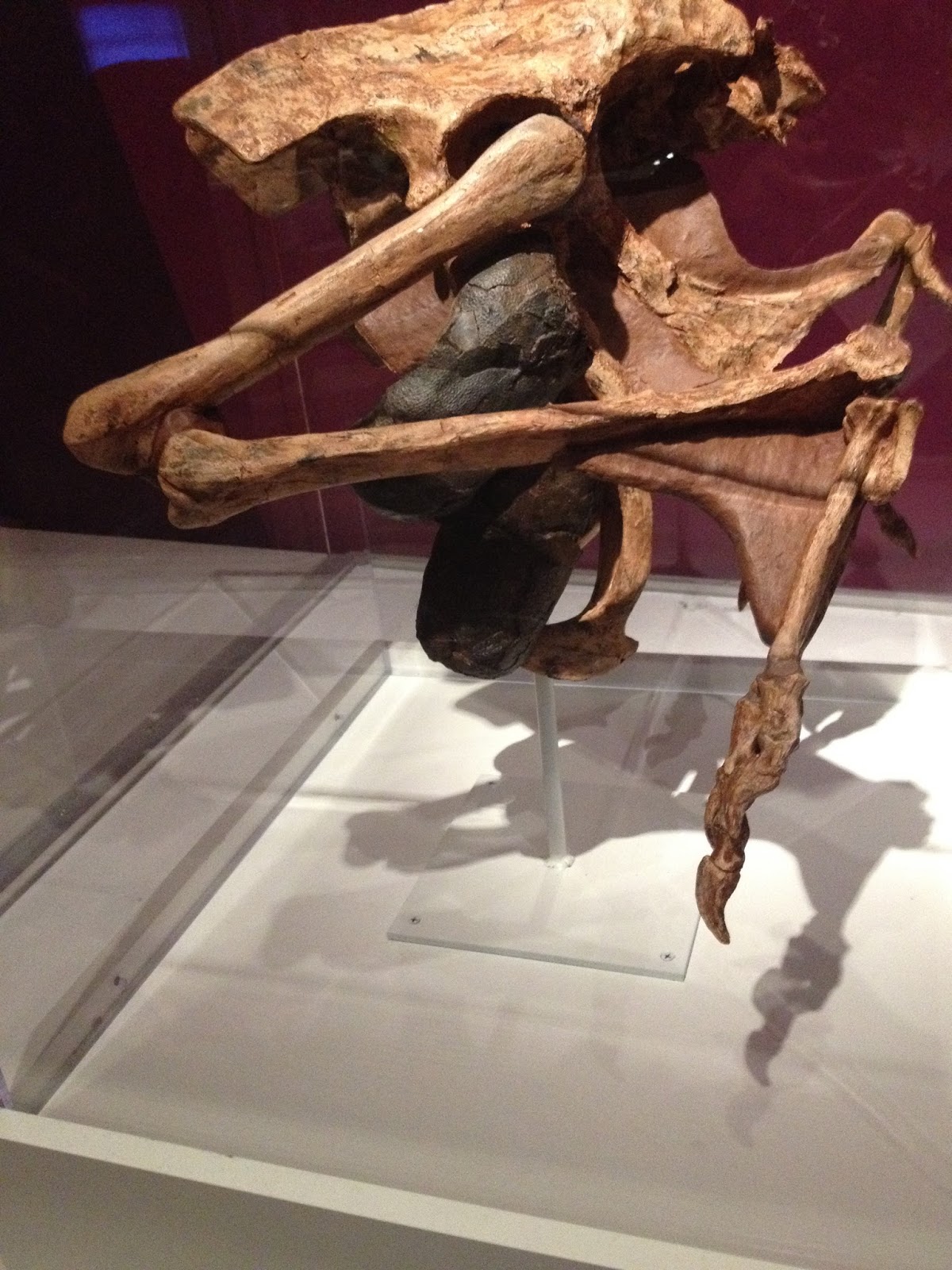
I figured I'd take a break from the stupid, bad news of the day, and post about an awesome subject... the first discovery of a dinosaur poophole/peehole/sexhole. Yep, paleontologists have found fossil evidence of a dinosaur cloaca, that Swiss army knife of a hole that birds and crocodilians, the closest living relatives of dinosaurs, use for the elimination bodily wastes and for reproductive purposes.
The cloaca in question belonged to a psittacosaur, a parrot-beaked, hornless relative of the celebrated Triceratops. Paleontologists can even surmise the color of the beasts' hide by studying the shape of melanosomes, which are pigment-bearing cells. Psittacosaurus was determined to be brown, with a lighter underbelly... no technicolor dinosaur here!
The discovery of an impression of a dinosaur cloaca now raises questions about... uhhhhhh... how dinos did it... Some birds just perform a brief cloacal contact to transfer sperm, others have large, alarming dongs that ballistically launch out of the males' cloacas. It's probable that large dinosaurs, had titanic tallywhackers to compensate for their lack of maneuverability during coitus... tortoises have improbably large dicks, one would imagine that similarly encumbered dinosaurs would be just as comically hung. It looks like Chuck Tingle was right all along!
Next Tuesday will mark two weeks since tropical storm Isaias hit the area, taking down a lot of trees, blocking roads, and downing power lines. Lingering power outages remained until a couple of days ago, and there are still trees and branches precariously dangling over roadways. Convoys of bucket trucks have been a feature on the local roadways, dispatched to the locales where problems remain.
Last night, while running an errand at Stop-and-Shop before working the graveyard shift, I saw an entire brigade of bucket trucks parked in the lot the supermarket shares with a hotel:
Truck-obsessed five year old me would have been sent over the moon by the sight of so much heavy equipment, arrayed like the closest equivalents we now have to the dinosaurs that also obsessed me (and still do). Older, staider me was sent over the moon by the site of so much heavy equipment deployed to get our infrastructure back in order.
For the record, our company e-mail still hasn't been restored since a post-Isaias power outage and generator malfunction (not to mention the fact that our IT guys are working remotely). At least I sent in my expense reports before this problem came up, by which I mean came down.
Today's horror comes from the ungovernable backwater regions of Florida... where we have a public hearing in which masks are described by MAGA morons as 'tools of the devil'. There's a lot to unpack here:
Floridians angrily claiming masks are the work of the devil because “they want to throw God’s wonderful breathing system out the door.” pic.twitter.com/5pDzU8ncwY
I've often said that the greatest trick the authoritarians ever pulled was convincing the world that the Devil exists. Funny how that Devil can be repurposed for any lunatic cause- in this case the portrayal of a responsible behavior for the common good as something evil. Yeah, we're through the Stupid Looking Glass here. On another note, as a science geek, I have to call into question that bit about 'God's wonderful breathing system'- frankly, the mammalian breathing system is trash... I mean, having to breathe in and breathe out in succession is bullshit, birds breathe so much more efficiently. It is this sort of respiratory system, which separates ventilation and gas exchange, which probably allowed dinosaurs to grow to mind-boggling sizes. Suck it, mammals, by which I mean suck air.
Lost in the general lunacy of this public hearing is perhaps my favorite part, a statement as subtle as it is stupid... one of the women says to a doctor, “I have many question marks about your degrees and what you really know”. And SHE's the one who told another woman to go back to school!
One of the more clickbaity articles that came my way today painted a picture of an Age of Penguins that occurred after the extinction of the non-avian dinosaurs (n.b.: I found a less clickbaity site for my link). Penguins the size of humans (kudos to the Canterbury Museum for dressing the woman used in the comparison picture as a penguin) swam through the seas of the Paleocene South Pacific. These birds, in a see recently freed from the marine reptiles which once ruled the seas, were worthy successors to the distantly related, toothed diving birds of the Cretaceous.
This, of course, leads me to the source of the post title, namely H.P. Lovecraft's novella At the Mountains of Madness, which featured six foot tall cave-dwelling penguins, 'monstrous in (their) combined albinism and virtual eyelessness'. Amidst all of the cosmic horror and grue, it's not a masterly move to try to make penguins scary... Mr Popper's Penguins, not a horror yarn.
Being very cognizant of my need to maintain my nerd credentials, one of the websites I frequent is the Tor science fiction site. One of their recent posts concerned a movie I hadn't heard of, a Czechoslovakian (therefore, somewhat old) science-fantasy film titled Cesta do pravěku, directed by Karel Zeman. The film begins with an adolescent boy finding a fossilized trilobite, and musing about seeing a live one, precipitating a dream sequence concerning of a Verne-esque voyage upstream and back through time in a 'magic cave'. It's a bit like the cast of Stand by Me starring in a less violence-fraught production of Jurassic Park. It's a leisurely paced film with a likeable ensemble, portraying plucky, resourceful kids engaged in a scholarly expedition. It's really a travelogue, with time, rather than distance, comprising the journey, and is a nice precursor to the BBC's wonderful Walking with Dinosaurs and Walking with Beasts series.
The prehistoric animals portrayed in the film are modeled after the paleoart of Zdeněk Burian, a personal favorite of mine (his paintings are gorgeous). The portrayal of these animals is woefully outdated, but comported with the science of the time. The dinosaurs look a bit hokey as well... the movie really shines when it depicts the mammals, and one terrible bird, of the Cenozoic Era- the models are more detailed than the dinosaur models, the action more convincing. The film nicely showcases such unsung prehistoric critters as Deinotherium and Uintatherium.
It's a fun watch for a paleo-enthusiast, and a nice low-key adventure/travel film... perfect for watching on a chilly Sunday morning in November after a night of drinking pivo
On Friday afternoon, I got a glimpse of a 'showdown' between representatives of the two great endothermic terrestrial animal lineages... put in normal person terms, a woodchuck got into a standoff with a family of geese:
This showdown was preceded by a tiff between two woodchucks, with one chasing the other right past the geese until the pursuer set off the parenting instinct of the adults. Confronted by two hissing theropod dinosaurs, the large rodent decided to beat a hasty retreat.
I had the advantage of being on a raised porch above this particular fray. I doubt that the woodchuck would have approached the vicinity if I had been at eye level.
Last night, I headed down to the beautiful Bell House, in the Gowanus section of Brooklyn, for this month's Secret Science Club lecture featuring paleontologist and entomologist Dr Phillip Barden of the New Jersey Institute of Technology and the American Museum of Natural History. Dr Barden specializes in the study of fossils of social insects such as termites and ants.
Dr Barden began his lecture with a short definition of paleontology. Paleontologists ask two main questions: What is the history of life on Earth? How does evolution work? Paleontologists study finite events, such as the extinction of the non-avian dinosaurs. Life on Earth is 3.7 billion years old, with humans occupying a miniscule span of time. Most life is extinct, almost everything that has ever lived is now dead. Dr Barden asked the audience to picture a fossil, immediately following this up with the admonition that not every fossil is dinosaur remains. Some of the most famous non-dinosaur fossils are trilobite and ammonite fossils. There are also environmental remains of organisms, such as footprints. His concentration is the study of fossil insects.
Eighty percent of animal species are insects, While dinosaurs, being charismatic megafauna, attract most of the public's attention, there are spectacular insect fossils, such as that of Meganeura, a dragonfly-esque creature with a wingspan attaining over two feet which hunted in the Carboniferous skies, which had a higher oxygen content than our modern atmosphere- insects breath through treachea, so the surface area of these tubes limit body size. Dr Barden also displayed a fossil of a Jurassic Era lacewing which resembled a butterfly.
The best-preserved insect fossils are encased in amber, fossilized tree resin (NOT SAP!). Resin is secreted when a tree is injured, forming 'scabs' in which organisms can be trapped. When subjected to heat and pressure through geological processes, it becomes polymerized- Dr Barden joked that amber is 'OG Plastic'. Amber, known to the ancient Greeks as 'elektros', produces electric sparks when rubbed. Insects trapped in amber are preserved in three dimensions. Dr Barden accompanied this portion of the lecture with gorgeous photographs of amber-trapped insects, such as two ants trapped in amber while fighting (evidence of a social structure).
Dr Barden then showed us the 'Mr DNA' clip (though not the Mr DNA you were thinking of) from Jurassic Park, noting that the stand-in for the giant prehistoric mosquito in the amber walkingstick ornament is actually a crane fly and chiding anyone who killed a harmless crane fly as a 'giant mosquito'):
Dr Barden noted that the book Jurassic Park was released in 1990, and that in 1992, it was reported that DNA was extracted from an Oligo-Miocene termite, but that this study posed a problem of reproducibility. DNA from bones has a half-life of 521 years and that new techniques for DNA extraction are constantly sought.
Dr Barden stated that the oldest ants were not like was expected- early ants were thought to be wasplike, having similar body plans. The oldest ants discovered were more like basal Hymenoptera than wasps, with the similarities in body resulting from adaptive radiation.
Dr Barden conducted 3D imaging of ant fossils at the Advanced Photon Source at Argonne National Laboratory, fluorescing specimens while rotating them to provide the three-dimensional images. He joked that he was the guy putting bugs in the machine. As a comedic aside, he displayed a stupid tweet by a Kardashian: Do ants have dicks? He then displayed a photo of a drone ant fossilized in amber, then zoomed in, showing us a dick pic of a 20 million year old ant.
The topic of the lecture then shifted to the vampire hell ants of the post title. Haidomyrmex scimitarus was a Cretaceous Era ant found in an amber deposit in Myanmar. A detailed reconstruction using animations based off CT scans of this ant suggested that it used its mandibles to impale other insects, and grooves in the mouthparts hint that these ants consumed the hemolymph of the impaled. Dibs on "Hemolymph of the Impaled" for the name of my Doom Metal band. The queen ant was found outside of the nest, and lacked fat storage, indicating that the queen had to forage like a common worker. The generic name Haidomyrmex is a combination of 'Hades' and the Greek term for 'ant', so Dr Barden decided to make 'Hell Ant' the popular term for these insects- he asked the audience members to 'hashtag' #hellant. Another similar 'hell ant', Ceratomyrmex had a horn as well as the impaling jaws. Then, a scan of an ant dubbed Linguamyrmex vladi revealed that the horn was so dense as to suggest that the horn contained sequestered metal, leading to such lurid headlines as: 'Meet the vampire ant from hell with huge jaws and a metal horn.' Dr Braden then displayed a succession of increasingly lurid and 'clickbaity' headlines about this ant. The good doctor then displayed an articulated model of this ant's head, about the size of an American football.
The hell ants thrived for about twenty-million years, during the Cretaceous Era. It is not known what happened to this diverse clade of ants. The earliest ants were social, there is evidence of different specialized castes among early ants. About fifty million years ago, ants became more abundant, ants now currently compose 50-80% of insects in tropical tree communities. The hell ants don't seem to have been all that ecologically impactful. There are many Cretaceous ant fossils. There is a gap in the fossil record until the Eocene, a sort of 'black box' from which only modern ants emerge, while having diverse behaviors, extant ants have similar body forms. Divergent forms, such as the hell ants, disappeared. Dr Braden likened this emergence from a 'black box' to the K-T extinction event, from which one lineage of dinosaurs, the birds, emerged.
Dr Barden posed a question: Does extinction mean failure? He displayed a picture of the thylacine, a wolf-shaped marsupial that was killed off by humans (as an aside, I am obliged to plug SSC goddess Margaret Mittelbach's Carnivorous Nights: On the Trail of the Tasmanian Tiger, co-written with SSC alum Michael Crewdson- it's a great book by good friends, a funny, sad, and informative read). Dr Barden offered his three measures of evolutionary success: Diversity of species (beetles, with over 350,000 species, are very successful), Ecological Impact (South African harvester ant foraging territories can be seen in satellite images, such is their ability to reshape their environment), and Longevity (Neandertals were around for 430,000 years while modern Homo sapiens has been around for about 300,000 years). Certain taxons were extremely successful- about twenty thousand trilobite species are known, which indicates that there were probably many more. The impact of the dinosaurs on other evolutionary lineages is difficult to understate. The hell ants were around for about twenty-one million years, great apes a mere eight million. We only see about .01, much of the evolutionary legacy is hidden.
The lecture was followed by a Q&A session, as always. The first question regarded the phenotype of the hell ants- the 'archtecture' of the hell ant lineage has been lost, no traces last into modern ant lineages. The next question was, why did the hell ants go extinct? While this is unknown, it could be that their social structure was outcompeted by the social structure of modern ants which supplanted them. Perhaps the hell ants were 'painted into a corner' evolutionarily. Another question regarded evidence of the large structures which ants and termites build- fossil remains of these structures have been found, and Dr Barden likened this evidence to an 'extended phenotype' which provides clues to the behavior of the insects themselves. Regarding the gaps in the fossil record, new amber deposits have been found in Alaska and compression fossils have been found in Alberta- gradually, the 'black box' is being filled in. Regarding the half life of DNA, while DNA sequences degrade, partial genomes provide information valuable to researchers. Some Bastard in the audience asked about molecular evidence from insects trapped in amber- can inferences be made about pigmentation or the composition of venoms? Dr Barden noted that coloration is often preserved in amber, and stingers are often present in fossil insects, but no molecular structures for pigments or poisons have been found. Regarding prey items of hell ants, they have been found in association with a larva of an insect and a cockroach like insect. The musculature of an insect, useful in computer modelling, can be inferred from bulges in the interior of the exoskeleton, to which muscles, inside the skeleton, are attached. Regarding the caste system of social insects, insects from the same species have the same genome but different gene expression- while a worker has a lifespan of 1-3 years, a queen may live as long as twenty years- transcriptomes play a role in this sort of development. The earliest known modern style ant dates back to the Cretaceous, about ninety-two million years ago, and was found in New Jersey- the lineage probably split off from other ant lineages about 120 million years ago. Finally, asked about his application of the species concept, Dr Barden indicated that, due to the nature of his work, he applied the paleontological species concept, largely working off whether specimens look similar or different.
Once again, the Secret Science Club delivered a fantastic lecture. I make no bones about loving the life sciences the most, so this lecture was right up my alley, or allele... Dr Barden hit what I call the 'Secret Science Sweet Spot'- the lecture was specific, extremely informative about recent discoveries, accompanied by gorgeous images of fossils, and leavened with humor. I call it a grand slam. Kudos to Dr Barden, the staff of the Beautiful Bell House, and Margaret and Dorian for another great monthly event. It was also great to see both the NJIT 'swarm lab' crowd with Dr Garnier and the AMNH crowd, represented by Dr Hekkala and her husband, in attendance. High fives to everyone!
Poking around the t00bz, I found a fun video of Dr Barden giving a tour of the AMNH insect collections to a budding young entomologist:
I only have one quibble, and that's because bugs suck. The video, however, is great. Pour yourself a nice beverage, and watch two cool young dudes talk about SCIENCE!
Dr Frank's talk riffed on the topic of the book- the research behind it came out of being a science writer who specializes in outreach. In the book, he wanted to address climate change denialism. An astronomer looks at what happens to planets undergoing climate change differently than a typical climate scientist. Regarding climate change, the problem can't be solved unless it is understood, and it can't be understood unless its story can be told. Anthropogenic climate change being a recent phenomenon, there is no broad story about it. The story that must be pieced together is: what is the human future on a climate-changing planet? Currently, there is an anthropogenically driven change in the planetary climate state from 'warm and moist' to an unknown state. Climate change will be accompanied by resource depletion, most dangerously, a depletion of potable water.
"Air pollution is no longer confined to isolated places. This generation has altered the composition of the atmosphere on a global scale through radioactive materials and a steady increase in carbon dioxide from the burning of fossil fuels. Entire regional airsheds, crop plant environments, and river basins are heavy with noxious materials. Motor vehicles and home heating plants, municipal dumps and factories continually hurl pollutants into the air we breathe. Each day almost 50,000 tons of unpleasant, and sometimes poisonous, sulfur dioxide are added to the atmosphere, and our automobiles produce almost 300,000 tons of other pollutants. "
Currently, climate change denialism is another aspect of our political polarization.
In 2000 publication, Paul Crutzen and Eugene Stoermer coined the term Anthropocene (PDF) to describe the current geological epoch in which human activity is a fundamental driver of coupled Earth systems. Humans are altering the planet to the extent that researchers a million or two years in the future could be able to detect isotopic evidence of human activity. Humanity is pushing the levers on climate, biodiversity, the nitrogen cycle, and the phosphorous cycle. In 2009, Johan Rockström of the Stockholm Resilience Centre led an effort to describe the planetary boundaries within which humanity could thrive and to foster stability. Dr Frank described the Anthropocene with a wonderful turn of phrase: We have reached a mythic power regarding planetary change.
Dr Frank characterized his fusion of astrobiology and the Anthropocene as the 10,000 light-year view. Astrobiology is the study of life in an astronomical perspective. The difficulty in astrobiological studies is that it involves an N=1 problem because we only know of one life-bearing world. That being said, there were three revolutions in the field: the first being the discovery of exoplanets, the second being the exploration of the solar system, and the third being an exploration of Earth's distant past.
The existence of life on other planets has occupied the human imagination for millennia, with optimists and pessimists vying for public acceptance. Epicurus believed that extraterrestrial life was common while Aristotle believed that Earth is unique. Newton believed in extraterrestrial life, but by 1900, pessimism regarding life beyond Earth was ascendant. In 1995, NASA's Kepler Space Telescope detected the first concrete evidence of an exoplanet. Since then, planets have been found wholesale- almost every star has planets orbiting it, with one in five stars having planets in the Habitable Zone- that region around a star in which liquid water can exist.
The exploration of the solar system has proceeded apace, with all sorts of objects (planets, asteroids, comets) being visited. Climate is the generic status of all planets with an atmosphere, and climate models exist for the other planets of the solar system (PDF). Climate is a universal planetary phenomenon. Mars used to be a blue world, with a vast amount of liquid water. Dr Frank described its current state as hellish, a cold and nasty place, and joked 'bring your blanket!' He then noted that you can change your planet, it might not be the one you grew up on.
Dr Frank then showed us an image of various planets and asked us to identify them- they all turned out to be artists' conceptions of the stages of Earth's development, much like depicted in this gorgeous painting. At one stage, the Earth was molten. At another stage, before the formation of continents, the only landmasses were cratons. At another stage, it is believed that there was a Snowball Earth. During the Paleocene-Eocene Thermal Maximum, it is believed that Earth had no sea or land ice. Dr Frank quipped that the Earth has worn many masks.
The study of the Earth's past involves the study of many Earth systems: the co-evolution of the atmosphere, cryosphere, hydrosphere, geosphere, and biosphere. The Holocene, the geological epoch which encompasses our current Anthropocene, is one of many interglacial periods. AlL of human history has taken place in this epoch, approximately the last 10,000 years. Dr Frank posed the question, what would you experience if you landed on Earth three billion years ago? The answer is that you would asphyxiate because of a lack of oxygen in the atmosphere. The presence of free oxygen in the atmosphere is due to life- the Great Oxidation Event occurred when cyanobacteria 'farted out' oxygen as a waste product of photosynthesis. Life has changed the atmosphere over and over again. Successful species are numerous, but such success can lead to catastrophes- the cyanobacteria changed the atmosphere enough that it killed most of them off.
In 1979, James Lovelock and Lynn Margulis formulated the Gaia Hypothesis, the idea that the planet changes to maintain life. The hypothesis was controversial due to the notion of a teleological planet, a planet that 'wants' life, even though evolution is a blind processs. The idea of a 'living' planet led to some loopy interpretations in the public imagination, which led to some pushback, but it is undeniable that life plays an enormous role in Earth's systems dynamics. Earth and its life have been evolving together as a coupled system for a long time.
Dr Frank's research involves the study of astrobiological systems to determine if sustainable versions of our type of civilization are possible. Do industrialized civilizations like ours burn out in two hundred years? Astrobiological studies can inform us of new perspectives on our trajectory into and through the Anthropocene. How common are 'anthropocenes'? How fatal are 'anthropocenes'? What is the average lifespan of an industrial civilization? What are the characteristics of planets that survive an 'anthropocene'? Dr Frank urged us to take the prospect of exocivilizations seriously.
At this time, I will leave off the recap for now because bar trivia beckons- what good is learning while intoxicated if one cannot follow it up with showing off intellectually while intoxicated? I will finish this recap tomorrow...
By which I mean today!
Different stars have different characteristics. A star with a different spectrum from our sun would mean that photosynthesis on a planet orbiting it would differ from terrestrial photosynthesis. There are no tools in the toolbox to constrain our models focusing on the co-evolution of civilization and planetary systems. One definition of civilization involves the use of energy by intelligent lifeforms. A problem with studying astrobiology is the bad prosthetic forehead variety of science fiction- aliens provide a snicker factor. The search for extraterrestrial intelligence can be refined, as Dr Frank put it, "This is not your grandfather's SETI." Mentioning the excitement over the discovery of a possible extrasolarian megastructure, he exhorted us: "Consider the possibilities!" Within the next thirty years, we may have data relevant to the possibility of extraterrestrial life. For example, atmospheric signatures of industrial civilization include methane and CFCs.
The theoretical studies of exocivilizations involve a battle between optimists and pessimists. Astronomer Frank Drake formulated the Drake Equation, a theoretical exercise to estimate the possible number of detectable extrasolar civilizations, expressed as:
N is the number of detectable civilizations. R* is the average rate of star formation. Fp is the number of stars with planets. Ne is the number of those stars which have planets which can sustain life. Fl is the number of those planets on which life develops. Fi is the number of those planets which develop intelligent life which can produce civilizations. Fc is the number of those civilizations which have developed detectable communications technologies. L is the duration of time in which those civilizations release detectable signals.
Dr Frank posed the question: What sub-questions in the Drake Equation can be answered? Are we the only instance in cosmic evolution that intelligent life evolved? This ultra-pessimistic view would be a one in ten billion trillion chance. Even a pessimist like Ernst Mayr was ten million times more optimistic than that. Most pessimists would get a universe full of civilizations of two hundred years' duration.
Building world civilizations involves planetary feedback- 'anthropocenes' have probably happened before. We now know enough about planets and how they respond to to anthropocenes to begin how species will drive planetary feedback. Science is about constraining imagination, and the astrobiological/archaeological models are based on the predator/prey population models formulated by Lotka and Volterra:
Predator numbers tend to go up after the amount of prey increases, and crash after the prey numbers crash. Dr Frank used similar equations for population and planetary temperatures- he quipped that planets are machines, push hard enough and they go off. The models used for the equations were based on the population of Easter Island, as detailed in his May 2018 article in The Atlantic. Running multiple scenarios, he determined that there are three main results. The first is a mass die off as population exceeds the planet's carrying capacity. The second is the achievement of sustainability- a soft landing to a steady state is reached. The last is a true collapse, perhaps a runaway Venus scenario.
Dr Frank posed the question, what does the astrobiological perspective change? He joked that he is from New Jersey, so he is naturally combative, then noted that this is not a battle to save the planet- as Lynn Margulis joked: "Gaia is a tough bitch." The planet has been the scene of five known mass extinctions, and the only reason why we are here is because the non-avian dinosaurs went extinct, leaving ecological niches for our ancestors. What are we trying to sustain? What moral imperatives do we invoke to do so? Dr Frank showed the picture of the polar bear stranded on a melting ice flow and noted that it is an apex predator that would easily kill you. He then stated that humans can no longer practice ecological hooliganism. Even if humans are successful in reaching sustainability, there will be no more ice ages. Climate change poses a probably existential threat to the project of civilization, but Earth will survive even if we do not. Ecologically, the Earth's phytoplankton is more important than the charismatic megafauna usually invoked in ecological pleas.
Dr Frank urged activists to stop with the human hate- the goal should be to sustain the climatic conditions that are amenable to the project of civilization. Sustainability goals should balance a technologically advanced, energy intensive, high population with quality of life. 'Hockey Stick' diagrams won't change the narrative, stories are needed and the wrong story is 'we suck'. Cities are ecosystems just like forests, they have just been invented recently. The wrong question to ask is 'did we change climate?' The right question is 'what did we expect?' When oil was discovered, humans did not set out to change the climate, it was a mistake resulting from one particular sort of energy production. Our mistake now is to keep using fossil fuels. Climate scientist Raymond Pierrehumbert characterized climate change as 'Humanity's Final Exam'. Through right action and skillful means, we might just pass it. If we acknowledge that planets have rules, and achieve sustainability, we might create an 'awakened' planet on which the biosphere and civilization can flourish together, and the Gaia hypothesis can be realized.
The lecture was followed by a Q&A session. The first question involved mass extinctions, and Dr Frank noted that the biosphere would be happy to move on without us, and the burden falls on us to 'think like the biosphere' to benefit ourselves. Some bastard in the audience asked the good doctor for his opinion on the theoretical notion that a planet had 'one shot' to produce a high-tech civilization, because a failing civilization would 'spend all the startup capital' and impoverish any successors. Happily, Dr Frank's colleague Gavin Schmidt posed a speculative scenario in which a high tech civilization evolved millions of years before humanity. What sort of evidence would survive, say, thirty-five million years? Could climate change end one civilization and set up the cycle of fossil fuel production for the next civilization? Would a wind powered civilization be possible? What does a planet provide? What would our footprint be millions of years from now? It would be weird isotopic anomalies.
Regarding Mars, it is not Planet B. There is no way to move a mass of population and enough resources to sustain them to the red planet. Dr Frank then joked that we should 'fuck up' Mars- as we are triggering climate change, we are becoming spacefarers, and the price for climate change is the rest of the solar system.
Regarding the lifespan of technological civilizations, Dr Frank joked that, two hundred years ago, anyone traveling more than thirty miles per hour would be falling to their death.
Regarding the Fermi Paradox, Dr Frank noted that SETI funding has been slim, and that, if space were an ocean, we have only looked at at thimble. If there were aliens which could travel at approximately the speed of light, they could have disseminated throughout the galaxy in six thousand years, but if they had visited Earth, any traces would have been lost, so researchers should (shades of Arthur C. Clarke) look on the moon. I have my own theory about the Fermi Paradox.
Asked for the most effective story about climate change, Dr Frank opined that climate change shows us how powerful we are. He advised us not to bother talking to hardcore climate denialists, and noted that carbon dioxide doesn't care who you vote for.
Regarding Easter Island models, he noted that in most cases the population of the island exceeds its carrying capacity... sustainability is almost impossible. Carrying capacity studies for the planet use real climate models, with the parameters being based on energy sources. Even using wind power as a parameter, a two-degree change is expected. He noted that doctors don't only study sick people, and that many models are needed.
Asked about what technologies are needed, Dr Frank noted that we must get off fossil fuels and develop renewables. He noted that, near his Rochester campus, there are four bits of transportation infrastructure: the Erie Canal, a railroad, a highway, and an airport. Infrastructure changes, technologies change.
Dr Frank delivered a really great lecture- while much of it was speculative, it was a valuable intellectual exercise, and a call to action. I particularly dug the almost Lovecraftian evocation of vast periods of time, unburdened by Lovecraftian cosmic indifference and other less pleasant baggage. This was a superfun think piece. Kudos to Dr Frank, Dorian and Margaret, and the staff of the beautiful Bell House. Here is a video of Dr Frank discussing his new book:
Pour yourself a libation and soak in that SCIENCE!
ADDENDUM: Here is a short, sweet video featuring Dr Frank:
Hoplosuchus kayi was a seven-inch long crocodilian with relatively long limbs from the Upper Jurassic. It most likely ate insects and other small vertebrates. Simosuchus clarki was a small, probably-herbivorous crocodilian from Late Cretaceous Madagascar. Sarcosuchus was a huge croc, attaining lengths up to forty feet, which lived in Cretaceous Era Africa and South America. The alligator-like Deinosuchus, which haunted the waterways of Cretaceous North America, attained lengths of about thirty-five feet, and there is evidence that it even fed on such formidable prey as tyranosaurs such as Appalachiosaurus. Thecachampsa antigua was relatively recent, living from the Oligocene to the Middle Pleistocene in present day Florida- it's closest living relative is the false gharial. Steneosaurus was a Jurassic Era marine crocodilian, as was Metriorhynchus. Kaprosuchus was a 'boar-tusked' terrestrial crocodilian from Cretaceous Era Africa, and Anatosuchus was a 'duck-billed' crocodilian, also from Cretaceous Era Africa.
The highlight of the exhibit were the live crocodilians, four species worth- including adorable baby American alligators (Alligator mississippiensis), African Slender-snouted Crocodiles (Mecistops cataphractus), African Dwarf Crocodiles (Osteolaemus tetraspis), and the critically endangered Siamese Crocodiles (Crocodylus siamensis). One highlight of the visit was seeing one of the young Siamese crocodiles clambering from the water to a high-and-dry spot... a bunch of us joked that we had caught the beast at its best, and it would be a couple of hours before it moved again. A centerpiece of the exhibit was the mounted carcass of Gomek, a saltwater crocodile which attained a length of 17 feet 9 inches and a weight of almost a ton.
Once again, my preference is to visit these exhibits multiple times in order to catch everything. This particular exhibit is a traveling production... if it comes to a venue near you, please check it out, it's gorgeous.
On Monday, I returned to the American Museum of Natural History for the last day of the Dinosaurs Among Us exhibit, which I had covered in a previous blog post. As I mentioned in that previous post, one of the centerpieces of the exhibit is a life-sized model of Yutyrannus huali, a thirty-foot long feathered tyrannosaur. There was also a cast of the fossilized skeleton of Yutyrannus, demonstrating the feather impressions.
One non-dinosaur archosaur featured in the exhibit was Effigia okeeffeae, a relative of the crocodilians which, through convergent evolution, resembled the ornithomimid dinosaurs that evolved much later.
Perhaps the most unusual dinosaur in the exhibit, represented by a small placard, was Yi qi, an oddball dinosaur from the Late Jurassic which, while feathered had membranous wings similar to those of a bat. Yi was probably a glider, and it represents a 'failed experiment' in dinosaurian flight... the fact that flight, or at least gliding, evolved in two vastly different forms in the dinosaur lineage is pretty mind-blowing.
The other displays, displaying evidence of nesting behaviors and casts of brains, didn't fail to amaze on a second visit. One pelvis of an oviraptorid dinosaur provided evidence that these dinosaurs had two oviducts, 'egg tubes', while modern birds have one:
Also, there was a life-sized model of a Velociraptor, resplendent in dove-gray feathers:
These dinosaurs were about the size of a wild turkey, and would not have served well as threats in a Spielberg movie.
This local news story gives a brief snippet of the exhibit. If it arrives in a museum near you, I would advise you to check it out, but in the interest of full disclosure, I am a huge dinosaur nerd.
I'm going to preface this post by saying that I am not antisocial- I have a job which often involves interacting with the public, I have friends and acquaintances from a diverse array of backgrounds, who I have met through a diverse array of activities. That being said, I typically prefer to go to museums alone. When you go to a museum with a bunch of people, you spend time figuring out what you want to see, and if you decide to split the party, you spend time figuring out a rendezvous point and you spend time traveling to said rendezvous point. Don't get me wrong, I love to go to museums with people, but when I really want a museum experience, I go alone... this is precisely why I have a membership to the American Museum of Natural History- I have the luxury of attending the museum every single day of its operation, should I wish to go.
Yesterday, I spent a few hours nerding out at the museum. It was the final day of both the Dinosaurs Among Us and the Crocs exhibits. I attended both of these exhibits with friends, and had a great time watching their kids learning about these creatures, but I wanted a solo archosaur immersion for a few hours. Birds and crocodiles are both archosaurs, the birds being the descendants of dinosaurs and the crocodilians being distant cousins. I missed some details of the exhibits in my previous visits, which is precisely why I attend these exhibits multiple times... membership has its benefits, besides being able to waltz past the long general admission lines. I will post addenda to my older posts over the next couple of days.
I would do it tonight, but I'm headed out for bar trivia night... as I wrote, I'm not antisocial.
Last night, I headed down to the beautiful Bell House, in the Gowanus section of Brooklyn, for this month's Secret Science Club lecture featuring evolutionary biologist Dr Rafael Maia of Columbia University. Dr Maia titled his lecture 'The Colorful Sex Lives of Birds'. He noted that he isn't exactly the best birder, often having trouble finding his subjects in the field. He noted that the 'bird nerd' image is somewhat justified, with birders planning their honeymoons around adding to their life lists. He noted that he first became interested in studying birds by watching Jurassic Park, specifically the scene in which Sam Neill lectures an annoying kid who says that stating dinosaurs are like birds is dumb:
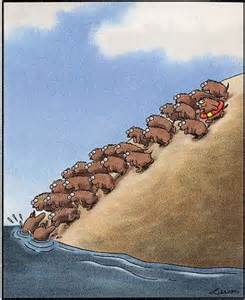
Charles Darwin observed that evolution occurs through natural selection. First, there is variation among members of a species. Secondly, there is heritability- variations are passed on to offspring. Finally, there is selection- some individuals are better at surviving and will be selected for better reproductive outcomes. To illustrate the concept, Dr Maia showed us a slide of one of Gary Larson's Far Side cartoons:
The lemming with the lifesaver will beat out the other lemmings in the selection process. Darwin knew nothing about genetics when he formulated his theory of evolution by means of natural selection. Darwin also wrote about the expression of emotion in man and animals, speculating whether or not behaviors are heritable and selected for. Is a particular behavior critical for reproductive success or not? Dr Maia showed us a video of the mating dance of the greater bird of paradise (Paradisaea apoda) from the Cornell Ornithology Lab's Birds of Paradise website:
Dr Maia quipped that sex and death are the only things that matter in evolution- reproducing is more important than survival itself. Why do most multicellular organisms have sex, why don't they just clone replicas of themselves? There are benefits to sex, advantages to gene mixing, such as disease resistance. Why are their two sexes, why not ten? There are two problems which must be solved by gametes- mobility and nutrition. Gametes need to move and they need to nurture developing offspring. If all gametes were identical, they would not be able to solve these two problems optimally. Thus, there are two types of gametes- tiny ones adept at moving (sperm) and large ones good at nurturing (ova). Occupying the middle ground is not so advantageous. Metabolically, sperm are cheap to produce but ova are expensive to produce. On the most basic level, the one thing which defines whether an individual is male or female is whether it produces small gametes or big gametes.
One aspect of natural selection is sexual selection, the ability of an organism to successfully reproduce with a mate. Females produce big gametes, which are expensive to produce, so they produce fewer gametes than males do and typically seek fewer mates. Males produce a lot of cheap gametes, so they tend to mate with more partners than females do. For females, sexual selection is weak- there is little variation in reproductive success. Males undergo strong sexual selection, they must mate often for reproductive success. It benefits females to be choosy, while it benefits males to go for quantity. Males tend to have more variation in looks as well as in reproductive success.
In the case of Arizona house finches, females prefer to males whose plumage exhibits a greater degree of carotenoids. Carotenoids are derived from the diet and are an important anti-oxidant, put putting pigments in feathers is a luxury- excess pigment is a sign of better health, and most likely better genes.
Dr Maia then showed us a video of the mating dance of the blue manakin (Chiroxiphia caudata), which engages in a competitive group pre-mating behavior known as lekking:
Typically, one alpha male gets to mate with the female, the other males acting as 'wingmen'. The younger, less dominant males learn how to perform the mating dance by observing the alpha male in a joint reproductive effort.
Dr Maia joked that sexual selection among birds can produce crazy behavioral traits and crazy morphological traits, then showed us a video of a club-winged manakin (Machaeropterus deliciosus) beating its wings together over one-hundred times a minute to produce a sexually appealing stridulation:
One of the pitfalls of the traditional view of sexual selection is that it tends to 'erase' the female story, something alluded to in Sarah B. Hrdy's The Woman that Never Evolved, which opens with the sentence, "Biology, it is sometimes thought, has worked against women." While females were often dismissed as passive and ignored in studies of evolution, female behaviors are important in evolutionary success. Most bird species, about ninety percent, are monogamous. In most cases, they are sequentially monogamous, they form pair bonds for a breeding season, but mating for life is not the norm. In contrast, about three percent of mammal species are monogamous. It is thought that monogamy in birds may be due to low variation in sexual selection- males and females have similar selection pressures, even though males tend to be more ornamented than females. Even though monogamy is the norm, extra-pair paternity is found in seventy-five percent of bird species. Extra-pair young are found in about one in five nests, about ten to twenty percent of offspring are merely social offspring, not biological offspring.
The Australian superb fairy-wren (Malurus cyaneus) forms monogamous social pairs (males present females with flower petals in courtship), but both males and females engage in extra-pair copulation. In the case of these birds, females don't necessarily go for the most attractive males, but for neighboring males, favoring early risers (Mr Right-now is preferred to Mr Right). Dr Maia joked that, among fairy-wrens, it's better to be ugly than to be isolated.
There are even birds which exhibit a sex-role reversal, the wattled jacacna (Jacana jacana) being a prime example. Female jacanas are larger than males, have bigger wattles, and tend to be more aggressive. Females are polyandrous, mating with multiple males- they produce a lot of eggs which the males will incubate. Females will even break other females' eggs and mate with the the bereaved fathers. Jacanas inhabit a tough environment, one in which the loss of eggs to predation approaches ninety-percent. For female jacanas, the eggs are not that expensive, and the males do the work of nurturing. Dr Maia stressed that it is not a good deal to overgeneralize when discussing reproductive roles.
Dr Maia then veered into the 'JUST PLAIN NASTY' aspects of bird reproduction. This involves ducks, so here's a huge TRIGGER WARNING for anyone who wishes to avoid discussions of violent, outré sexuality. Male ducks will attack females, often nearly drowning them in order to prevent them from escaping. Male ducks will copulate with other male ducks, even dead ones. Male ducks, unlike most birds, which merely engage in cloaca-to-cloaca sperm transfer, have evolved elaborate 'penes' WARNING: CANNOT UNSEE FOLLOWING VIDEO:
There is an immense diversity of morphology and behavior, which Dr Maia cited as the overarching basis of his research. He then presented us with a video of a blue-black grassquit's (Volatinia jacarina) leaping display:
The male grassquit defends a small territory, and its leaping displays showcase the color of its plumage.
While humans have three types of cone cells, resulting in trichromatic vision, birds have a fourth type of cone cell that allows them to see into the ultraviolet. Often, the males will have plumage which reflects UV light in order to attract females.
Dr Maia then shifted the topic of his lecture to the ways by which bird plumage derives its colors. Generally speaking, brown and red plumage results from pigments while green and blue plumage results from structural elements which reflect colors. The brown pigments in feathers results from the pigment melanin, which is collected in structures known as melanosomes. The reddish pheomelanin and the brown and black eumelanins form in differently-shaped organelles, which allows paleontologists to make educated guesses about the colors of dinosaur plumage using microscopy. In one dramatic case, paleontologists were able to determine that Anchiornis huxleyi probably had black and white plumage with a reddish crest. Ornamentation preceded flight, with complex plume patterns probably being the norm among dinosaurs. Yellow, orange, and red pigments are due to pigments known as carotenoids. Pigments result in a limited palette, which is insufficient to explain the variety of bird coloration.
The palette of bird colors is vastly expanded by structural colors. There are no known blue pigments, and very few green pigments used by animals. Structural colors result from the reflection of light- Dr Maia likened this effect to the iridescence of soap bubbles. The structure of a feather is complex, with differing pigment layers which absorb, reflect, and refract light. Some wavelengths cancel each other out, some reinforce each other. An expert can predict the structural factors which will result in particular colors. In birds, the brightest colors tend to be structural, as Dr Maia illustrated with this amazing video of a male Costa's hummingbird (Calypte costae) trying to impress a female with his iridescent mantle:
Dr Maia then ticked off some of the benefits of studying structural color in bird plumage, such as a new kind of mirrorless laser, improvements in fiber optics, improved camouflage, even better cosmetics.
There are different types of melanosome arrangements, with flat melanosomes producing less light absorption, hollow melanosomes have a major impact on iridescence, and a combination of flat and hollow melanosomes adding to the color palette. Dr Maia cited the African starlings as having a wide array of melanosome arrangements and the resultant optical complexity. The different color palettes among the starlings, derived from different melanosome morphologies, drive faster speciation and greater diversity.
The lecture was followed by a Q&A session, in which I was beaten to the punch by a gentleman who inquired about brood parasites such as cuckoos and cowbirds... how do they fool their victims? Dr Maia hypothesized that the calls of baby birds are probably similar enough that the adults don't figure out that something is wrong. Some bastard in the audience asked specifically about the hypothesis that ornamentation was correlated with lower parasite counts. Dr Maia reiterated that ornamentation was generally a good indicator of health and good genes, followed by a brief overview of the handicap hypothesis.
All told, this was another fantastic lecture, a feather in the cap of the Secret Science Club. My main interests lie in biology and the study of evolution, so this lecture hit the 'Secret Science Sweet Spot' for me- it was a great overview of bird reproductive strategies and the anatomy of feathers, illustrated by incredible video footage. I'm a bird nerd, and a dino nerd, so Dr Maia knocked it out of the park in my estimation. Kudos to Dr Maia, Margaret and Dorian, and the staff of the beautiful Bell House.
Longtime readers of this blog will know that I am enamored of dinosaurs. I never quite grew out of that dinosaur mania that all young children gain and some of us never lose. Needless to say, I was ecstatic to hear the news that a probable fossil of a dinosaur brain was recently discovered. The fossil, thought to be that of an ornithischian dinosaur related to Iquanodon, appears to be similar to the brains of crocodilians and birds, the closest living relatives of the dinosaurs:
One seemingly odd thing about the dinosaurs is that modern birds are descended from the saurischian, or 'lizard-hipped' dinosaurs rather than the ornithischian or 'bird-hipped' dinosaurs. The bird hip of the ornithischians is thought to have a 'swept back' pubis in order to accommodate big intestines in order to cope with a vegetable diet. The maniraptoran dinosaurs, including the birds, also have backwards pointing pubic bones... if I recall correctly, this is thought to be an adaptation to improve balance.
Modern birds aren't that closely related to the Iquanodon-like dinosaur which had its brain structure preserved, so extrapolating intelligence for this dinosaur is a risky enterprise. That being said, certain birds exhibit a remarkable degree of intelligence. Meanwhile, there is plenty of evidence that dinosaurs cared for their young (in one case of tragic character assassination, Oviraptor was dubbed an 'egg thief' because a specimen was found sitting on its own nest). I personally have no doubt that dinosaurs were not the stupid, ungainly creatures that mammal supremacists deemed them to be through much of the 20th century. The dinosaurs evolved into diverse forms and held their own for hundreds of millions of years and still remain in the form of birds, they had to have something going for them to be so successful for so long.
This morning, I decided to buck my lazy Sunday morning trend and meet up with some friends at the American Museum of Natural History. I hadn't seen these particular friends in a while, and I was overdue for a renewal of my museum membership. After meeting my friends, we made a beeline for the fourth floor, which houses the dinosaurs. The greatest addition to the museum is a cast of the 122 foot long fossilized skeleton of a titanosaur found so recently that it hasn't received a species name.
After touring the fossil galleries, we headed over to the special exhibition Dinosaurs Among Us, which details the evolution of modern birds from dinosaur ancestors. The exhibit featured gorgeous fossils and models of the various feathered dinosaurs on display, including modern birds.
There were interactive exhibits detailing egg-laying, nesting, and childcare among the crocodilians, dinosaurs, and birds, including casts of dinosaur eggs and embryos and a 'life sized' dinosaur nest for kids to play dinosaur parent on. Among the dinosaur remains in this area were the fossils of two ovaraptosaurs assigned to the species Khaan mckennai and nicknamed 'Sid and Nancy'.
The exhibit also featured some charming activities for kids, including a 'build a bird' simulator, in which players could choose different options (heavy body vs light body, various sized wings and breastbones) to create different animals, ranging from a velociraptor to a penguin, to a strong-flying modern bird. Players would place the various puzzle pieces in the display, then hit a button to display an animation of their creation on a screen... a modern flying bird would reward the player with a nice 'flight' display.
After a few hours spent basking in the museum, it was time to wend my way back to the Bronx, where I had parked the car, and get myself to work. It's been a long day, longer than a typical lazy Sunday, and I'll be dragging my tailfeathers tomorrow, but renewing my membership and hitting this amazing exhibit totally makes it all worthwhile. If the exhibit comes to a museum near you, I highly recommend it, but I am a huge dinosaur nerd, by which I mean a bird nerd.
I was as happy as a schoolkid with a new crush when I read about the discovery of evidence that dinosaurs performed mating dances similar to those performed by their avian descendents. Just imagine a pair of forty-one foot (12.5 meter) long Acrocanthosauruses cavorting like cranes:
I can imagine the earth shaking under the impacts of such a dance.
Of course, this evidence is not conclusive, though it is highly suggestive. It's possible that these scrapes don't represent mating dances. Perhaps dinosaurs danced to demonstrate their victory over alien monster threats:
Can I get some grant money to watch kaiju films? I promise I won't drink all of it away, just a lot of it.
Last night, I headed down to the beautiful Bell House, in the Gowanus section of Brooklyn, for this month's Secret Science Club lecture, featuring primatologist Dr Patricia Chapple Wright of Stony Brook University, who founded Madagascar's Centre ValBio Research Station. Dr Wright has won numerous awards, including a MacArthur “Genius Grant” and the 2014 Indianapolis Prize. She was one of the subjects of the recently released IMAX film Island of Lemurs, along with the eponymous island and its endemic primates.
Dr Wright began her lecture with a quick account of her pathway to a career in the sciences. After a childhood in Buffalo, New York, she determined to make her way to a warmer clime, joking, "In my dreams, I thought I'd go south of Buffalo, I'd go to New Jersey." She and her husband made it all the way to Brooklyn, in the days when she could see Dzimi Hendriks at the Filmore East for five dollars. In a pet shop near the Filmore, she was enchanted by an Aotus monkey, which she purchased. The purchase of the monkey inspired her to learn all about furry animals and the monkey's dissatisfaction with being alone when she and her husband went out at night drove her to take a leave of absence from work so she could travel to Latin America to find her monkey a mate, a project in which she succeeded. While in Costa Rica attempting to ascertain whether Aotus was present in that country, she was stuck in San Isidro by a cyclone. While there, she fell ill and, after a battery of tests to determine if she'd picked up an illness, she learned that she was pregnant. She gave birth to a daughter right around the time that her pet monkeys had a baby (at this point, she displayed an incredibly cute picture of her adorable young daughter with an adorable baby monkey perched on top of her head).
After the birth of the baby monkey, she noticed that the father took care of the baby about 90% of the time. The mother would nurse the baby, but the father would take care of it when she had finished. She wanted to learn how the division of parental care between males and females evolved, but first she had to learn how a non-academic would begin such a study. Her initial impulse was to write a letter to Jane Goodall. After receiving no reply, she wrote to the National Geographic Society and was informed that she would not be eligible for funding without a PhD. She called her mother for advice, and her mother was able to have upstate philanthropist George Eastman advise her- without a university affiliation, she wouldn't be able to get grant money, if she were to obtain affiliation, she would be able to get funding. She was able to contact a staffer at The New School who told her that, for a 25% fee to cover overhead, she could receive affiliation. At around the same time, her mother, a habitual clipper of newspaper articles, sent her an item about a City College professor studying monkeys in the Amazon. She then called CCNY, where she informed Dr Warren Kinzey that she wished to study Aotus. His immediate response was, "You know they're nocturnal?" She was able to secure funding and eventually wrote her doctoral dissertation on Aotus.
After obtaining her dissertation, Dr Elwyn Simons of the Duke University Primate Center (now the Duke Lemur Center) contacted her- he had received a grant from the NSF to study tarsiers, and had sent five researchers to obtain the nocturnal primates, with no success. Hearing that she was the nocturnal primate expert, he wanted to send her to Borneo to bring back tarsiers. She was able to obtain twelve tarsiers in Borneo and twelve tarsiers in the Philippines.
After this successful foray, she was presented with a big problem- since a 1972 revolution had occurred, there were no primatologists working in Madagascar. Nothing was known about the current state of the island's lemurs. In particular, it wasn't known if the greater bamboo lemur (Haplalemur simus) had gone extinct. In 1986, Dr Wright was sent to ascertain whether or not the animal were extinct. When she traveled to Madagascar, it was one of the poorest countries on the planet- there were no roads, no cars, the medium of exchange was barter, and the country's only ally was North Korea. After a month of searching, she looked for lemurs in the forest behind the old hotel in which she was staying. Her first clue that there were lemurs about was a shredded bamboo trunk surrounded by green pellets- lemur turds! While she didn't find H. simus at this time, she discovered a species new to science, the golden bamboo lemur (Hapalemur aureus). Happily, she found greater bamboo lemurs in 1987.
At around this time, timber exploiters were coming to Madagascar to cut trees in the forest in which a new species had been discovered and a lost species rediscovered. A national park was needed, but money was needed to form a park. If she were able to get money, the government of Madagascar could create a park. Put starkly, if she did nothing, these animals would go extinct. She was able to raise $3.8 million dollars from Liz Claiborne and the MacArthur Foundation, and then contacted the timberers and all of the villagers in the vicinity in which she'd located the bamboo lemurs, explaining the need for a park. In turn, the villagers spoke of their needs- they needed schools, they needed healthcare, they needed economic aid, and they needed a soccer ball. Dr Wright noted that the Malagasy people are extraordinarily organized, so once their needs were met, they acted quickly- in 1991, Ranomafana National Park was created. USAID provided a new bridge to replace the terrifying old bridge that gave access to the area, and soccer balls were obtained for the villagers.
After her account of her career, and her triumph in creating a refuge for lemurs, Dr Wright proceeded to discuss the primates themselves. The ancestors of lemurs arrived at Madagascar about sixty million years ago, not long after the extinction of the non-avian dinosaurs. When these early primates colonized Madagascar, there wasn't much animal life there, so they were able to adapt to a multitude of environmental niches, eventually radiating to over 100 species. Members of the order Carnivora didn't reach the island until about twenty million years after the lemur ancestors did, and there weren't a lot of birds or bats on the island, though some of the birds were spectacular. She introduced us to a bunch of representative lemurs- the bamboo lemurs, which have adapted to a cyanide-rich diet,being able to excrete cyanide in their urine rather than having it blow up their red blood cells. The dwarf lemurs hibernate for about six months- Dr Wright quipped that they are the world's laziest mammals. The frugivorous black-and-white ruffed lemurs swap babies from nest-to-nest among related groups in a form of animal 'daycare'- the males care for the babies while the females feed, thus increasing the chance of survival for all offspring. The nocturnal woolly lemurs are noted for their night calls. The sportive lemurs have a high tolerance for alkaloids in their diet. Red-bellied lemurs form female-dominant groups- males are colorblind while females have color vision... it is thought that high-status females use their color vision in order to better forage for fruits.
There was a wonderful aside concerning the otherworldly Aye-Aye. Aye-Ayes were needed at the Duke University Primate Center, so Dr Wright was charged with bringing them to the U.S. Regarding the task, "It's easy, climb tree and pull the Aye-Aye out of its nest." After poking around one-hundred and thirty-five nests, no Aye-Ayes were obtained... thousands of dollars, and no Aye-Ayes? Finally, two Aye-Ayes were found... both male, no breeding pair- what kind of biologist brings back two males? The males were brought to the primate center, and another expedition was sent to obtain females. Finally, a pair of female Aye-Ayes were found, a mother and her daughter, were found on the first day in the field. They were supposed to be transported in dog carriers, but one of them was able to gnaw its way out of the carrier- it had to be pushed down into the carrier, which was hastily repaired with duct tape. Facing a six month quarantine for the animals (a critical delay), Dr Wright was referred to KLM being told "They like animals." She was reluctant to show the animals to the KLM agent, thinking "look at that face!" She relented and showed one of the animals to the agent, who promptly exclaimed "That's an Aye-Aye!" and produced a picture clipped from National Geographic magazine. The only seats available were in the first class section, but the agent exclaimed, "This animal deserves first class." While Dr Wright had beetle larvae in her pocket to feed to the Aye-Ayes, the KLM stewardess decided to feed them a banana, which they ate- until that stewardess in the first class section of that KLM flight fed them that banana, it was never known that they ate fruit. At some point in the flight, the animals were let out of their carriers with the permission of the other passengers. When the female Aye-Ayes arrived at the primate center, the formerly silent males began calling out and now there are thirty-two Aye-Ayes in the center. A female Aye-Aye enters estrus every three years, when it calls out and mates with a single male, which she grabs with her hind feet, whereupon they copulate for one to two hours.
The Aye-Aye has big ears and long fingers- it taps on dead logs in order to listen for insect larvae (a technique known as percussive foraging). It then gnaws holes in the wood with its beaver-like teeth and spears the grubs with an alarmingly skinny finger- its feeding style is best compared to that of a woodpecker.
Another fascinating aside concerned grey mouse lemurs. In the 1950's a bunch of mouse lemurs were brought to Paris by French researchers. In captivity, the lemurs are subject to dementia and type two diabetes. In 1991, it was discovered that the mouse lemurs of Paris got plaques and tangles in their brain neurons (for some Secret Science synergy, see the recap of last month's lecture). A NSF grant was earmarked to study if lemurs in the wild were subject to dementia, so a number of animals were caught, chipped, and tracked. Old lemurs, twelve to eighteen years of age, were found in the wild, but out of a sample of 650 individuals, none exhibited symptoms of Alzheimer's. The wild lemurs eat a lot of insects and berries toxic to humans, but only captive lemurs exhibit symptoms of diabetes and dementia.
The heart of the talk was the history of Ranomafana National Park and the Centre ValBio facility. From 1986-2003, researchers had to camp in tents or cabin. In 2003, a grant came in to build a grander facility, and provisions were made to train Malagasy students. In 2012, the facility was expanded- the expansion involved a great deal of labor, with bricks being handmade and the stones being chiseled by hand. The expanded facility includes a molecular biology lab and an infectious disease lab. Currently a reforestation project is underway- in twenty-two sites, ten thousand endemic trees are being planted in order to restore degraded habitats. Thirty-thousand tourists are expected to visit the park per year, and 50% of the park entrance fees goes to support nearby villagers. With improved horticultural techniques, the fruit-to-flower timespan for most of the native trees is about eighteen years. The reforestation efforts are first being put in place along riverbanks.
There are conservation education outreach programs- the future of lemurs depends on educating the next generation. To benefit the local Malagasy population, cyclone relief is provided as needed and there is an economic development component to the center's work- local people are employed full-time and there is a mobile wellness team to provide care for locals. A certain amount of parkland is earmarked for vanilla and cacao production- cash crops among the endemic trees. The center also is expanding university connections and sponsors four "study abroad" sessions per year. There's also a Music and Arts "embassy" program. Madagascar's Minister of the Environment is working to create a constellation of connected sites for lemur conservation and research. There's hope for Madagascar, and there's hope for lemurs.
After the lecture, as a special treat, Dr Wright had Ben Mirin, a musician who combines his "human beatbox" schtick with lemur calls, give a brief performance:
Ben, seems like a really likeable, idealistic guy, but I'd be lying if I said most of us weren't hoping for a live lemur.
In the Q&A, some bastard in the audience asked about discoveries of extinct lemur species, and Dr Wright went on a glorious digression about an amazing discovery of subfossil remains, including the bones of lemurs the size of gorillas. When presented with sacks of large bones, Dr Wright hired fifteen laborers to dig for fifteen days in an area of fifteen meters, uncovering hippo bones, Aepyornis bones, crocodile bones, and tortoise bones dating to approximately ten thousand years ago- humans did not reach Madagascar until about two-to-three thousand years ago. More recently, a treasure trove of remains was found in an underwater cave, and among the giant lemur remains, the remains of a giant fossa were found.
Dr Wright delivered a fantastic lecture- part superhero origin tale, part introduction to a fascinating branch of our primate family tree, part conservation procedural, part earnest argument for development and conservation spending, and part well-deserved victory lap with cautious acknowledgement that the important work goes on. Her love for science, her love for lemurs, her love for the Malagasy people, and her love for Madagascar were palpable. She informed the audience that she'd be flying to Madagascar in a couple of days, and I wish her a heartfelt bon voyage.
As an added bonus, Secret Science superstar and Madagascar adventurer Evon Hekkala was in attendance, along with her awesome husband. Over a post lecture beer, Dr Hekkala mentioned that she had asked Dr Wright for some of the prefossil crocodile remains. It's always good to know that Secret Science synergy is actually a thing.
Thanks to Dr Wright, Dr Hekkala, Dorian and Margaret, and the staff of the beautiful Bell House. Once again, a standing room only crowd was treated to a fantastic, informative lecture. High fives all around.
Here's the trailer for Madagascar: Island of Lemurs:
Crack open a beer and soak in the gorgeous visuals and the mellifluous tones of Morgan Freeman's narration, and you'll have some sense of the Secret Science Club ambiance.
The Big Bad Bald Bastard is a character played by Monsieur _______ of the City of Y______. The role of the Bastard is a handy one to play on subways, walking the streets, and in dive-bars, when being a nerdy, bookish sort is not to one's advantage.