I travel to Brooklyn at least once a month. This time will my trip to Brooklyn will be different, I'll be meeting up with a Man of Substance and a substantial man.
How does my big bald melon look? Did I buff it to a glossy shine? Time to get my ass on that downtown train, and, yeah, I'm a fool for all those Brooklyn girls:
For the record, my favorite Tom Waits song is Jockey Full of Bourbon:
I imagine I'll be feeling like that while riding the subway home.
Showing posts sorted by relevance for query brooklyn. Sort by date Show all posts
Showing posts sorted by relevance for query brooklyn. Sort by date Show all posts
Tuesday, August 16, 2011



Tuesday, April 12, 2022
A Pall Hangs Over a Homecoming
Tonight will mark my return to Brooklyn after a two-year-and-two-month absence. It is the return of live Secret Science Club lectures to the beautiful Bell House. As if that weren't enough, tonight's lecture will feature a personal hero of mine, Primatologist Frans De Waal, who has been working for decades not to bridge the divide between humans and animals, but to point out that there really is no divide.
Today would be an unambiguously glorious day, but for one event which casts a poll over the day, the borough of Brooklyn, the New York City metro area, and the country- a shooting at a D/N/R station at the 36th St stop which claimed ten lives. Longtime readers might recall that my typical Bell House trip involves a ride on the 4 Train from the Bronx to the Atlantic Ave stop in downtown Brooklyn, then a transfer to the R train. Looks like I'll be taking shanks' mare down 4th Ave this evening.
I can't complain, this is a minor inconvenience at worst, a chance to check out interesting restaurants at best. People were killed, people are wounded, that's the thing to remember. Those deaths sadden me, but I refuse to live in fear. Brooklyn, here I am come, but with my gladness tempered for sorrow for the fallen.
CORRECTION: None of the ten people shot has died, all in all, 29 people were injured, but there were no fatalities, thank goodness.
Monday, March 28, 2011
You Shall Know Them by a Foulness*
The Sweetheart of the Heartland has informed her adoring public that there is a "library scented" perfume named, in a creative ferment, "In the Library". Hmmm... how about a perfume like "In the Labyrinth", smelling of slime poison and prootwaddle sweat?
Barring that, how about an "In the Miskatonic Library" variation, with the scent of old parchment and lemon oil underlaid with the faintest hint of *****SPOILER WARNING***** deliquescing Wilbur Whateley?
My friend Margaret got me hip to the Mountain Goats' Lovecraft in Brooklyn, which deals with alienation (Lovecraft lived in Brooklyn while he was married to Sonia Greene, and was apparently very unhappy while he lived there). His Brooklyn idyll resulted in his short story Horror at Red Hook, which was probably inspired by a spleen sandwich.
In looking up a link for Lovecraft in Brooklyn, I saw a website for Lovecraft Biofuels, which gives me hope that we'll be able to kick the fossil fuels and transition to shoggoth based energy systems.
*Oddly enough, not a political post...
Sunday, August 3, 2014
The Major and the Mrs. and the Mourners
Today, I had a full dance card. I was out of the house shortly after 9AM, and took the number 4 train from Woodlawn to Brooklyn's Borough Hall. The plan was to meet up with Major Kong, the good Major's wife, and N__B, Mrs_B, and Mini_B, who is not so mini anymore. We rendezvoused at Brooklyn Bridge Park, right outside the Brooklyn Smorgasburg (sic). Our rendezvous point provided spectacular views of downtown Manhattan, just across the East River, and the Smorg provided an eclectic variety of food vendors. I made a beeline for the Bolivian Llama Party and got their delicious triple pork sandwich (festooned with picked onions, pickled carrots, and both brined jalapeño rings and a thinly sliced hot red pepper, then drizzled with crema and sprinkled with a grated cheese reminiscent of cotija). I got a lemonade/rosewater soda to wash it down. We dined at a table riverside, a most felicitous location for brunch. I work on Sunday afternoons, but I think I may make the "Smorg" an occasional stop on Sunday mornings.
After brunch, we parted ways with Mrs_B and Mini_B, who stayed at the park for some outdoor recreation, and took a leisurely stroll through the beautiful Brooklyn Heights neighborhood, where Ned pointed out the interesting architectural highlights, including the Our Lady of Lebanon Cathedral, which features bronze doors salvaged from the ill-fated SS Normandie.
We parted ways at Borough Hall, with Ned and the Kongs taking the 2 train back to Manhattan and myself taking the 4 train back to Woodlawn.
I then drove to my place of employment and walked to a nearby establishment where a dear co-worker of mine was holding a fundraiser to cover medical expenses for her sister-in-law, who had succumbed to cancer at the all-too-young age of forty. Yeah, it's that bad. The family is holding together well, but there is an undercurrent of melancholy that will be lingering for a while. On a happier note, I got to know a couple of bartenders and one of the owners of the place, a place I don't visit nearly enough (I usually get out of work too late to bend an elbow, and I typically limit my drinking to establishments I can walk to, or need to take the train to).
After a couple of hours, I had to head to work, having bowed out of the fundraiser early. It's been a long day, but I made sure I brewed a pot of yerba mate to keep me from flagging. It's not often that I have friends from out of town coming on the same day as friends from the area are having an event, but I'm the sort of person who'll jump through hoops to see everybody.
Sunday, August 14, 2011
Retro, Rapturous
This morning, while listening to the local college radio station, I heard a really sweet song by Brooklyn music group The Bandana Splits. The song is really catchy, and the video, with it's retro vibe, is instantly likeable:
How can one fail to be charmed? The singers are enchanting, and the "working stiff dreams big" theme manages to be simultaneously poignant and funny. The setting, Brooklyn Farmacy and Soda Fountain, is attractive (I love the tile floor, it reminds me of Ferdinando's Focacceria, of course, I am more a spleen sandwich guy than an ice cream soda guy, but that's me). I think I may have to stop by Brooklyn Farmacy for an egg cream when I head down to Brooklyn to have a beer (or several) with Ned and ***SPOILER ALERT*** Substance McGravitas.
The Bandana Splits - "Sometimes" from stereogum on Vimeo.
How can one fail to be charmed? The singers are enchanting, and the "working stiff dreams big" theme manages to be simultaneously poignant and funny. The setting, Brooklyn Farmacy and Soda Fountain, is attractive (I love the tile floor, it reminds me of Ferdinando's Focacceria, of course, I am more a spleen sandwich guy than an ice cream soda guy, but that's me). I think I may have to stop by Brooklyn Farmacy for an egg cream when I head down to Brooklyn to have a beer (or several) with Ned and ***SPOILER ALERT*** Substance McGravitas.
Wednesday, June 22, 2022
Brooklyn Bound
I'm headed down to the Gowanus section of Brooklyn this afternoon for this month's Secret Science Club lecture. It's nice to have this particular routine back in my life, the ritual of taking the subway from the end of the line in the Bronx to downtown Brooklyn. In this year's trips, I've been walking from the Atlantic Avenue subway station to the beautiful Bell House, which I've been doing since the shooting on the R Train, my usual transfer from the 4 Train. Luckily, there's a really good Middle Eastern bakery along the way.
It's comforting to be able to return to this important part of my life after two years, and even better to see my Brooklyn friends, who are actually from the entire NYC metro area. Being able to recap it for you folks is the icing on the cake.
Monday, April 18, 2011
Just About Three Years Ago
Hmmm... The Brazen Head... cask-conditioned, hand pumped ales... free food... name alluding to Friar Bacon and Friar Bungay (and reminiscent of one of my favorite books)... what's not to like? Indeed, what's not to like?
Three years ago, at about the same time the lovely Aunt Snow was kicking off her one-woman effort to bring beauty to the blogosphere, my friend Andy told me that his bar, Park Slope's Union Hall, was in danger of losing its liquor license. The land-use/landmarks committee of Brooklyn's Community Board 6 recommended that the NY State Liquor Authority not renew Union Hall's license. Community Board member Lou Sones (owner of the aforementioned Brazen Head), a guy with a clear-cut conflict of interest , and a couple of lunatic residents (one of whom called 911 to make a false report of dangerous overcrowding) were trying to shut down a business which employs forty persons (a business which occupies a formerly vacant store). Here's the video footage documenting the false alarm:
I had been going to the monthly Secret Science Club lectures since 2006, and had come to know Andy very well. Andy, to be concise, is a prince. I mean, he's a genuinely nice person (he has a positive quality of niceness, not merely an absence of meanness), and a hard-working, stand-up guy. When he told me about his problem with the Community Board, I said to myself, "Nobody fucks with a Friend of the Bastard, and expects the Bastard to sit on the sidelines." I wrote a letter to the Community Board, urging them to reconsider the decision of the land-use/landmarks committee:
7 March 2008
REDACTED, District Manager
REDACTED, Assistant District Manager
Community Board 6
250 Baltic Street
Brooklyn, NY 11201
Re: Union Hall, Park Slope
Dear Sirs:
I am writing to urge you to support Andy and Jim of Union Hall in their efforts to renew their liquor license. Union Hall is not merely a bar- Andy and Jim run their establishment in the true tradition of the Public House. In a city in which most residents live in apartments with limited space, Union Hall functions as an additional living room for a diverse clientele. With its book-lined walls, bocce courts, and homey atmosphere, it’s the best living room in the borough. Even more significantly, it’s a living room that has hosted Nobel Prize winners, three of whom have been featured speakers at the monthly Secret Science Club lecture series.
The Park Slope community is known for being dynamic and diverse. Union Hall reflects this dynamism and diversity. Artists, professionals, graduate students, tradespeople, all rub elbows at Union Hall, or engage in friendly competition in bocce matches and spelling bees. Andy and Jim, and their dedicated security and bar staff make it all possible, and it would be a great loss to Brooklyn if their vision, dedication, and hard work should all come to naught.
Very truly yours,
Big Bad Bald Bastard
I was visiting my mom in Virginia when the full community board meeting when the committee's decision was reversed and the board recommended that the license be renewed, but I was gratified to hear that the good guys won.
I live in the "tavern district" of the City of Yonkers, I can walk to a dozen bars in the space of five minutes. I look around my neighborhood and I realize that the bars saved the commercial strip. The area would have become a post-industrial moonscape if the bars hadn't opened in profusion. Would Park Slope have been better off with a vacant storefront rather than a well-run, eclectic bar?
Three years later, Union Hall is going strong, and Andy and Jim's Bell House, has transformed a vacant post-industrial space in a post-industrial landscape into a huge, attractive venue hosting a variety of activities and employing even more local residents. Happily, they don't have cranky, kooky neighbors to deal with at their new venue.
I don't have the figures, but they probably employ a hundred people at the three bars they own, and the panoply of events they host is quite varied. It would have been a goddamn crime if they had lost their liquor license, and had been unable to expand. After the whole kerfuffle was over, I told Andy, "You know you're living a righteous life when all of your enemies are weasels."
Brazen Head? They could be giving out free cask-conditioned ale by the gallon, but there's no way I'll set foot in a bar owned by a rat-fucking weasel. As much as I love beer, I hate evil mothers.
Sunday, October 20, 2019
Pining for Brooklyn
Tragically, I will have to miss tonight's Secret Science Club lecture because I was just not able to provide for coverage on the job. It'll be the first regular Brooklyn lecture that I've missed in just about ten years, when I missed a lecture on the night of my father's death. I am bummed about this, but duty cannot be put aside, and weekends have always been my crunch time, weekends in October especially so.
Before I head off to work, rather than Brooklyn, I figure I'll post a video of atmospheric researcher Dr Sonali McDermid, this month's speaker. I figure that I can't write up this lecture, so I will provide some link to the good doctor's knowledge:
I firmly believe that my Secret Science Club recaps are my most important posts. They are the posts which require the most time, and the most research, to write... the posts which force me to bring my 'A game' to this whole business of writing. The write-ups also reinforce the knowledge conveyed to my own mind, by writing them I have better recall, am actually made smarter. I guess October isn't a month for getting smarter, being a mad dash to get the job done on the job.
Next month, I should have no schedule conflicts, so I anticipate heading down to the beautiful Bell House. Tonight, though, I will be casting my eyes, forlornly, to the Southeast, and dreaming of 'SCIENCE!'
ADDENDUM: I just want to thank SSC regular Chris A., Margaret, and Dorian. They are the ones I always text if I’m running late, because my absence from a lecture would mean that something happened to me. They are good, devoted friends, truly devoted to SCIENCE!
Sunday, April 3, 2011
Déjà Vu All Over Again...
Today will be eerily similar to yesterday- a graveyard shift followed by a trip to Brooklyn, this time for the monthly Secret Science Club lecture (with added theremin performance!) at the gorgeous Bell House near the not-so-gorgeous Gowanus Canal. Last night, I got my ass kicked by the subway system- although I was able to take the 4 Train from the Bronx to Borough Hall in Brooklyn, the train made all local stops (it's usually an express train from 125th St to 14th St in Manhattan). Getting back took an hour and forty five minutes and three friggin' trains due to a police investigation on the Lexington Avenue Line (4,5, and 6 Trains). GRRR... I had to take the 3 to 96th St, change to the 2, then transfer to a woefully late 4 Train at 149th St in the South Bronx. I must've waited at 149th for half-an-hour, along with a couple of hundred of my closest, bestest new friends. Then I had to drive to work- I was born beautiful, not rich.
When I get home, I'm going to "press my ears" until the mid-afternoon (although my landlord is renovating the upstairs apartments so there will be noise- I've never been a deep sleeper but I think I could sleep through just about anything, even a neighbor running a dehumidifier 24/7, these days), then get on a poky, though hopefully undisrupted-by-incidents 4 Train to Brooklyn. Thankfully, I don't have to do diddly-squat on Monday morning, so I can make it a Big Beer Night if I don't nod off into my suds.
When I get home, I'm going to "press my ears" until the mid-afternoon (although my landlord is renovating the upstairs apartments so there will be noise- I've never been a deep sleeper but I think I could sleep through just about anything, even a neighbor running a dehumidifier 24/7, these days), then get on a poky, though hopefully undisrupted-by-incidents 4 Train to Brooklyn. Thankfully, I don't have to do diddly-squat on Monday morning, so I can make it a Big Beer Night if I don't nod off into my suds.
Friday, March 23, 2018
No Horror at Red Hook
Last night, I headed down to the Grindhause in the Red Hook section of Brooklyn, to hang out with some Wonketteers, including the Editrix and her lovely family. It was a good time with some funny, smart people.
After the soirée, I received a ride back to the Borough Hall subway station from Brooklyn Bred Brian, a Wonkette lurker who is an all-around great guy. He saved me a half hour wait for the B61 bus. We immediately hit it off while discussing pub crawling. When he mentioned the venerable Rocky Sullivan's, I immediately thought, "Now, this is the kind of drinking buddy everybody needs." We also talked about the changes in Brooklyn over the last twenty years. He's a Rafa Avis, a Brooklynite who was born and raised in the borough. I made sure to mention the Secret Science Club to him, first round on me. Some of the other attendees work in STEM fields, and I look forward to seeing them at the beautiful Bell House.
Once I got to Borough Hall, the trek became complicated. The Borough Hall station is, as Dotard would put it, a shithole. The entire station was dripping dubious liquid from the snowmelt above. The 4 Train was running to 138th in the Bronx, with shuttle bus service to 149th St, where service to Woodlawn resumed. There was no guidance at 138th St, a crowd was hanging out near a sign reading 'Discharge Only', with pickup taking place around the corner. All told, the commute was a slog. Still, the event more than made up for the ride home.
Post title taken from this charming tale.
Monday, July 24, 2017
Transit Tales of Terror
In the interest of full disclosure, when I traveled to Broolyn last week for the Secret Science Club lecture, the ride from Woodlawn in the Bronx to the 9th St/4th Avenue stop in Brooklyn took over an hour and forty-five minutes. That day, the entire subway system was a mess, a crappy day in what has been dubbed a Summer of Hell. Currently, the state and local officials are engaged in a blame game and the transit situation just seems to worsen.
Coincidentally, my current reading obsession is pulp tales of morlocks/ghouls/deros/CHUDS- those creepy, subterranean people-eaters that seem to crop up periodically in lurid tales from questionable magazines and low-budget movies. One of the best of these 'cannibalistic mole-people' stories is Robert Barbour Johnson's Far Below, which seems to build on one of the most memorable lines in H.P. Lovecraft's ghoulish Pickman's Model:
There was a study called 'Subway Accident,' in which a flock of the vile things were clambering up from some unknown catacomb through a crack in the floor of the Boston Street subway and attacking a crowd of people on the platform.
Far Below elaborates on this theme, chronicling a secret police division tasked with protecting commuters from the hungry creeps which inhabit the tunnels 'far below' the subway system... it also has a nice, shuddersome take on the perils of fighting monsters. The story also serves as a precursor to Clive Barker's The Midnight Meat Train, which also concerns a secret cabal of government operatives working in the subway for arcane purposes.
Counterintuitively, last week, the subway train I rode on at midnight was much more crowded than the 5PM train I rode to Brooklyn. Part of that is due to the fact that fewer trains run at night than during the daylight hours, but it also speaks to the reality of work in this day and age. Far more people are working night shifts than did before- office cleaners, maids, restaurant workers, CNA's and nurses... a lot of the hard work of the city is done between 3PM and midnight, and there is another crowd that starts work at 11PM to midnight. Many of these people live in places like the Bronx, Brooklyn, and Queens. The very idea of a quiet 'midnight meat train' in which shadowy killers can stalk their prey is pretty far-fetched these days... can't have a meat train when everybody is packed in like tinned sardines.
Now, who needs a pulpy mole-man subway horror story? The real horror is the ride itself.
Tuesday, February 20, 2018
Secret Science Club Post-Lecture Recap: Simon and the Swarmbots
Last night, I headed down to the beautiful Bell House, in the Gowanus section of Brooklyn, for this month's Secret Science Club lecture, featuring the triumphant return of biologist, transportation expert, and all-around fantastic human being, my great and good friend Dr Simon Garnier of New Jersey Institute of Technology's Swarm Lab. Dr Garnier delivered the December 2015 SSC lecture and has been a regular attendee of lectures since then. Over the years, I have become an unabashed fanboi, but don't let him know that... he has a knack for self-deprecation, so he might be embarrassed.
I have to confess that I arrived at the lecture late, after a two-and-a-half-hour MTA ordeal. I boarded a 4 Train at the Woodlawn station, as usual, but train traffic was delayed because of a fire at 51st St in Manhattan which closed down the Lexington Avenue subway line. At 161st St, an announcement was made, suggesting transfer to the B/D line, which ends up going down 4th Avenue Brooklyn, which is exactly where I was headed. It was a no-brainer, but for the brainlessness of the MTA holiday second-stringers who were on duty- the platform for the B/D trains was closed, no trains. I had to wait for another 4 train, and take it to 149th St, to transfer to the 2 Train, which ordinarily would have taken me to Brooklyn, but for construction. I had to transfer to the N/R train at Times Square. The N train was slow-going, but I might have made the lecture on time but for the boobery of the conductor of the train, who never mentioned that there was no local service along 4th Ave. I exited the N at Atlantic Avenue and I dutifully waited on the platform for an R train to take me two measly stops... no R trains were forthcoming. On a hunch, I boarded the third N train that stopped at the station, whereupon I learned that I would have to take the train to 36th St, then transfer to a Manhattan bound local train to get to 9th St. Facchinello!
I finally arrived at the beautiful Bell House and I have to say that EVERYBODY had been worried about me, because the only lecture I'd ever missed was on the date of my father's death. I was greeted effusively by staff, Dorian and Margaret, and the regular crowd- here's a big hug and molto amore to everybody- thanks for being so great. I had arrived about halfway through Simon's lecture, and he was showing a video of swarm-robots combining to pull a child across a floor:
As usual, don't read the YouTube comments, it seems that there are too many people who refuse to see the practical applications of this technology to post-disaster rescue efforts.
One conundrum in coordinating robot 'swarms' is whether a central control should be implemented- a centralized control system would require a lot of computing power and would be hard-pressed to adapt to changing conditions. For example, a centrally-controlled swarm of aerial drones could be stymied by the presence of birds. To illustrate the capability of swarming drones, Dr Garnier showed us a video of Intel's drone exhibition for the opening of the 2018 Winter Olympics:
There are three rules to being able to swarm like a flock ofseagulls starlings: If too close to another individual, move away. If too far from another individual, move closer. Align movement.
Using these three roles, the European Union is developing swarming drones with no central control, in a venture called the COLLMOT Project:
Predictably, the project is receiving major funding from military organizstions. To illustrate the potential dangers of weaponized swarming drones, Dr Garnier showed a brief clip of a fictional short titled Slaughterbots:
Suddenly, the idea of package delivery by drones is a lot less appealing...
The topic of the lecture then shifted to transportation infrastructure (my particular travail of the evening). It is estimated that $120-305 billion worth of productivity is lost to traffic each year in the United States. Dr Garnier joked that, if there were a percentage bounty for solving the problem, he'd take it. Much of the transportation infrastructure in the country is too old, was designed for less traffic, and bad behavior on the part of users compounds traffic problems. Dr Garnier displayed a video of a simulation of phantom traffic jams similar in subject matter to this video. He followed this up with Hyundai's 'Empty Car Convoy' commercial, which illustrates the 'too close slow down but not too much' approach to traffic control:
During the video, he called our attention to the 'terrible moment that didn't happen', and noted that undisciplined drivers could be helped by robots. He capped off the segment on robots by posing the question: Autonomous swarms- problem or benefit?
Dr Garnier then pivoted to the subject of morphogenesis- processes leading to the formation of functional structures. He emphasized the importance of functionality. This portion of the lecture involved discussion of structures formed by social insects. Dr Garnier displayed a diagram of an African termite mound. These structures, built by blind workers with tiny brains, can be several meters in height and have a complex 'architecture'- the queen is housed in the core of the mound, and there are multiple nurseries and fungus gardens. A central shaft provides ventilation, 'breathing' in or out in response to temperature changes. Dr Garnier noted that such ventilation systems could be incorporated into skyscrapers.
Dr Garnier then brought up to topic of stigmergy, the mechanism of communication through modification of the environment. He joked that every internet post ever is an example of stigmergy. To illustrate stigmergy among social insects, he began with the example of paper wasps- the first cell made by an individual wasp stimulates the construction of the next cell, and the process is continued until an entire nest is constructed. Put simply, the rule is 'observe what is done and make the best next step'. The simple probabilistic rules used by the wasps result in regular structures. Different rules result in different shapes, and in computer simulations, rules are modified to create new structures.
A potential application for this type of construction would be the use of swarming robots to build structures on Mars before the arrival of human explorers or colonists. Dr Garnier displayed a video of Harvard University's robot swarm construction crew:
In typically droll fashion, Dr Garnier joked 'robots are better at Lego than you' and followed it up with a hashtag: #childhoodruined. Other robots are pre-programmed self-assembly units, with the body of the robots being the actual construction materials:
Dr Garnier then brought up his particular specialty- ants, which are capable of using their own bodies with much flexibility. He opened with Australian weaver ants, which form chains in order to form nests:
He joked, "do not let these ants get on your body, they bite and they inject acid into you and they are hard to get off- I am speaking from experience."
He then displayed a video of fire ants forming rafts in order to survive floods, then shifted to the topic of army ants, which form nests out of the own bodies to protect their queen, then move and reassemble the nest. These temporary nests can conform to any environmental condition- filling tree cavities or depressions in the forest floor. The Harvard University kilobot swarm mimics the ability of army ants to form specific shaped structures:
One particularly useful skill of army ants is their ability to form self-repairing bridges:
The Harvard lab developed a climbing microbot which could possibly be developed into temporary patches for weak spots in bridges until the money is available for a more permanent fix:
Self-repairing infrastructure, it's what's needed when nobody is repairing infrastructure.
Dr Garnier finished his talk by noting that these robots in development are individually stupid, but collectively capable. I would editorialize that humans tend to be the opposite.
The lecture was followed by a Q&A session. One individual asked about ant castes- ants often have a diversity in body shape along with a diversity in purpose, but swarming robots tend to be uniform. Regarding the danger posed by robots, Dr Garnier noted that the danger lies in how humans use them- will the robots be delivering packages or less nice things? Dr Garnier noted that he wasn't a complex AI expert, but that swarming robots were dumb, easily controllable. He noted that swarm behavior can be exploited- for example, dolphins and sharks can often exploit swarm behavior to catch fish. Regarding computer viruses, they can exhibit swarm behavior, overwhelming computer systems through sheer volume. Some bastard in the audience asked if swarming organisms changed their behavior when introduced to novel environments, and Dr Garnier brought up the example of invasive Argentine ants- in their native environment, ant colonies are territorial, and fight each other. Introduced to alien environments, a lack of genetic diversity has led to the formation of megacolonies, such as one which stretches from the Portugese littoral along southern Europe to Italy. These colonies seem to be collapsing though, probably due to the lack of genetic diversity which led to their formation. One final question concerned Von Neumann machines, which Dr Garnier noted are far from development.
Once again, the Secret Science Club has delivered a fantastic lecture, so thanks to Simon, Dorian and Margaret, and the staff of the beautiful Bell House... and sincerely, thanks to everybody for your concern- I love you all. I also have to note that SSC alum, good guy, and rockstar Mark Siddall was in the audience as was the NJIT crew and some Rockefeller University scholars. The ride to the Bell House was horrible, but I would not have turned around for any reason!
I have to confess that I arrived at the lecture late, after a two-and-a-half-hour MTA ordeal. I boarded a 4 Train at the Woodlawn station, as usual, but train traffic was delayed because of a fire at 51st St in Manhattan which closed down the Lexington Avenue subway line. At 161st St, an announcement was made, suggesting transfer to the B/D line, which ends up going down 4th Avenue Brooklyn, which is exactly where I was headed. It was a no-brainer, but for the brainlessness of the MTA holiday second-stringers who were on duty- the platform for the B/D trains was closed, no trains. I had to wait for another 4 train, and take it to 149th St, to transfer to the 2 Train, which ordinarily would have taken me to Brooklyn, but for construction. I had to transfer to the N/R train at Times Square. The N train was slow-going, but I might have made the lecture on time but for the boobery of the conductor of the train, who never mentioned that there was no local service along 4th Ave. I exited the N at Atlantic Avenue and I dutifully waited on the platform for an R train to take me two measly stops... no R trains were forthcoming. On a hunch, I boarded the third N train that stopped at the station, whereupon I learned that I would have to take the train to 36th St, then transfer to a Manhattan bound local train to get to 9th St. Facchinello!
I finally arrived at the beautiful Bell House and I have to say that EVERYBODY had been worried about me, because the only lecture I'd ever missed was on the date of my father's death. I was greeted effusively by staff, Dorian and Margaret, and the regular crowd- here's a big hug and molto amore to everybody- thanks for being so great. I had arrived about halfway through Simon's lecture, and he was showing a video of swarm-robots combining to pull a child across a floor:
As usual, don't read the YouTube comments, it seems that there are too many people who refuse to see the practical applications of this technology to post-disaster rescue efforts.
One conundrum in coordinating robot 'swarms' is whether a central control should be implemented- a centralized control system would require a lot of computing power and would be hard-pressed to adapt to changing conditions. For example, a centrally-controlled swarm of aerial drones could be stymied by the presence of birds. To illustrate the capability of swarming drones, Dr Garnier showed us a video of Intel's drone exhibition for the opening of the 2018 Winter Olympics:
There are three rules to being able to swarm like a flock of
Using these three roles, the European Union is developing swarming drones with no central control, in a venture called the COLLMOT Project:
Predictably, the project is receiving major funding from military organizstions. To illustrate the potential dangers of weaponized swarming drones, Dr Garnier showed a brief clip of a fictional short titled Slaughterbots:
Suddenly, the idea of package delivery by drones is a lot less appealing...
The topic of the lecture then shifted to transportation infrastructure (my particular travail of the evening). It is estimated that $120-305 billion worth of productivity is lost to traffic each year in the United States. Dr Garnier joked that, if there were a percentage bounty for solving the problem, he'd take it. Much of the transportation infrastructure in the country is too old, was designed for less traffic, and bad behavior on the part of users compounds traffic problems. Dr Garnier displayed a video of a simulation of phantom traffic jams similar in subject matter to this video. He followed this up with Hyundai's 'Empty Car Convoy' commercial, which illustrates the 'too close slow down but not too much' approach to traffic control:
During the video, he called our attention to the 'terrible moment that didn't happen', and noted that undisciplined drivers could be helped by robots. He capped off the segment on robots by posing the question: Autonomous swarms- problem or benefit?
Dr Garnier then pivoted to the subject of morphogenesis- processes leading to the formation of functional structures. He emphasized the importance of functionality. This portion of the lecture involved discussion of structures formed by social insects. Dr Garnier displayed a diagram of an African termite mound. These structures, built by blind workers with tiny brains, can be several meters in height and have a complex 'architecture'- the queen is housed in the core of the mound, and there are multiple nurseries and fungus gardens. A central shaft provides ventilation, 'breathing' in or out in response to temperature changes. Dr Garnier noted that such ventilation systems could be incorporated into skyscrapers.
Dr Garnier then brought up to topic of stigmergy, the mechanism of communication through modification of the environment. He joked that every internet post ever is an example of stigmergy. To illustrate stigmergy among social insects, he began with the example of paper wasps- the first cell made by an individual wasp stimulates the construction of the next cell, and the process is continued until an entire nest is constructed. Put simply, the rule is 'observe what is done and make the best next step'. The simple probabilistic rules used by the wasps result in regular structures. Different rules result in different shapes, and in computer simulations, rules are modified to create new structures.
A potential application for this type of construction would be the use of swarming robots to build structures on Mars before the arrival of human explorers or colonists. Dr Garnier displayed a video of Harvard University's robot swarm construction crew:
In typically droll fashion, Dr Garnier joked 'robots are better at Lego than you' and followed it up with a hashtag: #childhoodruined. Other robots are pre-programmed self-assembly units, with the body of the robots being the actual construction materials:
Dr Garnier then brought up his particular specialty- ants, which are capable of using their own bodies with much flexibility. He opened with Australian weaver ants, which form chains in order to form nests:
He joked, "do not let these ants get on your body, they bite and they inject acid into you and they are hard to get off- I am speaking from experience."
He then displayed a video of fire ants forming rafts in order to survive floods, then shifted to the topic of army ants, which form nests out of the own bodies to protect their queen, then move and reassemble the nest. These temporary nests can conform to any environmental condition- filling tree cavities or depressions in the forest floor. The Harvard University kilobot swarm mimics the ability of army ants to form specific shaped structures:
One particularly useful skill of army ants is their ability to form self-repairing bridges:
The Harvard lab developed a climbing microbot which could possibly be developed into temporary patches for weak spots in bridges until the money is available for a more permanent fix:
Self-repairing infrastructure, it's what's needed when nobody is repairing infrastructure.
Dr Garnier finished his talk by noting that these robots in development are individually stupid, but collectively capable. I would editorialize that humans tend to be the opposite.
The lecture was followed by a Q&A session. One individual asked about ant castes- ants often have a diversity in body shape along with a diversity in purpose, but swarming robots tend to be uniform. Regarding the danger posed by robots, Dr Garnier noted that the danger lies in how humans use them- will the robots be delivering packages or less nice things? Dr Garnier noted that he wasn't a complex AI expert, but that swarming robots were dumb, easily controllable. He noted that swarm behavior can be exploited- for example, dolphins and sharks can often exploit swarm behavior to catch fish. Regarding computer viruses, they can exhibit swarm behavior, overwhelming computer systems through sheer volume. Some bastard in the audience asked if swarming organisms changed their behavior when introduced to novel environments, and Dr Garnier brought up the example of invasive Argentine ants- in their native environment, ant colonies are territorial, and fight each other. Introduced to alien environments, a lack of genetic diversity has led to the formation of megacolonies, such as one which stretches from the Portugese littoral along southern Europe to Italy. These colonies seem to be collapsing though, probably due to the lack of genetic diversity which led to their formation. One final question concerned Von Neumann machines, which Dr Garnier noted are far from development.
Once again, the Secret Science Club has delivered a fantastic lecture, so thanks to Simon, Dorian and Margaret, and the staff of the beautiful Bell House... and sincerely, thanks to everybody for your concern- I love you all. I also have to note that SSC alum, good guy, and rockstar Mark Siddall was in the audience as was the NJIT crew and some Rockefeller University scholars. The ride to the Bell House was horrible, but I would not have turned around for any reason!
Tuesday, June 26, 2012
Primary Day
The biggest primary race in NY has got to be Charlie Rangel's attempt to hold onto the congressional seat he's held for twenty-one terms. Personally, I've always liked Rangel, but I've been appalled at his recent ethical lapses. As much as it pains me to say it, I'd have to throw my support behind Adriano Espaillat, a Dominican-American state senator running in a heavily Dominican district (I think he'd represent his constituents well). I think Rangel will survive though, with turnout projected to be low. As I said before, I like Rangel, flaws and all, so I won't be upset if he wins, and he'll have a certain amount of congressional seniority, even though he will be used as a scapegoat for Republican politicians hoping to make points about the "bipartisan" nature of poor Congressional ethics.
In the newly formed 7th Congressional District, I'd have to say that I think Nydia Velasquez has been doing a fine job, and I hope she wins reelection. There's some scuttlebutt about her primary opponents being proxies in a conflict with Brooklyn Democratic party boss Vito Lopez, but I don't know enough about Brooklyn politics to comment with any authority... I primarily view Brooklyn as a place where a bastard can drink and learn.
Closer to home, the race to watch is the primary to find a challenger to useless teabagger Nan Hayworth, who inexplicably beat John Hall in 2010. I have no real familiarity with the candidates, but any one of them is better that Nan.
That's the rundown, since I've bored you all with this post about local issues, I figure I owe a consolation prize on this primary day, so here's an appropriate video:
Tuesday, October 23, 2012
Secret Science Club Post-Lecture Recap: Meeting the Neighbors
Last night, I headed down to the beautiful Bell House in the Gowanus section of Brooklyn for the monthly Secret Science Club lecture by Dr Jason Munshi-South a professor of Urban Evolutionary Biology at Baruch College and CUNY's Graduate Center. Dr Munshi-South lectured on some of the neighbors that most New Yorkers are unacquainted with.
Dr Munshi-South began his lecture with an admission that he had been somewhat surprised upon his first visit at the amount of "nature" that is present in New York City. He displayed a map of the world's biomes and indicated that, because of the activities of humans throughout the world, it was useful to think of human-altered biomes- anthromes. Because of human activity, it could be said that we are living in the age of human-dominated environments, which could be termed the Anthropocene Epoch. Even though the majority of biomes are human dominated, most ecological studies take place in protected areas. Only four percent of these studies are conducted in an urban environment.
In urban environments, biodiversity decreases. There are fewer species in urban areas, but the populations of the species that remain typically increase. While many species are "urban avoiders", the few "urban adapters" tend to thrive. Besides the ubiquitous eastern gray squirrel (we have a fairly common melanistic variety of this squirrel as well), the most common native small mammals in NYC are the white footed mouse, the meadow vole, and the northern short-tailed shrew. The mice and voles are typically caught in traps baited with birdseed, while the shrews are caught in pitfall traps. In the Q&A, Dr Munshi-South indicated that the infamous rats of the city are not included in his study because he doesn't like them, as any rats caught in the baited traps are smelly and vicious. Additionally, the rats aren't native to the region. Larger mammals, such as racoons, squirrels, striped skunks, opossums, red foxes, feral cats, and coyotes are detected with remote cameras (great images can be found at the Fauna of NYC section of the Encyclopedia of Life. The coyote pictured in the EoL was photographed on the grounds of the New York Botanical Garden in the Bronx. As an aside, coyotes are also present in Van Cortlandt Park in the Bronx. They are fairly abundant in Westchester County- I actually saw one hanging out in the driveway of a Stop-n-Shop near my workplace last Thursday night, it looked like it owned the place.
Dr Munshi-South also discussed salamander species that still inhabit New York City. Redback salamanders (and their gray-backed variety the leadback) are fairly common in parks are areas bordering golf courses. Northern two-lined salamanders and dusky salamanders are not as common, but can be found near springs and streams in extreme Northern Manhattan (being very rocky, the northern tip of Manhattan has extensive undeveloped areas).
As far as the coyote goes, the animals arrived in the New York metro area recently. It is thought that the coyote came to the city by two routes- one population arrived from the west, while another population traveled east through Canada (the reduction of the wolf population made this movement easier, and this population of coyotes engaged in interbreeding with wolves- the coyotes also occasionally interbred with dogs, so the population is more accurately described as "Northeastern wild canids"), then turned south until it established itself in the undeveloped portions of the Bronx. From time to time, a coyote will enter Manhattan, but these incidents tend to be unreported these days, probably to avoid embarrassing coverage of the authorities.
After an overview of the fauna of the city, Dr Munshi-South discussed evolution in the urban environment. The habitats of the wild critters in the city tend to be fractured (this map of the parks of the city shows that the parks are often separated by long distances though Frederick Law Olmstead did design greenbelts to connect the parks. Isolated populations gain genetic variations through the process of genetic drift- changes in allele frequency can eventually become dominant in a population. Such changes in isolated populations accumulate until each population is genetically distinct.
The white-footed mouse is the the go-to animal in urban evolutionary studies. In one study, twenty-five mice each were collected from fifteen city parks, and tissue samples were taken so eighteen locations on the genome could be compared to determine the extent of genetic variation. In the more isolated parks, the populations were distinct, while mice in connected parks showed less variation (there is an extensive green belt in eastern Brooklyn and Queens composed of parks and cemeteries). To model the movement of populations diagrams similar to circuit diagrams can be used (warning: PDF). In the case of New York City's white-footed mice, travel from one suitable habitat to another is most feasible when there is a 70% coverage of an area by the tree canopy. Lesser canopy cover results in an impeded ability to move from suitable habitat to another. Even though the isolated populations of the city's white-footed mice are genetically distinct, they have not been isolated for enough generations for allopatric speciation to occur- they are not distinct species.
Further studies compared mouse populations from more rural areas (such as Harriman State Park) to the city mouse populations (yes, the obligatory joke was made). The city mice tended to have changes in the region of the genome that influences the immune system- remember that biodiversity decreases in urban areas, but the population density of successful urban adapters tends to increase. Natural selection would result in these populations having more robust immune systems.
In the case of the dusky salamander, there are two populations separated by the insurmountable obstacle posed by the Alexander Hamilton Bridge. The populations on either side of the bridge (180th St and 167th St) are genetically distinct.
In the Q&A, Dr Munshi-South addressed such topics as the explosion in the raccoon population in New York City, and the relatively high opossum population in less developed neighborhoods in Queens and Brooklyn. He discussed the discovery of a second beaver in the Bronx (dubbed Justin Beaver). He discussed the movement of fishers from the Albany area to the south (for the record, there's a fisher at one of my worksites in northern Westchester county- luckily, it's nowhere near my primary workplace because fishers tend to kill cats and I would be really upset if anything happened to mah preshus kittehs). Some bastard in the crowd asked about conservation measures taken to protect salamander habitats in city parks and Dr Munshi-South spoke of the need to balance human recreational needs with the needs of animals... a proposed mountain biking path was scratched to protect Northern Manhattan's dusky salamanders.
The lecture was yet another stellar Secret Science Club event. For a taste of this lecture's subject matter, crack open a beer and watch this video featuring Dr Munshi-South:
Wednesday, April 17, 2013
Post- Lecture Recap: No Crocodile Tears in Brooklyn!
Last night, I headed down to the beautiful Bell House in the Gowanus section of Brooklyn for the latest Secret Science Club lecture, featuring evolutionary biologist Dr Evon Hekkala of Fordham University.
Dr Hekkala started her lecture with a brief autobiography. She had a personal statement, "doing" is better than "believing"- the process of scientific inquiry is what is important, not reliance on authorities. She then chronicled her rambling career, as she became disenchanted with the graphic design she studied as an undergrad, then progressed to a study of evolutionary theory, with a desire to study lemurs. Her study of lemurs was derailed when she discovered that the residents of the villages she visited had eaten the lemurs in the vicinity, but she came to the realization that one can't tell someone whose child's belly is distended with malnutrition to refrain from eating bushmeat. She was determined to return to Madagascar, and changed the focus of her studies to the native crocodiles. When she returned to Madagascar, she had to act as a courier for a team of researchers who had run low on funds. In a plot worthy of a "James Bond" movie, she detailed getting a transfer to her bank account, purchasing bundles of travelers' checks, then cashing them in Madagascar, where the exchange rate was so lopsided that she had to hire porters to help her carry the cash.
Dr Hekkala then gave a quick overview of the crocodiles. There are 12 recognized species of extant true crocodiles, genus Crocodylus (compared to two species of extant alligators). Crocodiles have been hunted for their skins, which can be made into a fine leather. They also face danger from wetlands development , chemicals which interfere with the development of their endocrine systems, and, perhaps most alarmingly, from global climate change, which can determine which gender hatchlings will develop in the nest.
Most of Dr Hekkala's work with crocodiles involved the East African "Nile" crocodile Crocodylus niloticus, which inhabits various ecological niches in Madagascar, including karst caverns and "sacred" lakes, such as Lake Ravelobe. Again, her work comes across as an action film (and was immortalized in a "National Geographic" documentary, Man-Eaters of Madagascar- in the space of a year, nine humans were killed by the crocodiles of Lake Ravelobe. Traditionally, the humans in the area coexisted peacefully with the crocodiles- women could wade into the waters of the lake with cans of worms on their heads while they fished. Unraveling the mystery of the crocodile attacks, Dr Hekkala determined that the lake was being fished by persons unfamiliar with the area, and runoff from slaughterhouse located upstream from the lake caused the crocodiles to become more aggressive (I am reminded of a case in Brazil where sewage runoff attracted aggressive sharks) while water management efforts by the government caused the level of the lake to rise and destroy crocodile nests and the lack of younger crocodiles (crocodiles are cannibals) removed an important food source from the lake. As an aside, I have been looking for Man-Eaters of Madagascar on the web, but have not been able to find the video, much to my chagrin. It really sounds like it has the makings of a great action/mystery flick.
Dr Hekkala then proceeded to discuss her efforts to collect DNA from crocodiles, both living and dead, and to sequence their genomes. Again, she was confronted by a mystery- ever since Herodotus wrote his histories, the crocodiles of the Nile were divided into aggressive, dangerous monsters and more docile crocodiles sacred to the ancient Egyptians, who often mummified them. The mummies were often wrapped in documents, and the possibility that such mummies were used as fuel would represent a tragic loss.
In 1807, the French naturalist Étienne Geoffroy Saint-Hilaire noticed differences in the skulls of the "sacred" crocodiles and the larger Nile crocodiles. Sadly, the two types of crocodiles were lumped together as C. niloticus and Saint-Hilaire's proposed species name Crocodylys suchus went largely forgotten. In her study of the DNA of various crocodile mummies and preserved specimens from museums around the globe, Dr Hekkala was able to determine that the crocodiles of the Nile belong to two distinct, distantly related species. Crocodilus niloticus is actually more closely related to the New World crocodiles than it is to the "rediscovered" C. suchus. Yet another instance of "sleuthing" on Dr Hekkala's part- is her career better than a movie, or what?
Dr Hekkala, no stranger to preserved crocodiles, then went into a brief digression into the tradition of scholars and apothecaries hanging crocodiles in their shops. In a case of truth being stranger than fiction, it turns out that crocodile blood has antibiotic properties... maybe those old quacks were onto something after all!
In the Q&A, some bastard in the audience asked Dr Hekkala about the contrast between the diversity and cosmopolitan (in the tropics and subtropics) distribution of the true crocodiles vs the relatively limited ranges of the two extant alligator species. Why are the crocs so much more successful? While Dr Hekkala didn't have a direct answer for this question, she noted that the alligators and crocodiles diverged about 65 million years ago, in the Cretaceous period, so alligators and crocodiles, despite superficial similarities, are about as closely related as bats and humans. The Nile crocodile, far from being "primitive", is about as old as humanity.
All told, this was another incredible Secret Science Club lecture... it hit the sweet spot between adventure narrative and hard science, and Dr Hekkala came across as a supergenius action star. She totally knocked it out of the park.
On an unrelated note, I met an old friend, handsome Johnny C., native of Ireland, but long-time Brooklyn resident, at the Bell House for the lecture. He coaches soccer for the same program I coach judo for- I had a big blond 'fro when I first met Johnny C. It was good to be able to hoist a few pints with an old friend and, more importantly, to win another convert over to the ways of the Secret Science Club.
Friday, January 17, 2014
Secret Science Club Post Lecture Recap: The Mathiverse
On Wednesday, I headed down to the beautiful Bell House in the Gowanus section of Brooklyn for the monthly Secret Science Club lecture, featuring physicist and cosmologist Dr Max Tegmark of the Massachusetts Institute of Technology. Dr Tegmark has just released the book Our Mathematical Universe: My Quest for the Ultimate Nature of Reality. On a biographical note, Dr Tegmark informed us that his father was a Brooklyn boy who relocated to Sweden, where he married a local girl, so his Bell House appearance was a return to the Motherland.
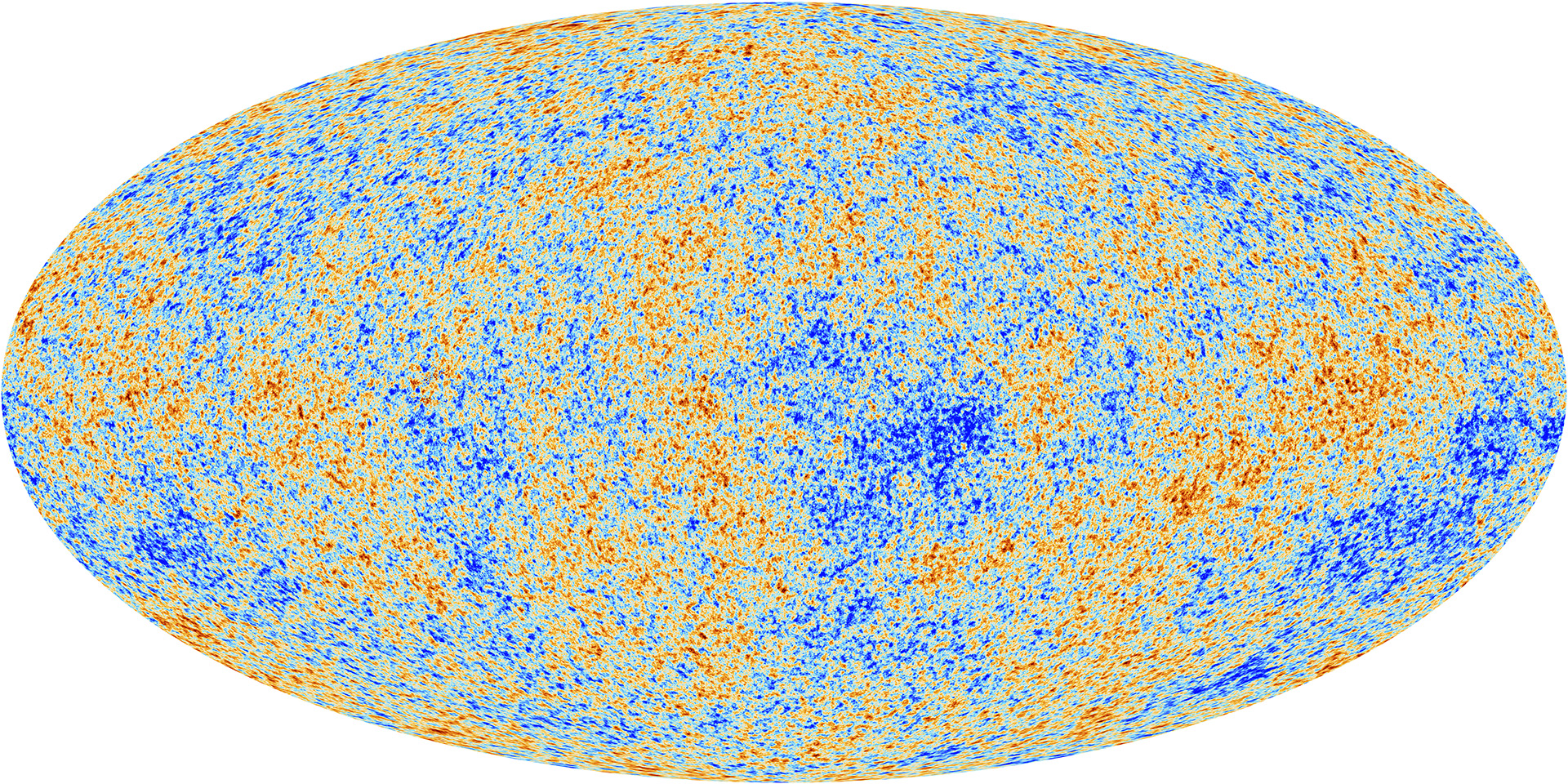
Dr Tegmark began the lecture by stating that humans tend to underestimate two things, the size of the cosmos, and their ability to comprehend it. Any observation of the cosmos involves a "journey" not only through space, but through time as well- the light from the sun takes approximately eight minutes to reach the earth, so we are observing the sun as it was eight minutes previously. The delay is greater for more distant objects. As one looks further away, one looks further back in time, the more distant stars are seen in their younger forms, and then one finds a "dark" area as one peers further back into time, when hydrogen atoms were forming, when nucleons were forming, when quarks were forming. There is evidence that the universe is expanding, light from objects moving away from an observer "shifts" toward the red end of the spectrum due to the Doppler effect. Ever since the Big Bang, approximately 13.8 billion years ago, the universe has been expanding. As a gas expands, it gets cooler, and the "older", hotter gasses behind the galaxies we are able to observe form an opaque "screen" of plasma. This opaque plasma background was detected by the Wilkinson Microwave Anisotropy Probe, or WMAP. The Planck satellite was developed to "map" the universe's Cosmic Microwave Background. Dr Tegmark had his wife inflate a ball which depicted the map of the universe, and toss it into the crowd, whereupon it made several passes through the audience during the course of the talk.
Dr Tegmark then reiterated his statement that humans have long underestimated the size of things and what we can figure out about them. He observed that we have no clue about the composition of 95% of the universe, and wryly noted that "dark matter" and "dark energy" are fancy words for our current ignorance (he did not use the word in a pejorative sense). The observable universe is a a core of observable matter and a background of plasma separated by a vast uncharted territory. The hydrogen in the non-observable part of the universe gives off radio waves. Doctor Tegmark then broke for a video interlude, showing the construction of an inexpensive radio telescope by a crew of MIT students:
Dr Tegmark continued, exhorting humans to "think big". Ever since the days when our ancestors looked up at the sky (something they did more often in the days before pollution and television- perhaps a redundancy, I'd note) and saw patterns, we have had the power to figure things out. Nature is characterized by patterns- Pythagoras noted that numbers rule the universe and Galileo described mathematics as the language of the universe. Nature is full of recurrent patterns and shapes- a parabola describes the trajectory of a object thrown into the air, an ellipse describes the orbit of a heavenly body. He gave a pop quiz to illustrate the usefulness of mathematics in science, citing the use of math to locate the planet Neptune, to predict the presence of radio waves, and to model the existence of the Higgs boson. Dr Tegmark noted that the physicist Eugene Wigner wrote an essay about the "Unreasonable Effectiveness of Mathematics in the Natural Sciences"- the universe can be described in mathematical terms.
Dr Tegmark then posed the question, if everything in space exhibits mathematical properties, does space itself have mathematical properties? Space has three dimensions, and it can be described in terms of dimensionality, curvature, and topography. Space is a purely mathematical structure, it has no properties besides mathematical properties. He noted that, if space has properties that cannot be described mathematically, then our knowledge of physics effectively hits a "roadblock", beyond which we cannot model the universe, but if there is no roadblock, then our only limit to understanding the universe is imagination. He told us not to let our egos get crushed by the sheer size of the universe- the human brain is the most complex thing that he have so-far discovered, and we have the power to understand, shape, and improve our world. He opined that humanity needs to realize its cosmic potential- the most urgent risks faced by humans are largely self-inflicted, but if we can get our act together, we can take on greater risks. He sadly noted that Justin Bieber is more famous than Vasili Arkhipov, who single-handedly forestalled a nuclear exchange during the Cuban Missile Crisis. He compared the funding for scientific research with the vastly greater sums spent on tobacco marketing and military budgets.
The lecture ended with a reiteration of our capacity to understand the world around us and to improve it, and an injunction to make a difference. We need to experiment, to measure, and to question everything around us, even our own preconceptions.
In the Q&A session (the Bastard didn't get a question in, he's more of a biology/geology/paleontology kind of guy, and deferred to audience members who are more passionate about physics), a mathematically inclined individual asked why, if the universe is math, why are irrational numbers, like pi, so important. Dr Tegmark replied that we assume that irrational numbers are considered infinite because it is convenient to do so. On the topic of dark energy, he noted that understanding dark energy would be equivalent to understanding the future of the universe... dark energy does not like to be diluted- if the space it occupies expands to twice the volume, the stuff still has the same density while other stuff gets diluted. Understanding the properties of dark energy would help us understand if the fate of the universe is a Big Chill, or a Big Crunch, or a Big Snap, or a Big Rip, or...
Another questioner asked Dr Tegmark why we seem to be in the center of the universe, and he indicated that we are in the middle of a "fog space", there's a certain radius beyond which we cannot see. Because of this, he titled his book "Our Mathematical Universe", not "The Mathematical Universe".
Another question involved the mathematical modelling of consciousness, and Dr Tegmark went on a digression about the need to integrate information. Only recently have physicists and neurologists started to work together to integrate information. Science has involved a process of integration, with energy and matter being integrated- and electricity and magnetism, and space and time. The integration of mind and the outer world has only recently begun.
Before he concluded his presentation, Dr Tegmark gave us a charming description of his personal trajectory as a physicist- saying that, at one point in his career, he was humbled by the vastness of the universe, but that, since then, he has done a U-turn... as far as we know, we are the only intelligence in the universe. We use our intelligence to describe the universe, therefore, we give meaning to the universe.
Here's a brief, casual interview of Dr Tegmark by his wife (the woman who tossed the "universe" to the crowd), in which the good doctor touches on the thesis of his talk:
Here's a longer talk by Dr Tegmark, in front of a crowd of philosophers and scientists:
The Brooklyn crowd was considerably less staid.
Wednesday, August 27, 2014
The Git and the Pendulum
The big local news story is the letter written by Ed Mullins, the head of the NYPD Sergeants' Benevolent Association, wrote urging the DNC to not hold their 2016 convention in New York City, specifically downtown Brooklyn's Barclays Center. Mullins' letter is a masterpiece of dog-whistling and innuendo, invoking the "bad old days of high crime", and the return of "squeegee men" to the highway exits of the city.
Mullins letter opens up with a doozy of a paragraph:
Mayor Bill de Blasio wants the Democratic National Committee to designate the beautiful Barclays Center in downtown Brooklyn as the site of the 2016 Democratic National Convention. But while the Barclays Center is still new and glistening, the great city in which it stands is lurching backwards to the bad old days of high crime, danger-infested public spaces, and families that walk our streets worried for their safety.
I doubt Mullins is referring to the families of Eric Garner and Ramarley Graham.
Mullins then engages in a little bit of, as Roy would put it, "Ooga Booga" by hinting at an éminencegrise noire acting behind the scenes in the DeBlasio administration:
But it is not just that we have fewer officers patrolling the streets. The Mayor has provided a public platform to the loudest of the city’s anti-safety agitators, instead of giving voice to the millions of New Yorkers who want to live and work in safety. Why would he kowtow to demagogues who push a political agenda? Does he really believe people in the city care more about politics than quality of life?
Today, Mullins appeared on WNYC's Brian Lehrer show, with predictably disastrous results. The entire segment is a train wreck, with Mullins bringing up the 1987 Tawana Brawley scandal. He continually comments that the "pendulum" is swinging back toward the "bad old days" depicted in this documentary:
Mullins gives the whole game away, though, when asked if the DNC has responded to him:
"No and I don't think they will reply... What many people seem to not realize is that New York is a Democrat state and their real value is not in New York."
Democrat state? Mullins seems to forget he's not talking to Boss Limbaugh. As an added bonus, Mr Mullins characterizes the protestors arrested during the 2004 Republican convention as criminals, rather than the victims they were. Listen to the interview, Mullins is a git, and he can shove his "pendulum" where the sun doesn't shine.
Mullins letter opens up with a doozy of a paragraph:
Mayor Bill de Blasio wants the Democratic National Committee to designate the beautiful Barclays Center in downtown Brooklyn as the site of the 2016 Democratic National Convention. But while the Barclays Center is still new and glistening, the great city in which it stands is lurching backwards to the bad old days of high crime, danger-infested public spaces, and families that walk our streets worried for their safety.
I doubt Mullins is referring to the families of Eric Garner and Ramarley Graham.
Mullins then engages in a little bit of, as Roy would put it, "Ooga Booga" by hinting at an éminence
But it is not just that we have fewer officers patrolling the streets. The Mayor has provided a public platform to the loudest of the city’s anti-safety agitators, instead of giving voice to the millions of New Yorkers who want to live and work in safety. Why would he kowtow to demagogues who push a political agenda? Does he really believe people in the city care more about politics than quality of life?
Today, Mullins appeared on WNYC's Brian Lehrer show, with predictably disastrous results. The entire segment is a train wreck, with Mullins bringing up the 1987 Tawana Brawley scandal. He continually comments that the "pendulum" is swinging back toward the "bad old days" depicted in this documentary:
Mullins gives the whole game away, though, when asked if the DNC has responded to him:
"No and I don't think they will reply... What many people seem to not realize is that New York is a Democrat state and their real value is not in New York."
Democrat state? Mullins seems to forget he's not talking to Boss Limbaugh. As an added bonus, Mr Mullins characterizes the protestors arrested during the 2004 Republican convention as criminals, rather than the victims they were. Listen to the interview, Mullins is a git, and he can shove his "pendulum" where the sun doesn't shine.
Thursday, March 2, 2017
Feeling Antsy
I'm heading down to the beautiful Bell House in Brooklyn for this month's Secret Science Club lecture, which is all about ants. Before I hit the 4 train to Brooklyn, I figure I have time to post a video for Attack of the Giant Ants, a rather silly song off of Blondie's eponymous first album:
Has the prospect of human extinction ever sounded so upbeat? The video accompanying the song was cobbled together out of clips from the movie THEM!, perhaps the finest giant radioactive ant movie ever filmed. On a personal note, my only exposure to giant ants has been totally delicious. Why yes, I have indulged in myrmecophagy on several occasions.
Has the prospect of human extinction ever sounded so upbeat? The video accompanying the song was cobbled together out of clips from the movie THEM!, perhaps the finest giant radioactive ant movie ever filmed. On a personal note, my only exposure to giant ants has been totally delicious. Why yes, I have indulged in myrmecophagy on several occasions.
Thursday, December 28, 2017
2017 Music Retrospective
This being the wind-down part of the year, I figure I should engage in some year-end retrospectives. 2017 has been a pretty horrible year in many ways, but it was a damn fine year for music. I figure I'd take some time to post some of my favorite singles from the year.
The National, originally from Cincinnati, but now making Brooklyn their home, released the album Sleep Well Beast in September. The first single from the album, The System Only Dreams in Total Darkness, released in May, is a moody masterpiece of a song, with lyrics that hint at hidden layers of meaning... this song gives me goosebumps:
Australia's Courtney Barnett and Philadelphia's Kurt Vile released an album of droll duets- their combination of deadpan snark and cute lyrics is a real delight. My favorite song of theirs is Continental Breakfast, I crack up every time I hear Ms Barnett sing about 'East Bumble-wherever':
I posted earlier this year about LCD Soundsystem's Tonite, a bit of droll media commentary disguised as a hot electronic dance track:
Sunflower Bean, another Brooklyn-based band that came to my attention last year released the single I Was a Fool, a 70s vintage sounding single with a video in which lead singer Julia Cumming trades her Gorey-esque image for an entirely more sultry one, more Deborah Harry than Wednesday Addams:
I'd have to say, though, that my favorite album of the year has to be Antisocialites, the sophomore album by Canadian band Alvvays. This album is a gorgeous bit of power-pop reminiscent of a lot of late 80s, early to mid 90s British 'shoegaze' bands. Listening to the band, I hear echoes of my beloved Shop Assistants, and the band invokes Jim Reid of The Jesus and Mary Chain in their song Lollipop (Ode to Jim):
The entire record is fantastic, with the opener In Undertow being a glorious combination of lush vocals and fuzz-laden guitars:
Plimsoll Punks is an uptempo number with an immediately catchy chorus:
As if the band read my mind about their sound being reminiscent of The Shop Assistants, they covered post-Shop Assistants Alex Taylor project Motorcycle Boy's Trying to Be Kind:
Even better, the band showcased their sense of humor by covering the Ramones' Cretin Hop:
This is a band which can do no wrong, and I have been compulsively listening to both of the albums for the past two weeks. Like I said, it's been a crap year in a lot of ways, but a great year musically.
Saturday, June 30, 2018
A Most Symbolic March
I missed the marches against family separation today- we've been short staffed at work, so I had to work both graveyard and afternoon shifts today. The march in New York City was particularly well-routed, the thousands of marchers began at Foley Square in Manhattan, the civic heart of Manhattan, went over the Brooklyn Bridge, which affords spectacular views of New York harbor, through which countless immigrants, including my great-grandparents and my mom's dad, who was born at sea between Buenos Aires and New York. The march ended with a rally in Cadman Plaza, in the civic heart of Brooklyn. I like the significance of linking both borough government centers, a nice show of rejection for federal policies which don't comport with our prevailing values. While I didn't have an opportunity to march, I am pleased that more people attended the major marches than attended Vulgarmort's inauguration.
In morning, before I left work, I was participating in a discussion of various slogans to put on signs at the march. My contribution was: "You can't be the party of family values if you don't value families." Another possible slogan for me would have been: "Juntos somos poderosos, juntos podemos cambiar el mundo." Alas, a particularly rough weekend at work sidelined me.
In morning, before I left work, I was participating in a discussion of various slogans to put on signs at the march. My contribution was: "You can't be the party of family values if you don't value families." Another possible slogan for me would have been: "Juntos somos poderosos, juntos podemos cambiar el mundo." Alas, a particularly rough weekend at work sidelined me.
Subscribe to:
Posts (Atom)