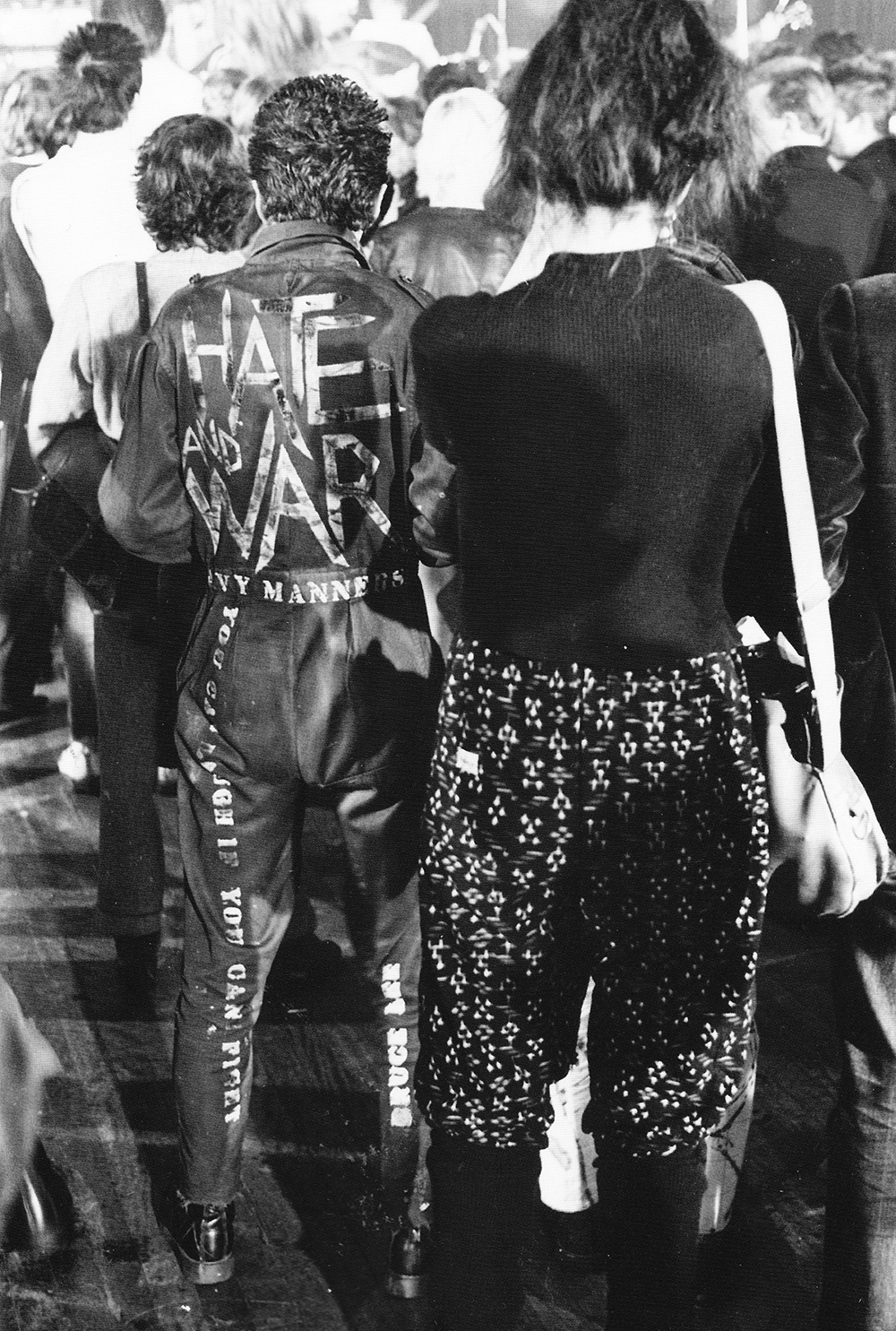
Marion Elliott-Said, who re-invented herself as punk goddess Poly Styrene of the X-Ray Spex died of breast cancer complications on 4/25/2011. The X-Ray Spex album Germ Free Adolescents, one of the essential documents of the punk era, retains its power due to the trenchant, prescient themes that Poly wrote and sang about.
Whether singing about the possible perils of "Genetic Engineering", the chemically saturated modern world, obsessive germ-phobia, the ubiquity of advertising and the resultant consumption-obsesssion, unrealistic beauty standards and overdependence on consumer goods and "all mod cons", Poly Styrene captured the wonders and horrors of the modern age, and commented on them with fierceness, passion, and wit. Listening to the album, one cannot escape its timeless quality- the very topics that Poly addressed are even more apparent today. Poly always seemed to walk the knife edge between genius and madness, and eventually suffered a nervous breakdown due to a brutal schedule. She recorded a couple of solo albums, including the upcoming Generation Indigo.
Rest in Peace, Poly... you warned us back in 1977, but your howl of warning was ignored, and we still face the dilemmas you sang about.
Enough of me, how about some X-Ray Spex?
Here's proto-Riot Grrrl anthem "Oh, Bondage, Up Yours!", in which Poly kicks the patriarchy and consumer culture in the nads with a bovver boot, along with "Identity":
Here's a snippet of an interview of Dearest Polly:
A teaser for a documentary:
And a personal favorite- the first video I ever embedded on this here blog:
Poly- punk, poetess, prophetess, you will be missed. Your legacy lives on in the millions of women who refuse to be bound, whether by the patriarchal dominance structure or the Mass-Consumption Complex.
Thanks to zrm, who broke the sad news to me, and "Big Ups" to the Youtube commenter who wrote, "Oh, Cancer, Up Yours!" Now, go out and get your hands on some X-Ray Spex and crank it up to ELEVEN!!
* Don't believe a word of this.
Showing posts sorted by relevance for query x ray spex. Sort by date Show all posts
Showing posts sorted by relevance for query x ray spex. Sort by date Show all posts
Tuesday, April 26, 2011



Thursday, December 3, 2009
Bastard's First Video
Figured I'd have to start off with a bang, here, so I chose The Day the World Turned Dayglo by the X-ray Spex:
One of my greatest accomplishments in the mid-to-late 90's was introducing the Spex to Peoria, Illinois. One of my baby brother's classmates was an Illinois-boy, and he'd often come around to the homestead when he had time off, but was unable to travel home. At the time, I was playing the hell out of a newly released CD reissue of Germfree Adolescents, (I'm talking "laser burning a groove in the damn thing" here) and he became enamored of their music. When he returned home, he got his younger siblings hooked on the Spex, and the damage was done.
The album is an amazing cultural artifact. The prescience shown by lead singer/head songwriter Poly Styrene (Née Marian Joan Elliott Said) verges on the terrifying- her commentary on such topics as genetic engineering, consumerism, gender and racial identity, germ-phobia and chemical saturation of the environment sounds as timely now as it did in 1977. The fact that she was a teenager when the album debuted should make dimbulb "pundits" such as William Kristol and Thomas Friedman slink off in shame.
Although I deplore consumerism, I implore anyone reading this (yeah, right!) to purchase Germfree Adolescents as soon as is humanly possible. If you've never heard any of the songs, prepare to be shocked at how timely they all sound.
In 1978, Poly started hallucinating, went on a hiatus, and was eventually diagnosed with bipolar disorder (from "tehWiki Waki Woo", although John Savage's England's Dreaming) has a lot to say about her). At the risk of sounding histrionic, I like to think that she had tapped into a vein of hyper-consciousness, which simply overwhelmed her for a time. Reading the article linked by Wikipedia, it's good to know that she's doing well- she paid a high enough price for her awe-inspiring awareness.
One of my greatest accomplishments in the mid-to-late 90's was introducing the Spex to Peoria, Illinois. One of my baby brother's classmates was an Illinois-boy, and he'd often come around to the homestead when he had time off, but was unable to travel home. At the time, I was playing the hell out of a newly released CD reissue of Germfree Adolescents, (I'm talking "laser burning a groove in the damn thing" here) and he became enamored of their music. When he returned home, he got his younger siblings hooked on the Spex, and the damage was done.
The album is an amazing cultural artifact. The prescience shown by lead singer/head songwriter Poly Styrene (Née Marian Joan Elliott Said) verges on the terrifying- her commentary on such topics as genetic engineering, consumerism, gender and racial identity, germ-phobia and chemical saturation of the environment sounds as timely now as it did in 1977. The fact that she was a teenager when the album debuted should make dimbulb "pundits" such as William Kristol and Thomas Friedman slink off in shame.
Although I deplore consumerism, I implore anyone reading this (yeah, right!) to purchase Germfree Adolescents as soon as is humanly possible. If you've never heard any of the songs, prepare to be shocked at how timely they all sound.
In 1978, Poly started hallucinating, went on a hiatus, and was eventually diagnosed with bipolar disorder (from "tehWiki Waki Woo", although John Savage's England's Dreaming) has a lot to say about her). At the risk of sounding histrionic, I like to think that she had tapped into a vein of hyper-consciousness, which simply overwhelmed her for a time. Reading the article linked by Wikipedia, it's good to know that she's doing well- she paid a high enough price for her awe-inspiring awareness.
Friday, February 24, 2012
Post Lecture Recap
Wednesday night, I headed to the beautiful Bell House in the Gowanus section of Brooklyn for the monthly Secret Science Club lecture by NYU Neuroscientist David Carmel. Dr Carmel's field is the role of the brain in visual perception, and his lecture was accompanied by many displays illustrating the topics he addressed. Before the lecture, attendees were supplied with small slips of paper displaying the classic blind spot demonstration, and "glasses" with a red and a green gel, much like classic 3-D glasses (not to be confused with X-Ray Spex).
Humans tend to recognize patterns, and often impose aninterpretation on objects which isn't supported by further observation.
The "blind spot" phenomenon was explained- the optic nerve connects to the retina in a region that lacks the cells that "receive" incoming light. The blind spot test allows one to "locate" one's blind spot, but an unusual thing occurs- the brain "fills in" the missing details, in the test, one perceives a blank white space in the white background, if one were to draw a line on the paper through the two test images, one would perceive a continuation of the line where the "missing" image should be.
After a brief discussion of "metacognition", basically one's abilitity to know what one knows, and the ability of one to recall images briefly flashed on a screen, Dr Carmel presented a bunch of bistable images, which are basically unchanging stimuli which can be perceived in various ways. A classic bistable image is the Necker Cube. Dr Carmel also displayed the ambiguous duck/rabbit (sounds like an ingredient in a McGravitasian recipe), the vase/face image and the young woman/old crone image. Notably, one cannot perceive both images simultaneously.
The most mind-blowing part of the lecture was a demonstration of the selective attention test, which must be seen to be believed. Sadly, I fall within the 50% or so percent of the population which gets blindsided by the test. It's truly humbling. The sequel is not quite so bad.
Dr Carmel then went on to demonstrate binocular rivalry, instructing the audience to use the two-toned "glasses" to "separate" the two images in this composite- as one looked at the image with glasses, one would alternate between seeing the face and the building. I am ashamed to admit that I asked a n00b question, about the ability of color blind persons to perceive the two images, forgetting that they would experience the binocular rivalry, with the two images appearing gray. I sure hope a colour vision specialist doesn't read this, because I really didn't drink enough Ommegang to justify the lapse.
Dr Carmel went on to discuss the portions of the brain involved in perception, focusing on the use of transcranial magnetic stimulation to monitor brain activity. Here's a nice, brief overview of TMS... Dr Carmel showed a video of himself receiving TMS, and having one of his hands moving without his volition (a waggish bastard in the audience asked him if TMS had been weaponized for use in crowd suppression... not yet, at any rate). While the primary visual cortex is located at the rear of the brain, there are other portions of the brain which are involved in perception. Dr Carmel studied the role of the right parietal lobe in perception of and found that TMS affected the duration of "dominance" in binocular rivalry. At the same time, one of his colleagues found that TMS decreased the duration of "dominance". They were able to reconcile these seemingly contradictory findings by ascertaining that they had been stimulating slightly different regions of the parietal lobe. One portion of the parietal lobe plays a role in maintaining an interpretation of visual stimuli, while another plays a role in changing our perception of something based on changes in the perceived stimuli.
The lecture ended with a summation- we perceive the world with our brains. Perception is a balancing act- we make choices as to how we interpret the visual stimuli we receive. All told, it was yet another brilliant lecture, and the accompanying video presentations really knocked it out of the park- I'm still a little freaked out about the selective attention test.
Sorry about the delay, folks, but I had to chase down links to a lot of the images which were featured in the lecture (and ya know, I almost forgot one of the best examples of bistable imagery.
Humans tend to recognize patterns, and often impose aninterpretation on objects which isn't supported by further observation.
The "blind spot" phenomenon was explained- the optic nerve connects to the retina in a region that lacks the cells that "receive" incoming light. The blind spot test allows one to "locate" one's blind spot, but an unusual thing occurs- the brain "fills in" the missing details, in the test, one perceives a blank white space in the white background, if one were to draw a line on the paper through the two test images, one would perceive a continuation of the line where the "missing" image should be.
After a brief discussion of "metacognition", basically one's abilitity to know what one knows, and the ability of one to recall images briefly flashed on a screen, Dr Carmel presented a bunch of bistable images, which are basically unchanging stimuli which can be perceived in various ways. A classic bistable image is the Necker Cube. Dr Carmel also displayed the ambiguous duck/rabbit (sounds like an ingredient in a McGravitasian recipe), the vase/face image and the young woman/old crone image. Notably, one cannot perceive both images simultaneously.
The most mind-blowing part of the lecture was a demonstration of the selective attention test, which must be seen to be believed. Sadly, I fall within the 50% or so percent of the population which gets blindsided by the test. It's truly humbling. The sequel is not quite so bad.
Dr Carmel then went on to demonstrate binocular rivalry, instructing the audience to use the two-toned "glasses" to "separate" the two images in this composite- as one looked at the image with glasses, one would alternate between seeing the face and the building. I am ashamed to admit that I asked a n00b question, about the ability of color blind persons to perceive the two images, forgetting that they would experience the binocular rivalry, with the two images appearing gray. I sure hope a colour vision specialist doesn't read this, because I really didn't drink enough Ommegang to justify the lapse.
Dr Carmel went on to discuss the portions of the brain involved in perception, focusing on the use of transcranial magnetic stimulation to monitor brain activity. Here's a nice, brief overview of TMS... Dr Carmel showed a video of himself receiving TMS, and having one of his hands moving without his volition (a waggish bastard in the audience asked him if TMS had been weaponized for use in crowd suppression... not yet, at any rate). While the primary visual cortex is located at the rear of the brain, there are other portions of the brain which are involved in perception. Dr Carmel studied the role of the right parietal lobe in perception of and found that TMS affected the duration of "dominance" in binocular rivalry. At the same time, one of his colleagues found that TMS decreased the duration of "dominance". They were able to reconcile these seemingly contradictory findings by ascertaining that they had been stimulating slightly different regions of the parietal lobe. One portion of the parietal lobe plays a role in maintaining an interpretation of visual stimuli, while another plays a role in changing our perception of something based on changes in the perceived stimuli.
The lecture ended with a summation- we perceive the world with our brains. Perception is a balancing act- we make choices as to how we interpret the visual stimuli we receive. All told, it was yet another brilliant lecture, and the accompanying video presentations really knocked it out of the park- I'm still a little freaked out about the selective attention test.
Sorry about the delay, folks, but I had to chase down links to a lot of the images which were featured in the lecture (and ya know, I almost forgot one of the best examples of bistable imagery.
Monday, October 1, 2012
If It's October...
Every October, two things happen to me... October is the major fundraising month at work, so it involves long hours and a lot of running around (one of my running jokes is that my job is cushy, except when it's not, and October is an entire month in the "not" column. As if that weren't enough, my volunteer gig restarts on the first Saturday in October (since it's a kids' athletic program, it roughly coincides with the school year, specifically the months between fall and spring sports seasons). Suffice it to say, I pretty much pull a Captain Nemo- I basically won't surface for a month. My tradition is usually to post a video for my all-time favorite Sex Pistols song, but this year I'm posting the video for Let's Submerge by the late, great Poly Styrene and the X-Ray Spex- BLAST THIS ONE!
I've gotten savvier about posting in the years I've been blogging, so I'll try to set up posts for those days when I leave home in the vicinity of seven o'clock Saturday morning and don't get home until one-thirty or so Sunday morning, and I don't have any downtime for posting (for the record, I'm writing this at work because it's quiet now- all of the techies setting up for our fundraiser have left the site, but that's all about to end this weekend). I'm going to try to maintain a decent blogging schedule, but the posts will probably be shorter ones, with a fair amount of video embeds.
I've gotten savvier about posting in the years I've been blogging, so I'll try to set up posts for those days when I leave home in the vicinity of seven o'clock Saturday morning and don't get home until one-thirty or so Sunday morning, and I don't have any downtime for posting (for the record, I'm writing this at work because it's quiet now- all of the techies setting up for our fundraiser have left the site, but that's all about to end this weekend). I'm going to try to maintain a decent blogging schedule, but the posts will probably be shorter ones, with a fair amount of video embeds.
Thursday, August 8, 2013
Euro Sci-Fi Disco Environmentalism
So... this whole thing began innocently enough, a Google search that looking up old German New Wave Bands- a pretty typical internet search for me. Well, I was watching some old Nina Hagen videos and listening to Wir Leben Immer Noch, a cover of Lene Lovich's Lucky Number, which got me looking up Ms. Lovich's biography (the storied WLIR used to play a lot of songs by Lene Lovich, but I never thought to look up her biography. Anyway, poking around, I found out that she wrote the lyrics to a smash Euro-disco science fiction hit which is scarily prescient (there must have been something in the air in the 1970s, because the album "Germfree Adolescents" by the X-Ray Spex was as perspicacious as any document put out by a contemporaneous trend-watcher or science fiction author). Supernature is a cautionary tale about agricultural chemical runoff mutating creatures which then take their revenge on humankind. You can also dance your ass off to it:
The song's sound is way ahead of its time, if you added some autotune, it could have been this year's "Daft Punk" release rather than a 1977 release. In 1986, Lene Lovich released her own version of the song:
Until tonight, I had never known that there existed Euro-disco sci-fi cautionary tales. Previously, I thought the only Euro-disco cautionary tales were of a historic nature.
The song's sound is way ahead of its time, if you added some autotune, it could have been this year's "Daft Punk" release rather than a 1977 release. In 1986, Lene Lovich released her own version of the song:
Until tonight, I had never known that there existed Euro-disco sci-fi cautionary tales. Previously, I thought the only Euro-disco cautionary tales were of a historic nature.
Tuesday, July 23, 2013
Moshing at the Met?
Today was my day off, so I decided to head to the Metropolitan Museum of Art to see the exhibit Punk: Chaos to Couture. While I enjoyed the exhibit, I have to say that it was a lot more "couture" than "chaos". Here's the press release for the exhibit.
The exhibit, situated on the second floor of the 'Met, started with a brief overview of punk's "Do It Yourself" aesthetic- an aesthetic born largely out of poverty, as slumming Lower East Siders in New York and working-class kids in England cobbled together distinctive looks out of worn clothing and found objects, forming a look which was calculated to shock middle-class sensibilities. One of the first displays featured a Vivienne Westwood designed red "parachute" tunic, paired with red bondage pants with a terrycloth drop seat. Ms Westwood, it must be noted, was one of the designers who shaped the English punk aesthetic in the 1970s, while running the boutique "SEX" with Malcolm McLaren, who went on to become the "Svengali" behind the Sex Pistols.
The next gallery focused more on the New York punk scene, including (hilariously) a mock-up of the men's bathroom of C.B.G.B.- thankfully, the exhibit did not replicate the hideous miasma which accompanied the original (let's face it, the club was a fetid hellhole, storied as it was). As there wasn't a single "fount" of fashion for the 1970's Lower East Side scenesters, this wasn't the most compelling portion of the show. The soundtrack of this part of the exhibit included snippets of such NYC classics as I Don't Wanna Go Down to the Basement.
Following on this was an exhibit of clothes sold at the various McLaren and Westwood run shops at 430 Kings Road, London. Among the infamous designs on display were the "Two Cowboys" shirt (modeled by Sid Vicious here), which was inspired by the gay fetish art of Tom of Finland, the "God Save the Queen" T-Shirt, and the "Tits" T-shirt (modeled by Steve Jones here). Additionally, there was a video filmed at the 430 King's Road shop featuring an individual completely encased in a latex bondage suit, complete with "gimp" mask. As an aside, Malcolm McLaren was fascinated by the topic of submission, and he asked the Sex Pistols to write a song about it, with hilarious results. The centerpiece of this area of the exhibit was a "compare and contrast" of the classic Westwood designs and contemporary designs inspired by the originals.
The next galleries explored four different aspects of the punk aesthetic, starting with "Hardware". This section started off with the safety pins, chains, and studs that adorned punk clothes. Johnny Rotten, in his typical blunt fashion, explained the provenance of the safety pin in punk fashion: “The arse of your pants falls out, you just use safety pins.” The exhibit featured designer clothes with gold faux safety pins, padlocks(Sid famously wore a padlock necklace), and studs.
The second aspect of the aesthetic that was explored was bricolage. This gallery featured plastic garbage- and shopping-bag dresses, and dresses made up to look like they were made out of newsprint. In this gallery, the sountrack featured snippets of Boredom by the Buzzcocks, New Rose by The Damned, and Identity by the X-Ray Spex.
The third aspect dwelt on was Graffiti and Agitprop, typified by the spray painted and stenciled jumpsuits worn by The Clash. Tragically, the soundtrack in this section of the exhibit was ambient music, no Mick, Joe, Paul, and Tory-or-Topper to be heard. Among the current examples in this section was Vivienne Westwood's "Climate Revolution" design.
The last facet of the punk aesthetic touched upon in this exhibit was titled "Destroy", and hinged on the ripped-and-reconstituted look necessitated by poverty (refer to Monsieur Rotten's quote about safety pins and the arse of his pants).
All told, I wanted to see more chaos and less couture, to hear more of the raucous music I love so well. The exhibit was good, but I probably wasn't the target audience. Anyway, here's a video featuring Vivienne Westwood in her salad days on the King's Cross Road:
It was nice to see the Met playing homage to punk, they have a heavy metal exhibit every day.
The exhibit, situated on the second floor of the 'Met, started with a brief overview of punk's "Do It Yourself" aesthetic- an aesthetic born largely out of poverty, as slumming Lower East Siders in New York and working-class kids in England cobbled together distinctive looks out of worn clothing and found objects, forming a look which was calculated to shock middle-class sensibilities. One of the first displays featured a Vivienne Westwood designed red "parachute" tunic, paired with red bondage pants with a terrycloth drop seat. Ms Westwood, it must be noted, was one of the designers who shaped the English punk aesthetic in the 1970s, while running the boutique "SEX" with Malcolm McLaren, who went on to become the "Svengali" behind the Sex Pistols.
The next gallery focused more on the New York punk scene, including (hilariously) a mock-up of the men's bathroom of C.B.G.B.- thankfully, the exhibit did not replicate the hideous miasma which accompanied the original (let's face it, the club was a fetid hellhole, storied as it was). As there wasn't a single "fount" of fashion for the 1970's Lower East Side scenesters, this wasn't the most compelling portion of the show. The soundtrack of this part of the exhibit included snippets of such NYC classics as I Don't Wanna Go Down to the Basement.
Following on this was an exhibit of clothes sold at the various McLaren and Westwood run shops at 430 Kings Road, London. Among the infamous designs on display were the "Two Cowboys" shirt (modeled by Sid Vicious here), which was inspired by the gay fetish art of Tom of Finland, the "God Save the Queen" T-Shirt, and the "Tits" T-shirt (modeled by Steve Jones here). Additionally, there was a video filmed at the 430 King's Road shop featuring an individual completely encased in a latex bondage suit, complete with "gimp" mask. As an aside, Malcolm McLaren was fascinated by the topic of submission, and he asked the Sex Pistols to write a song about it, with hilarious results. The centerpiece of this area of the exhibit was a "compare and contrast" of the classic Westwood designs and contemporary designs inspired by the originals.
The next galleries explored four different aspects of the punk aesthetic, starting with "Hardware". This section started off with the safety pins, chains, and studs that adorned punk clothes. Johnny Rotten, in his typical blunt fashion, explained the provenance of the safety pin in punk fashion: “The arse of your pants falls out, you just use safety pins.” The exhibit featured designer clothes with gold faux safety pins, padlocks(Sid famously wore a padlock necklace), and studs.
The second aspect of the aesthetic that was explored was bricolage. This gallery featured plastic garbage- and shopping-bag dresses, and dresses made up to look like they were made out of newsprint. In this gallery, the sountrack featured snippets of Boredom by the Buzzcocks, New Rose by The Damned, and Identity by the X-Ray Spex.
The third aspect dwelt on was Graffiti and Agitprop, typified by the spray painted and stenciled jumpsuits worn by The Clash. Tragically, the soundtrack in this section of the exhibit was ambient music, no Mick, Joe, Paul, and Tory-or-Topper to be heard. Among the current examples in this section was Vivienne Westwood's "Climate Revolution" design.
The last facet of the punk aesthetic touched upon in this exhibit was titled "Destroy", and hinged on the ripped-and-reconstituted look necessitated by poverty (refer to Monsieur Rotten's quote about safety pins and the arse of his pants).
All told, I wanted to see more chaos and less couture, to hear more of the raucous music I love so well. The exhibit was good, but I probably wasn't the target audience. Anyway, here's a video featuring Vivienne Westwood in her salad days on the King's Cross Road:
It was nice to see the Met playing homage to punk, they have a heavy metal exhibit every day.
Wednesday, February 13, 2013
Post Lecture Recap: The World in Your Guts
Last night, I headed down to the beautiful Bell House in the Gowanus section of Brooklyn for this month's Secret Science Club lecture by Dr. Martin Blaser, director of NYU’s Human Microbiome Program. Dr Blaser's title for the lecture was: "While Babies Sleep and Dream, their Microbiome Never Rests"- a very sweet, poetic title.
After a brief overview of the topics he would cover, Dr Blaser opened his lecture with a slide of the changes in the Greenland ice sheets due to global warming. Just as global warming is a change in the macroenvironment, there are changes occurring in the microenvironment inside our bodies.
The lecture then proceeded to the topic of the three "Kingdoms" of life, the Bacteria, the Archaea, and the Eukarya. To put our place in the scheme of things into perspective, Dr Blaser showed a slide of the "Tree of Life" and informed us that, in comparison to the distantly related bacteria Escherichia coli and Clostridium sp., humans can count as close relatives corn and fungi.
The microbiome is ancient, niche-specific, persistent, conserved, and host specific. Ever since animals evolved, they have had microbial symbionts. In a typical human body, there are 23,000 "human" genes present, and 8 million microbial genes. Put bluntly, 99% of the genes present in your body are bacterial. Different sites around the human body have different microbial populations. The diversity of an individual's microbiomes levels out with age, with the "adult" microbiome typically being established by the age of three. The host and the symbiotic microbes co-evolve- host and symbiont send "signals" to each other.
The next topic in Dr Blaser's lecture was the stomach bacterium Helicobacter pylori. H. pylori us the dominant microorganism in the human stomach, and has been around for at least 100,000 years and has a worldwide distribution. Approximately half of the world's population plays host to H. pylori. The bacteria adhere to the stomach epithelia and form "pedestals". The bacteria produce a protein called CagA which they inject into the epithelial cells by means of molecular "syringes". As an aside, I wish to note that molecular syringes may have formed a precursor to the bacterial flagellum, a finding which torpedoed the foolish "irreducible complexity" argument posited by "Intelligent Design" creationists.
Recently, H. pylori has been rapidly disappearing in many regions of the world- this graph shows the precipitous decline in the U.S. over eighty years. Currently, only about 6% of children in the U.S. possess H. pylori symbionts.
H. pylori has been implicated in gastric cancer as well as stomach and duodenal ulcers. Men with H. pylori are more likely to develop stomach cancer than men without H. pylori. As H. pylori disappears, the incidence of gastric cancer has decreased. There's a downside, though- as H. pylori disappears, the incidence of gastric "reflux" and esophageal adenocarcinoma has increased. Reflux, which makes esophageal cancer more prevalent, was rare in the 1930s, but the incidence has been increasing with the wane of H. pylori. H. pylori is bad for the stomach, but good for the esophagus. As Dr Blaser bluntly put it, you can't win.
The next topic of the lecture involved other health effects of H. pylori. The stomach produces the hormone ghrelin, which stimulates appetite. H. pylori affects ghrelin levels. Ghrelin levels are typically high in the morning, which triggers hunger, and decrease as one is satiated. If H. pylori is eradicated, ghrelin levels tend to remain high. The elimination of H. pylori has also been implicated in increased asthma rates and may play a role in the increased incidence of food allergies. In children under fifteen, there is an inverse association between asthma and the presence of H. pylori, but there is no such association in children over the age of fifteen. Asthma rates tend to rise with courses of antibiotics administered to infants- early H. pylori infection could possibly prevent asthma. Wheezing is caused by metacholine. H. pylori makes wheezing less prevalent in infants. the bacteria in the stomach protect the lungs. H. pylori can also cause increased skin sensitization. The disappearance of H. pylori may be related to T-cell depletion and increased gastric acidity. H. pylori is good for the upper regions of the gastrointestinal tract and bad for the lower reaches of the GI tract. It's good for us early in life, but bad for us later in life. Once again, you can't win.
The next topic of the lecture was an overview of the disappearing microbiota hypothesis. A changing human ecology since the 19th century has affected the transmission and maintenance of the indigenous microbiota, and the microorganismal composition changes have an effect on health. Since the 19th century, each generation of mothers has passed fewer microbes to its children. In a cross-cultural study, the diversity of microbiota in the U.S. has been found to be lower than that in the Malawian and South American indigenous populations.
One major factor in the transmission of microbiota is the method of birth. Mothers pass their microbiota to their children through the birthing process (vaginal birth transfers a more diverse microbiota than birth by Caesarian section), through the mastication of food for their infants, through nursing, and through skin contact.
Dr Blaser then went on a slight tangent about the overuse of antimicrobials, and injected a moment of bizarre hilarity by showing an ad for an antimicrobial stapler (as an aside, I wonder if that's why Milton was so upset at losing his red Swingline). He emphatically stated that less bacteria do not equal better health.
The "antimicrobials" discussion turned to the use of antibiotics. Out of the top eight prescriptions given to children, five are for antibiotics. 41 million courses of antibiotics are administered to children yearly. This may be a factor in the rise of obesity throughout the developing world for the last thirty years. The administration of low doses of antibiotics (STAT: sub-therapeutic antibiotic treatment) promotes growth in farm animals. The earlier the antibiotics are applied, the greater the increase in growth. Studies involving mice showed no difference in weight between mice given "STAT", but the mice given antibiotics had a greater fat mass. Not only does STAT create a greater fat mass, but it also changes the host's microbiota. The microbiota change precedes the development of obesity. Liver adiposity also increases with STAT. STAT also affects lipid metabolic processes and fatty acid metabolism. The antibiotics change the composition of microbiota through Natural Selection (microbes not killed by the antibiotics proliferate when "weaker" microbes die off) The application of antibiotics also decreases the activation of the immune system's T-cells, and changes genes which regulate obesity in early life.
Besides STAT, sub-therapeutic antibiotic treatment, studies were made of PAT, pulse antibiotic therapy, the administration of antibiotics as if an infection were being treated. In these studies, it was found that three "pulses" of antibiotics were sufficient to accelerate weight gain and resulted in bigger bones with a higher mineral content. It's possible that PAT could be resulting in increases in average height.
The administration of antibiotics reduces the diversity of microbiota- with each "pulse" there is a permanent reduction in microbiota species. If an ecosystem is perturbed once, it can recover, additional perturbations cause permanent change. Perturbed equilibrium changes all "pathways" in an ecosystem. This has an implication in the development of stem cells because microbiota create a context for development. By perturbing microbiota, we could be changing metabolic, cognitive, and developmental processes. A changing microbiota also has allergic and autimmune implications- a rise in allergies and autoimmune disorders could be "collateral damage" resulting from changing microbiota.
In the Q&A session, some bastard in the audience asked Dr Blaser if the various "probiotics" on the market were of any value. He indicated that most of the probiotics on the shelf were more triumphs of marketing rather than paragons of therapeutic value. He also asserted that more narrow spectrum antibiotics were needed to prevent large scale disruptions of microbiota. In a response to a question about Fecal Transplant Therapy, he indicated that the clinical trial showed that fecal transplants are useful in treating persistent Clostridium difficile infections. As an aside, I think I could become a regular POOP donor... I'm full of the stuff! Diet can change the microbiome somewhat, but the fundamental (heh heh) "fingerprint" of the microbiome doesn't change much.
Once again, this was a top-notch lecture in a top-flight series. It was also an appropriate lecture for the Valentine's Day season, because it was a celebration of the fact that no-one is alone, ever. So... love the little buddies who travel with you wherever you go. Special thanks to Dr Blaser, Secret Science Goddesses Dorian Devins and Margaret Mittelbach, and the staff of the beautiful Bell House. They are even better than my beloved gut-buddies, and I never have to worry about them giving me ulcers.
POSTSCRIPT: Me being me, I couldn't finish this post without putting up the video for Germfree Adolescents by the late great Poly Styrene and the X-Ray Spex:
After a brief overview of the topics he would cover, Dr Blaser opened his lecture with a slide of the changes in the Greenland ice sheets due to global warming. Just as global warming is a change in the macroenvironment, there are changes occurring in the microenvironment inside our bodies.
The lecture then proceeded to the topic of the three "Kingdoms" of life, the Bacteria, the Archaea, and the Eukarya. To put our place in the scheme of things into perspective, Dr Blaser showed a slide of the "Tree of Life" and informed us that, in comparison to the distantly related bacteria Escherichia coli and Clostridium sp., humans can count as close relatives corn and fungi.
The microbiome is ancient, niche-specific, persistent, conserved, and host specific. Ever since animals evolved, they have had microbial symbionts. In a typical human body, there are 23,000 "human" genes present, and 8 million microbial genes. Put bluntly, 99% of the genes present in your body are bacterial. Different sites around the human body have different microbial populations. The diversity of an individual's microbiomes levels out with age, with the "adult" microbiome typically being established by the age of three. The host and the symbiotic microbes co-evolve- host and symbiont send "signals" to each other.
The next topic in Dr Blaser's lecture was the stomach bacterium Helicobacter pylori. H. pylori us the dominant microorganism in the human stomach, and has been around for at least 100,000 years and has a worldwide distribution. Approximately half of the world's population plays host to H. pylori. The bacteria adhere to the stomach epithelia and form "pedestals". The bacteria produce a protein called CagA which they inject into the epithelial cells by means of molecular "syringes". As an aside, I wish to note that molecular syringes may have formed a precursor to the bacterial flagellum, a finding which torpedoed the foolish "irreducible complexity" argument posited by "Intelligent Design" creationists.
Recently, H. pylori has been rapidly disappearing in many regions of the world- this graph shows the precipitous decline in the U.S. over eighty years. Currently, only about 6% of children in the U.S. possess H. pylori symbionts.
H. pylori has been implicated in gastric cancer as well as stomach and duodenal ulcers. Men with H. pylori are more likely to develop stomach cancer than men without H. pylori. As H. pylori disappears, the incidence of gastric cancer has decreased. There's a downside, though- as H. pylori disappears, the incidence of gastric "reflux" and esophageal adenocarcinoma has increased. Reflux, which makes esophageal cancer more prevalent, was rare in the 1930s, but the incidence has been increasing with the wane of H. pylori. H. pylori is bad for the stomach, but good for the esophagus. As Dr Blaser bluntly put it, you can't win.
The next topic of the lecture involved other health effects of H. pylori. The stomach produces the hormone ghrelin, which stimulates appetite. H. pylori affects ghrelin levels. Ghrelin levels are typically high in the morning, which triggers hunger, and decrease as one is satiated. If H. pylori is eradicated, ghrelin levels tend to remain high. The elimination of H. pylori has also been implicated in increased asthma rates and may play a role in the increased incidence of food allergies. In children under fifteen, there is an inverse association between asthma and the presence of H. pylori, but there is no such association in children over the age of fifteen. Asthma rates tend to rise with courses of antibiotics administered to infants- early H. pylori infection could possibly prevent asthma. Wheezing is caused by metacholine. H. pylori makes wheezing less prevalent in infants. the bacteria in the stomach protect the lungs. H. pylori can also cause increased skin sensitization. The disappearance of H. pylori may be related to T-cell depletion and increased gastric acidity. H. pylori is good for the upper regions of the gastrointestinal tract and bad for the lower reaches of the GI tract. It's good for us early in life, but bad for us later in life. Once again, you can't win.
The next topic of the lecture was an overview of the disappearing microbiota hypothesis. A changing human ecology since the 19th century has affected the transmission and maintenance of the indigenous microbiota, and the microorganismal composition changes have an effect on health. Since the 19th century, each generation of mothers has passed fewer microbes to its children. In a cross-cultural study, the diversity of microbiota in the U.S. has been found to be lower than that in the Malawian and South American indigenous populations.
One major factor in the transmission of microbiota is the method of birth. Mothers pass their microbiota to their children through the birthing process (vaginal birth transfers a more diverse microbiota than birth by Caesarian section), through the mastication of food for their infants, through nursing, and through skin contact.
Dr Blaser then went on a slight tangent about the overuse of antimicrobials, and injected a moment of bizarre hilarity by showing an ad for an antimicrobial stapler (as an aside, I wonder if that's why Milton was so upset at losing his red Swingline). He emphatically stated that less bacteria do not equal better health.
The "antimicrobials" discussion turned to the use of antibiotics. Out of the top eight prescriptions given to children, five are for antibiotics. 41 million courses of antibiotics are administered to children yearly. This may be a factor in the rise of obesity throughout the developing world for the last thirty years. The administration of low doses of antibiotics (STAT: sub-therapeutic antibiotic treatment) promotes growth in farm animals. The earlier the antibiotics are applied, the greater the increase in growth. Studies involving mice showed no difference in weight between mice given "STAT", but the mice given antibiotics had a greater fat mass. Not only does STAT create a greater fat mass, but it also changes the host's microbiota. The microbiota change precedes the development of obesity. Liver adiposity also increases with STAT. STAT also affects lipid metabolic processes and fatty acid metabolism. The antibiotics change the composition of microbiota through Natural Selection (microbes not killed by the antibiotics proliferate when "weaker" microbes die off) The application of antibiotics also decreases the activation of the immune system's T-cells, and changes genes which regulate obesity in early life.
Besides STAT, sub-therapeutic antibiotic treatment, studies were made of PAT, pulse antibiotic therapy, the administration of antibiotics as if an infection were being treated. In these studies, it was found that three "pulses" of antibiotics were sufficient to accelerate weight gain and resulted in bigger bones with a higher mineral content. It's possible that PAT could be resulting in increases in average height.
The administration of antibiotics reduces the diversity of microbiota- with each "pulse" there is a permanent reduction in microbiota species. If an ecosystem is perturbed once, it can recover, additional perturbations cause permanent change. Perturbed equilibrium changes all "pathways" in an ecosystem. This has an implication in the development of stem cells because microbiota create a context for development. By perturbing microbiota, we could be changing metabolic, cognitive, and developmental processes. A changing microbiota also has allergic and autimmune implications- a rise in allergies and autoimmune disorders could be "collateral damage" resulting from changing microbiota.
In the Q&A session, some bastard in the audience asked Dr Blaser if the various "probiotics" on the market were of any value. He indicated that most of the probiotics on the shelf were more triumphs of marketing rather than paragons of therapeutic value. He also asserted that more narrow spectrum antibiotics were needed to prevent large scale disruptions of microbiota. In a response to a question about Fecal Transplant Therapy, he indicated that the clinical trial showed that fecal transplants are useful in treating persistent Clostridium difficile infections. As an aside, I think I could become a regular POOP donor... I'm full of the stuff! Diet can change the microbiome somewhat, but the fundamental (heh heh) "fingerprint" of the microbiome doesn't change much.
Once again, this was a top-notch lecture in a top-flight series. It was also an appropriate lecture for the Valentine's Day season, because it was a celebration of the fact that no-one is alone, ever. So... love the little buddies who travel with you wherever you go. Special thanks to Dr Blaser, Secret Science Goddesses Dorian Devins and Margaret Mittelbach, and the staff of the beautiful Bell House. They are even better than my beloved gut-buddies, and I never have to worry about them giving me ulcers.
POSTSCRIPT: Me being me, I couldn't finish this post without putting up the video for Germfree Adolescents by the late great Poly Styrene and the X-Ray Spex:
Subscribe to:
Posts (Atom)